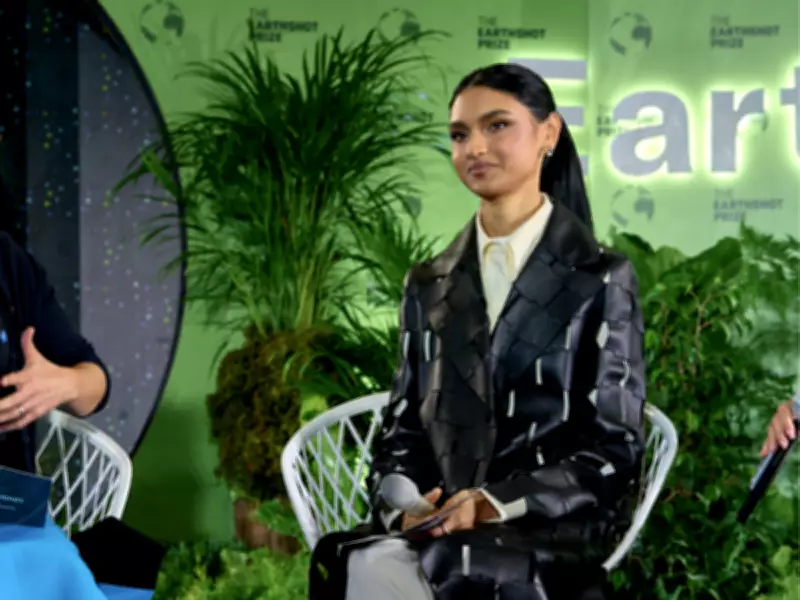
When South Africa faced one of its most severe droughts in years, a 16-year-old student had an innovative idea involving fruit peel waste. Kiara Nirghin, then a student at St Martin's School in Johannesburg, saw orange peels and avocado skins not as mere leftovers but as materials that could be transformed to help retain water in soil.
What began as a school science project quickly gained international attention. Nirghin developed a biodegradable superabsorbent material from orange peels and avocado skins to improve soil moisture retention. In 2016, this project earned her the grand prize at the Google Science Fair. Reports highlighted that she created this biodegradable material as an affordable alternative to existing artificial superabsorbents.
The story went viral due to its novel and relevant approach: using orange peel waste to address a complex agricultural issue.

A School Project Rooted in a Real Drought Crisis
According to Scientific American, Nirghin began thinking about drought after reading news reports about struggling farmers. South Africa was experiencing severe drought, raising concerns about food security and crop failure.
Her idea focused on superabsorbent polymers (SAPs), substances that can retain large amounts of water relative to their size. SAPs are used in agriculture to keep soils moist, but most commercially available SAPs are synthetic and non-biodegradable. Nirghin aimed to create a more affordable, eco-friendly alternative from agricultural waste.
She extracted pectin from orange peels, combined it with dried orange peel and avocado skin components, and developed a biodegradable absorbent material capable of retaining significant amounts of water. During testing, the resulting polymer could hold nearly 300 times its weight in water.
Why Scientists Take the Idea Seriously
The project continues to attract attention because its scientific basis is valid and verifiable through published studies. A peer-reviewed study found that orange peel-based hydrogels have higher moisture retention capacity in sandy soils. Orange peel waste is considered one of the most promising sources of biodegradable superabsorbent materials for soil conditioning.
Another study compared hydrogels made from orange peel and melon peel for dry-farming applications. While these studies do not verify Nirghin's unique blend, they indicate that using orange peels as a source of hydrogels is scientifically sound.
What the Research Still Cautions
A study by the Royal Society of Chemistry noted that while hydrogel soil amendments can improve water retention in sandy and sandy-loam soils, the amount of water available to plants depends on the hydrogel's composition and water potential.
Another review stated that hydrogels are beneficial for conditioning soil and storing water in water-deficient agricultural practices, but safety, formulation, and agricultural efficacy are vital considerations. Scientific studies have shown that orange peel-derived hydrogels can help soils retain water, but no single invention can solve all drought problems.
Why the Story Still Resonates
What made Nirghin's work special was using a familiar waste material to address a global problem. It was not just about a teen winning a science award; it was about using a cheap, easily available material—usually discarded after juice processing—to solve broader water scarcity in agriculture.
The science behind agricultural hydrogels continues to evolve, but the central idea remains compelling. In regions with limited water and dry soils, even small improvements in moisture retention can make a difference.
This is why her work will remain memorable: innovation does not have to happen in a large scientific lab; sometimes it occurs amid a drought and orange peels.