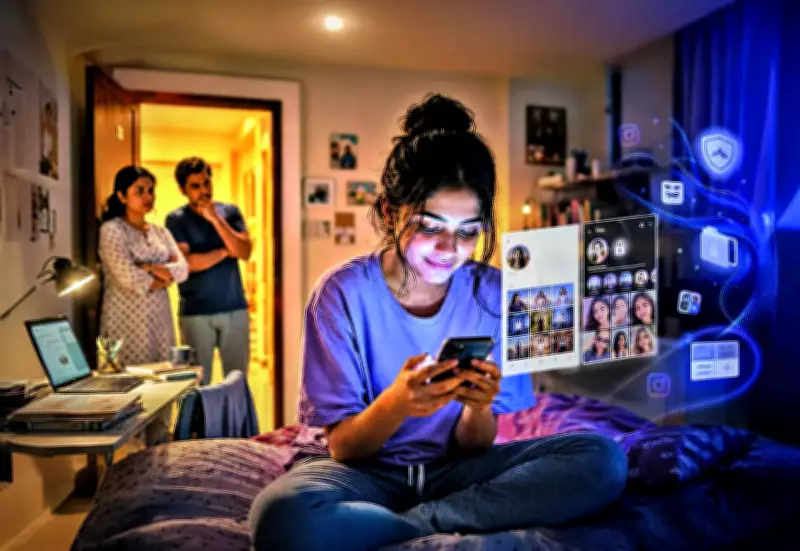
When 15-year-old Myra (name changed) is on her smartphone, her parents believe she is researching school projects. In reality, she frequently scrolls through her 'finsta' or secret Instagram account, sharing selfies and reels with a close circle of friends. Her mother follows her main account but remains unaware of the hidden one.
What Is a Finsta?
Finsta accounts are fake or hidden Instagram profiles used to share candid, unfiltered content with a select group. While celebrities and influencers use them to avoid public scrutiny, teenagers now use finstas to dodge parental supervision and nosy relatives. Myra explains, “We like to vent with friends without judgment or family comments. I have only 15–20 close friends on my finsta, and I mostly post 'rate me' picture polls.”
A Parent's Discovery
Delhi mother Anushree Jani (name changed) recently uncovered her daughter Riya's finsta and is struggling to respond. “During a trip, she became obsessed with selfies and kept asking for a spare phone. I sensed something was off, checked her phone later, and found Instagram and Snapchat accounts created without our knowledge,” Jani says. When confronted, Riya denied everything, leading to an argument. Since then, the accounts have vanished. Jani feels uneasy about the secrecy but wants to handle it without damaging their relationship.

Why Parents Are Losing Control
Experts point to a technology gap: teens are digital natives while many parents are still adapting. Ashutosh Bhatia, AI expert and founder of AleaIT Solutions, notes, “AI-driven tools and easily available information make it simple for users to bypass restrictions. The core issue is the technology gap between parents and children.” Teens know how to create multiple accounts, use VPNs, and hide apps, rendering traditional parental controls less effective.
What Should Parents Do?
Banning social media may backfire. Psychologist Ruby Ahuja recommends open conversations. “Ask your child why they feel the need for a finsta. Often, it's to avoid relatives following their main account. Suggest using the 'Close Friends' list as a compromise,” she says. Tools like Turbo VPN and Dual Space further complicate monitoring. Cybersecurity expert Shubham Singh warns, “A finsta is still a digital footprint that can be screenshotted or misused. Real protection comes from active parenting and setting clear rules.”
Technology vs. Trust
Experts advise against helicopter parenting but stress the importance of online safety. Bhatia emphasizes that no system can fully stop a determined user. Teens use app hiders or vault apps that look like calculators but conceal other apps, as well as dual/clone apps to run two Instagram accounts on one phone. Parents should watch for unfamiliar apps and signs of secrecy, such as sudden screen-hiding or discomfort when questioned.
Meta's Teen Accounts
Meta's Teen Accounts, available in India since February 2025, offer some safeguards. Under-16 accounts are private by default, strangers cannot message kids, and parents can see who their teen engages with and set time limits. A Meta spokesperson stated that parents can link multiple accounts and receive notifications when teens request setting changes. However, Meta cannot prevent teens from using VPNs or external apps to bypass controls.
Building Trust
Experts suggest device-level controls, monitoring usage patterns, and encouraging open dialogue. Ahuja advises, “Talk to your teen in a calm moment after dinner or a walk. Say something like, 'I understand that having family follow your main account feels like having us in your bedroom while you're with friends. If you need space for just friends, let's discuss how to keep it safe without hiding it from me.'” The goal is not to catch a finsta but to raise a teen who voluntarily shares their real feed. That begins when parents stop stalking and start asking, “How was your day — online and off?”