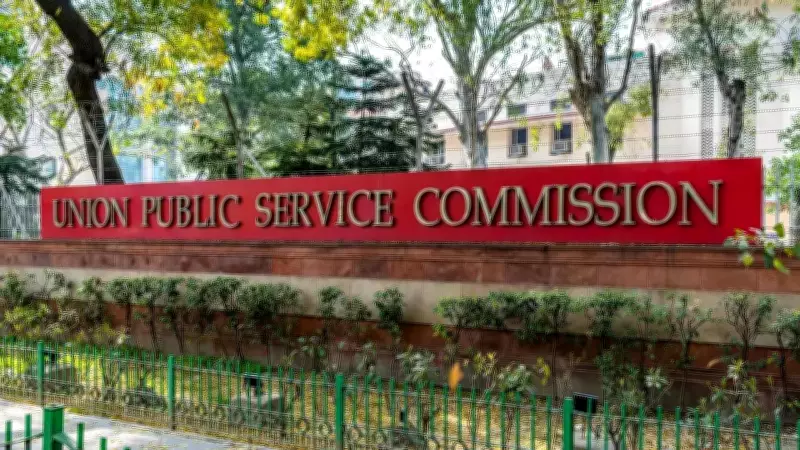
The Union Public Service Commission's Civil Services Preliminary Examination 2026, held on Sunday, May 24, has left a large number of aspirants surprised, exhausted, and uncertain about the expected cutoff. From an unusually lengthy paper to unconventional current affairs questions and analytical framing, this year's General Studies Paper-I is widely regarded by experts as one of the toughest and most unpredictable UPSC prelims papers in recent years.
Key Highlights of the Examination
While UPSC has often surprised candidates, educators and mentors believe the 2026 paper pushed unpredictability to another level. Several coaching experts who spoke to TOI Education noted that the exam demanded not only conceptual clarity and factual knowledge but also the ability to apply judgment under pressure amid a high reading load. Early assessments indicate that the cutoff may witness a noticeable decline compared to previous years, although some experts argue that the paper reflects the exact aptitude expected from future civil servants.
According to provisional data released by the Commission, nearly 5.49 lakh candidates appeared for the exam out of over 8.19 lakh registered applicants, resulting in an attendance rate of around 67%. The examination was conducted across 2,072 venues in 83 cities under enhanced security measures, including real-time face authentication and deployment of mobile signal jammers.

Difficulty Level Well Above Average
Commenting on the Economics section, Sriram Sir, Director and Founder of SRIRAM's IAS, said the questions required deeper conceptual understanding rather than surface-level preparation. “There are about 15 questions from Economics. Some are related to committees like the Malaygam Committee, Malhotra Committee, and Urjit Patel Committee, all included in one question. Some are related to institutions such as NBFCs and MSMEs, while others are conceptual, like the meaning of crowding out and blockchain technology. Altogether, these 15 questions require in-depth knowledge and strong conceptual clarity,” he explained. He added that the difficulty level is well above average, requiring in-depth knowledge conceptually, institutionally, and regarding various schemes.
One of the Most Unconventional Papers to Date
Manjunath Thamminidi, Author and Founder of PMF IAS, described the exam as highly unconventional and unpredictable. “The just-concluded UPSC CSE Prelims 2026 GS paper was arguably one of the most unconventional papers to date. The paper was extremely lengthy, with many questions drawn from seemingly random current affairs themes, making the outcome highly unpredictable. As a result, the cutoff is likely to fall significantly this year,” he said. He noted a major shift in option-framing style, with UPSC returning to an older style that made elimination easier in some questions. He suggested that aspirants who adopted a cautious approach may have a better chance of clearing Prelims. However, he criticized the paper's lack of clarity about what UPSC expects, as it ignored many essential areas and gave disproportionate weight to unconventional topics.
Longer Paper with Analytical Focus
Mr. B. Singh, CMD of NEXT IAS, echoed similar observations. He noted that the paper reflected a shift towards applied and inference-based questioning, with new and evolving question patterns across subjects. The question paper was noticeably lengthier, extending to 56 pages compared to 48 pages in 2025, increasing the reading burden. He stated that the exam placed greater emphasis on analytical ability over rote memorization, with lesser reliance on direct factual recall. Based on preliminary analysis, he estimated the cutoff may be around 70-75.

Prelims Itself Looked Like a Personality Test
Offering a contrasting perspective, another senior educator argued that the exam pattern should be viewed as a reflection of qualities UPSC expects from future administrators. “Regarding this year's prelims paper, I see it as a much-needed change and a refreshingly new approach required for civil servants in India, especially during difficult times. The world is interconnected, and there is turbulence everywhere,” she said. She emphasized that the exam tested whether aspirants possess the temperament for policymaking in complex, stressful situations. She noted that students relying on shortcuts and rote learning are unlikely to be comfortable, while those with intellectual curiosity and conceptual understanding will perform better. She described the paper as a test of temperament, quoting Plato: “A ruler must be a knowledgeable person, and knowledge should be understood in its widest sense.”
History and Science Sections Gain Prominence
Subject-wise analysis from NEXT IAS indicates that History and Art & Culture carried around 20 questions this year, significantly higher than recent trends. Science and Technology also had a substantial presence with nearly 18 questions, while Polity appeared less dominant.
- Economy: 19 questions (2026) vs 17 (2025) vs 14 (2024)
- Environment: 11 vs 12 vs 15
- Geography: 13 vs 14 vs 18
- History, Art & Culture: 20 vs 16 vs 12
- Polity, Governance & Public Policy: 8 vs 13 vs 15
- Science & Technology: 18 vs 14 vs 13
- Miscellaneous (IR, Society etc.): 11 vs 14 vs 13
Experts believe this redistribution may have caught many aspirants off guard, particularly those relying on recent trends and topic prioritization strategies.
Conclusion
Overall, the consensus among educators is clear: UPSC Prelims 2026 was not merely difficult because of tough questions, but because of its unpredictability, length, and changing pattern. The examination has reignited a debate about what UPSC truly intends to assess: factual memory, analytical ability, composure under pressure, or aptitude for public service leadership. With many aspirants reporting lower attempt accuracy and higher confusion levels, the coming weeks are likely to see intense speculation around the expected cutoff and answer keys.