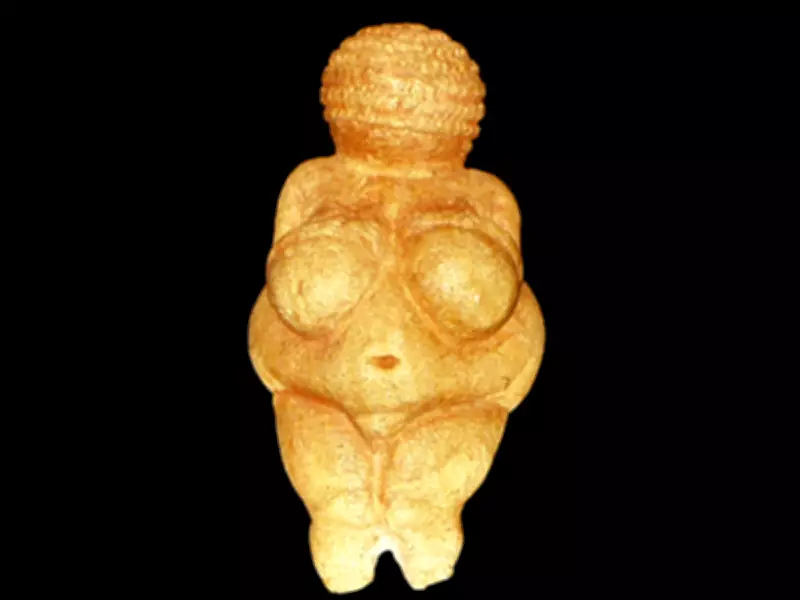
On August 7, 1908, workers digging at Willendorf II in Lower Austria unearthed a small female figurine carved from limestone. This artifact, later known as the Venus of Willendorf, would become one of the most famous examples of Ice Age art. The excavation, led by archaeologist Josef Szombathy, took place along the left bank of the Danube River. This location is significant, as the Danube served as a major route for early modern human migration across Europe. Although popular myths often depict the discovery as a stroke of luck, it actually originated from a planned scientific excavation. The figurine was found in the Gravettian layer and was immediately recognized as a unique find. Despite being only 110 millimeters tall, its historical importance far exceeds its size.
Small Size, Clear Image
The sculpture's physical features offer insight into prehistoric craftsmanship. According to research published in Scientific Reports, the figurine is carved from oolitic limestone and coated with red ochre pigment, suggesting a deliberate finish rather than a raw carving. The figurine lacks detailed facial features, emphasizing instead the breasts, hips, abdomen, and thighs. At about 11 cm tall, it fits in the palm and is highly portable, yet its exaggerated features invite close study. Interestingly, oolitic limestone does not naturally occur near Willendorf, indicating that either the raw material or the finished product originated elsewhere.
Why This Figurine Matters
The Venus of Willendorf is a key example of portable Upper Palaeolithic art. A comprehensive review in Evolution Medicine & Public Health describes such Venus figurines as among the earliest forms of portable art found in Europe, calling the Willendorf statue one of the best-known examples. The figurine helps archaeologists understand symbolic behavior in the Upper Palaeolithic. The study argues that these objects were part of a broader symbol system that spread across Eurasia during the Gravettian period. By linking a single excavation trench in Austria to a wider prehistoric network, the sculpture helps researchers understand how people shared ideas and cultural practices over vast distances.

Debates Over Meaning
For over a century, researchers have debated the figurine's meaning without reaching a consensus. Early interpretations viewed it as a fertility symbol or an idealized representation of feminine beauty. More recent research suggests that the body shape may reflect adaptation to harsh climates and possible nutritional or reproductive advantages. Part of the figurine's significance lies in its ambiguity. It has prompted generations of archaeologists to debate issues of body, ritual, and identity without a single agreed answer. The figurine remains a window into how Ice Age humans interpreted their world.
New Answers from New Scans
In 2022, high-resolution micro-CT analysis provided strong evidence regarding the stone's source. By examining the limestone's internal structure, researchers pinpointed its origin to a region in northern Italy. The rock matched oolitic limestone found there, suggesting that the sculpture or materials traveled hundreds of miles across the Alps. This finding supports the idea that materials or objects moved over long distances, implying contact or exchange among Gravettian groups. It suggests that some Ice Age communities were mobile and connected. More than a century after its discovery, the small limestone figurine continues to challenge our understanding of early human culture.