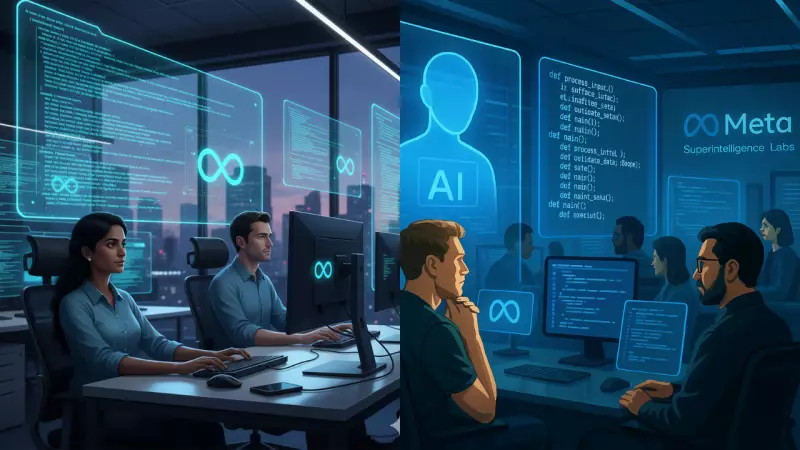
In February 2025, a new term sent ripples through the global technology community, capturing the seismic shift artificial intelligence is bringing to the ancient art of programming. Coined by Andrej Karpathy, the former director of AI at Tesla and a founding member of OpenAI, 'Vibe Coding' quickly became a Silicon Valley sensation. By the year's end, its cultural impact was cemented when it was crowned the Collins Dictionary Word of the Year for 2025, standing out among a shortlist of ten terms defining the year's spirit.
What Exactly is Vibe Coding?
Karpathy introduced the concept to describe a paradigm where programmers, assisted by powerful AI, can increasingly focus on the high-level intent and 'vibe' of a program rather than getting bogged down in every line of syntactic detail. In his own detailed explanation on Twitter, Karpathy expressed a feeling of being left behind, describing a profession in dramatic 'refactoring.'
He painted a picture of a new, complex layer of abstraction that developers must now master, involving agents, prompts, contexts, and workflows, all built atop 'fundamentally stochastic, fallible' AI entities. 'Clearly some powerful alien tool was handed around except it comes with no manual,' he remarked, urging peers to roll up their sleeves to keep pace with this 'magnitude 9 earthquake' rocking their field.

The Great Debate: Boon for Builders or Bane for Jobs?
The rise of Vibe Coding and AI-assisted development has ignited a fierce debate about the future of tech jobs and software engineering fundamentals.
On one side, proponents like Garry Tan, CEO of Y Combinator, see an unprecedented democratization of creation. He told CNBC that AI allows founders to build substantial businesses with tiny teams, as repetitive coding is automated. He highlighted a staggering statistic: 25% of the current Y Combinator startup batch used AI large language models to write 95% of their code. This, Tan argues, unlocks potential for engineers outside tech giants to build million-dollar ventures.
However, a cautionary note comes from voices like Michael Truell, CEO of Cursor. He warns that over-reliance on 'vibe coding' can lead to 'shaky foundations,' comparing it to building a house without understanding the wiring or floorboards. In a report by Fortune, Truell cautioned that while perfect for quick mock-ups, this method risks collapse when building complex, advanced software systems. 'Things start to kind of crumble,' he said, illustrating the potential pitfalls of not scrutinizing AI-generated code.
Cultural Recognition and the Road Ahead
Collins Dictionary's definition formalizes the trend: Vibe Coding is 'the use of artificial intelligence prompted by natural language to assist with the writing of computer code.' Alex Beecroft, Managing Director of Collins, stated the selection perfectly captures how language evolves with technology.
The core question remains: Is this the nail in the coffin for traditional programming skills, or simply the next step in its evolution? The industry is split. Vibe Coding symbolizes a move from painstaking manual coding to directing intelligence with natural language. It promises to make developers more powerful but also demands they build new mental models to manage the strengths and weaknesses of their AI collaborators. As 2025 unfolds, the journey to master this 'alien tool' without a manual continues to define the new era of software creation.