

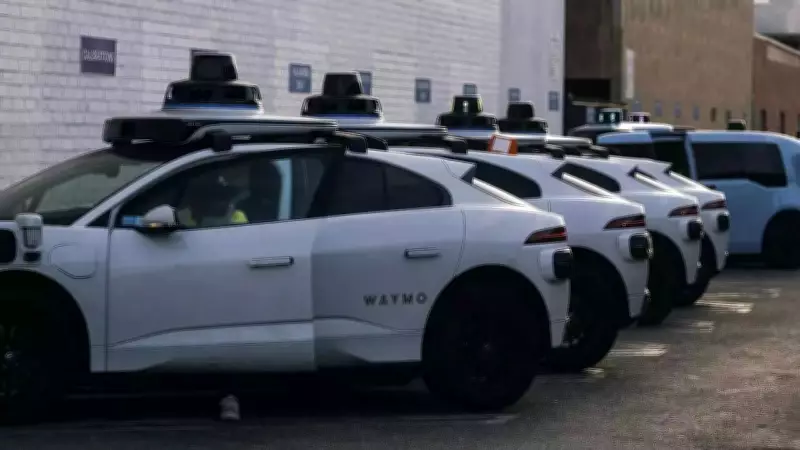
Waymo Harnesses DeepMind's Genie 3 AI to Revolutionize Autonomous Vehicle Training
Waymo, the self-driving subsidiary of Alphabet, is pioneering a groundbreaking approach to autonomous vehicle development by integrating Google DeepMind's Genie 3 artificial intelligence model. This innovative strategy enables the creation of highly realistic digital environments where Waymo's vehicles can train on rare and challenging driving scenarios, significantly advancing the reliability and safety of its technology.
Introducing the Waymo World Model
In a recent blog post, Waymo unveiled its new Waymo World Model, built upon the advanced capabilities of Genie 3. This AI model excels at constructing virtual environments from simple text prompts, generating synthetic driving footage and depth perception data that mimic the output of vehicle-mounted cameras and lidar sensors. A Waymo spokesperson explained to Bloomberg that traditional autonomous vehicle simulation models are often limited by the on-road data they collect. In contrast, the new world model allows the company to explore situations that have never been directly observed by its fleet, providing a crucial edge in preparing for unpredictable real-world conditions.
Enhancing Simulation with Real-World Data
Waymo's system goes beyond pure simulation by converting real-life dashcam datasets into detailed scenes and depth maps for vehicle training. This hybrid approach combines authentic driving data with AI-generated environments, aiming to make autonomous vehicle systems more robust in uncommon scenarios. The company believes this will facilitate the expansion of its self-driving services across more markets. As the spokesperson added, "This will enhance Waymo's ability to safely scale our service across more places and new driving environments."

Context and Industry Impact
The announcement comes on the heels of Google DeepMind's Genie 3 model gaining widespread attention for its world-building capabilities, which even triggered a sell-off in companies providing game development and graphics tools. By incorporating Genie 3, Waymo could accelerate its plans to expand to approximately a dozen cities this year. Simulation serves as a key tool for preparing autonomous systems for specific situations and validating their safety, though the company emphasizes that real-world driving experience remains irreplaceable. In December 2025, Alphabet reported that Waymo had surpassed 20 million autonomous trips, underscoring its extensive on-road testing.
Addressing Safety Concerns and Regulatory Scrutiny
Despite these advancements, Waymo is currently facing safety probes from U.S. authorities, including the National Highway Traffic Safety Administration and the National Transportation Safety Board, following a series of software mishaps. Investigations focus on incidents in Austin where Waymo vehicles failed to stop for parked school buses, leading to a voluntary software recall. When asked about simulations for scenarios like stopped school bus encounters or mass power outages—such as one that disrupted San Francisco operations last year—the spokesperson declined to comment but noted that the Waymo World Model "can simulate virtually any scene."
Broader Industry Trends and Competitors
Waymo is not alone in seeking enhanced data sources for autonomous vehicle training. Other robotaxi operators and AI companies are actively pursuing similar strategies. Nvidia, a supplier of chips and AI models for self-driving technology, has partnered with Uber to collect millions of hours of robotaxi-specific driving data to fuel driverless model training and validation. Meanwhile, SoftBank Group-backed Wayve, which plans to trial robotaxis on the Uber platform in the UK this year, has announced its own world model for generating synthetic driving data. Elon Musk's Tesla has also developed a comparable simulator, highlighting the industry-wide recognition that larger, more diverse training datasets are essential for improving safety and avoiding incidents.
As autonomous vehicle technology evolves, Waymo's integration of Genie 3 AI represents a significant leap forward in simulation-based training, potentially setting new standards for the industry and paving the way for safer, more reliable self-driving services globally.

