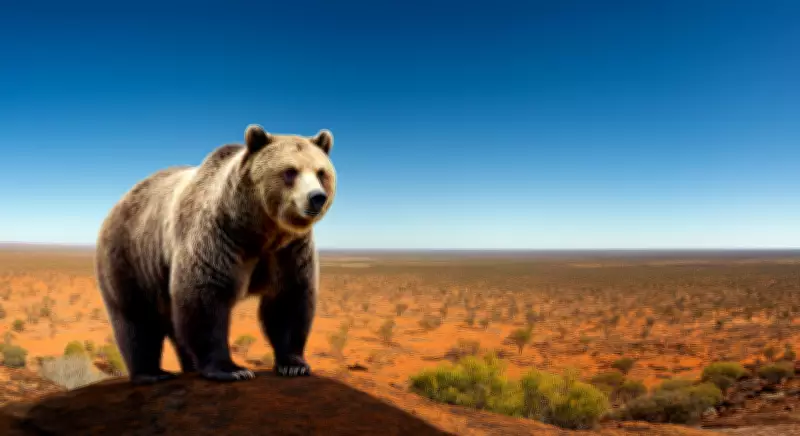
Bears are among the most widespread land mammals on Earth, thriving from the icy Arctic to the tropical forests of Southeast Asia. Yet, two entire continents—Africa and Australia—have no native bear species. This puzzling gap often appears as a tricky general knowledge question: if bears can survive in deserts, mountains, and rainforests, why have they never reached Africa or Australia? The answer lies in a blend of evolutionary history, ancient continental drift, and, for Africa, a relatively recent extinction. Here is a closer look at why these two continents remain bear-free, despite landscapes that could easily support them.
Where Do Bears Come From? The Evolutionary Origins of the Bear Family
The bear family, Ursidae, is relatively young in evolutionary terms. According to a study published in BMC Evolutionary Biology, the giant panda was the earliest bear lineage to diverge, followed by a rapid diversification of remaining species over just a few million years. This makes bears one of the fastest-evolving families within the order Carnivora. Fossil and genetic evidence both indicate that bears originated in the Northern Hemisphere, likely across Eurasia and North America, before spreading outward. From there, different lineages adapted to wildly different environments: the polar bear to Arctic ice, the sloth bear to Indian forests, and the spectacled bear—the only bear species found south of the equator—to the high-altitude Andes of South America.
A more recent analysis of bear distribution against climate conditions found that bears occupy almost every major climate zone except the hottest, driest regions. This raises an obvious question: with such broad tolerance for different climates, why have bears not established themselves in Africa or Australia, two continents with ample forests, mountains, and food sources?

Why Africa Once Had Bears but No Longer Does
Surprisingly, Africa was not always bear-free. Until the 19th century, a subspecies of brown bear known as the Atlas bear roamed the Atlas Mountains across Morocco, Algeria, and Tunisia. According to the IUCN Red List assessment for the brown bear, populations once stretched across much of Europe, Asia, and North Africa, with the Atlas bear representing the species' only confirmed presence on the African continent.
The Atlas bear was smaller than its European cousins, with a dark brown to black coat and a reddish underside. It primarily ate roots, nuts, and plant matter, occasionally supplementing its diet with meat. Unfortunately, these bears were heavily hunted for centuries—for sport and, in earlier periods, for use in arena spectacles. Combined with habitat loss and the arrival of modern firearms, the population could not survive. The last individuals are generally believed to have died out by around 1870.
Thus, while Africa technically did have a native bear species for thousands of years, human activity—rather than climate or geography—ultimately wiped it out.
Why Australia Never Had Bears in the First Place
Australia's story is completely different. Unlike Africa, Australia never had native bears to begin with, and the reason goes back hundreds of millions of years to the breakup of the ancient supercontinent Gondwana.
According to research published in Alcheringa: An Australasian Journal of Palaeontology and shared by the Australian Museum, the ancestors of modern marsupial and placental mammals—known as Theria—evolved in Gondwana around 126 million years ago, before migrating north into Asia and diversifying further. Bears, as a family, evolved much later, entirely within these northern lineages, long after Australia had already drifted away and become geographically isolated.
By the time true bears appeared, Australia was separated from other continents by ocean, with no land bridges connecting it to Asia for placental carnivores like bears to cross. As a result, Australia's mammal population remained dominated by marsupials—such as kangaroos, koalas, and wombats—which had evolved in isolation, while bears never got the chance to arrive at all.

What This Tells Us About Where Bears Live Today
Put together, the absence of bears in Africa and Australia stems from two very different stories. In Africa, bears existed for a long time but were driven to extinction by humans, leaving the continent's large carnivore niches to lions, leopards, and hyenas. In Australia, bears simply never had the opportunity to arrive, thanks to the continent's early and permanent isolation following the breakup of Gondwana.
Today, the eight living bear species are found across North and South America, Europe, and Asia, occupying environments from Arctic ice sheets to tropical rainforests—though several of these species are now listed as vulnerable or endangered. This widespread distribution shows how adaptable bears can be once established in a region. For students tackling general knowledge questions, the key takeaway is that why don't bears live here? is not always about whether a place is suitable for bears. Sometimes it is about evolutionary history, ancient geography, and, in at least one case, a species that disappeared not because of climate, but because of us.