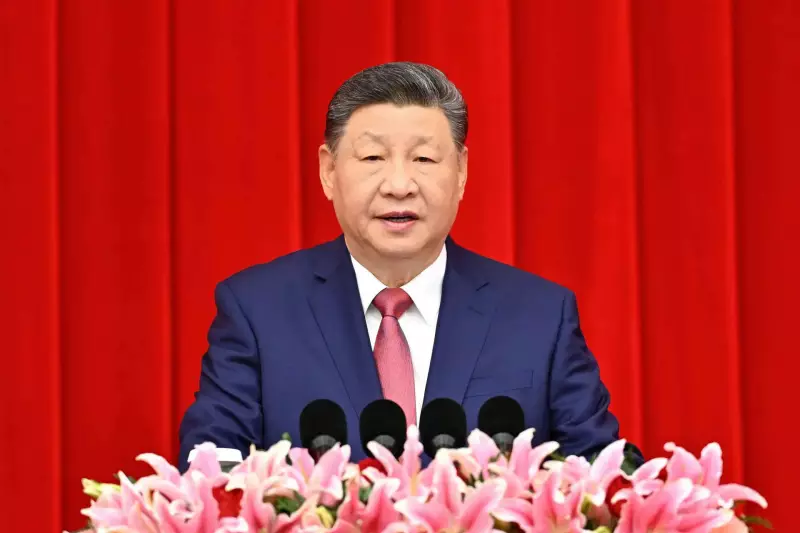
In a defiant New Year's address, Chinese President Xi Jinping sent a clear message to Washington, asserting that American efforts to restrict China's access to advanced semiconductor technology have failed to curb its artificial intelligence ambitions. Instead, Xi claimed, these barriers have accelerated the nation's drive for technological self-sufficiency.
From Trade Barriers to Tech Independence
Speaking from Beijing, President Xi celebrated significant domestic achievements in AI and chipmaking. "Many large AI models have been competing in a race to the top, and breakthroughs have been achieved in the research and development of our own chips," he stated in his annual speech. He positioned these innovations as a direct response to external pressure, highlighting how China has turned perceived obstacles into opportunities.
Xi emphasized that this push has solidified China's position as "one of the economies with the fastest-growing innovation capabilities." His remarks come after years of escalating export controls initiated under the Trump administration and continued under President Biden, designed to limit China's access to high-performance AI chips from companies like Nvidia.

The Unintended Consequence: A Booming Domestic Sector
Far from crippling China's tech ecosystem, evidence suggests the US restrictions have acted as a catalyst. The global tech community took note in January when Chinese AI startup DeepSeek unveiled its R1 model, a formidable competitor to offerings from OpenAI. The announcement was significant enough to trigger a sharp reaction on Wall Street, contributing to a drop of over 17% in Nvidia's stock price.
Simultaneously, homegrown Chinese chipmakers have thrived under the export ban. Founders like Chen Weiliang of MetaX Integrated Circuits have seen their fortunes soar, entering the billionaire ranks as their companies fill the void left by restricted foreign imports.
Global Investors Pivot Towards Chinese Tech
This strategic shift has captured the attention of international finance. UBS Global Wealth Management recently rated Chinese tech as "most attractive" for investors, pointing to strong governmental policy support and the rapid pace of AI monetization. Investment firms are adjusting their portfolios accordingly.
For instance, UK-based Ruffer has increased its stakes in Chinese giants like Alibaba while deliberately reducing exposure to US tech stocks. This trend indicates growing confidence in China's ability to build a self-reliant tech ecosystem.
In a late attempt to recalibrate, former President Donald Trump moved in December to allow Nvidia to sell its H200 chips to pre-approved Chinese customers. However, analysts believe the policy reversal may be too little, too late. The genie of technological self-sufficiency is out of the bottle in Beijing.
The combination of a state-mandated push for independence and swelling investor confidence means President Xi's vision for a technologically sovereign China is resonating far beyond the country's borders, setting the stage for a new phase of global tech competition.