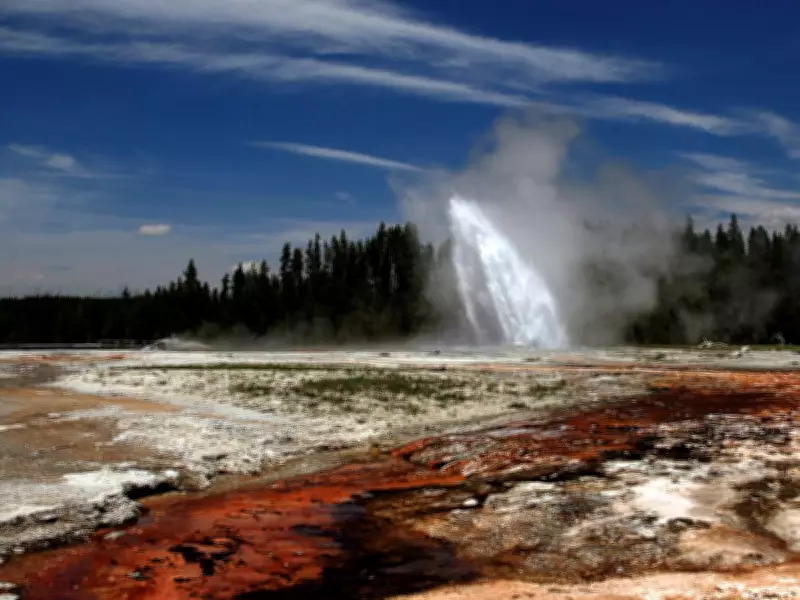
Yellowstone National Park is famous for its spectacular geysers, hot springs, and steaming vapor clouds. However, these surface features represent only a small fraction of a vast and largely mysterious hydrothermal system that lies beneath. Rainwater and melted snow seep deep into the ground, where they are heated near the magmatic reservoir before rising back through cracks and pores in the rock.
The Hidden System Beneath Yellowstone
According to the US Geological Survey, the active hydrothermal system at Yellowstone operates within the top few hundred meters of the Earth's crust. In contrast, the magma body that drives this system lies several kilometers deeper. Modern research, including a 2022 study published in Nature, has used airborne electromagnetic and magnetic surveys to map parts of the hidden hydrothermal network. These surveys have identified pathways connecting deep thermal fluids to surface geysers and hot springs. Despite these advances, many processes remain poorly understood. The subsurface hydrology of Yellowstone is challenging to study because the upper and middle crust layers have rapidly changing permeability, pressure, and fracture fields. Scientists therefore rely on a combination of seismic observations, gas measurements, thermal imaging, acoustic monitoring, and ground deformation studies to analyze underground processes.
Why Yellowstone's Geysers Behave Unpredictably
One reason Yellowstone fascinates scientists is that its geysers do not always erupt on fixed schedules. Variations in ground fractures, water availability, and pressure levels can affect the flow of fluids and heat. A dormant steam vent may suddenly become active, while a regularly erupting geyser can cease activity for extended periods. These surface landmarks are not stable elements but indicators of a dynamic subsurface system. Recent monitoring has captured these changes in real time. For instance, an event was detected through acoustic, seismic, and temperature measurements, and new activity was reported near Echinus Geyser after several years of dormancy.

New Technology for Deeper Insights
For many years, scientists could only estimate the subterranean flow network based on surface behavior. Recent advancements in geophysical imaging and monitoring technologies have overturned many previous assumptions. Tools that measure earthquakes, hydrothermal systems, and volcanic activity in the Yellowstone region now allow for improved hazard analysis and a better understanding of subsurface processes.
Why the Shallow Hydrothermal System Matters
Beyond scientific interest, Yellowstone's shallow hydrothermal system has important implications for hazard assessment. According to reports, the most likely explosive processes in the area are hydrothermal explosions or lava flows, not caldera-forming eruptions. Hydrothermal explosions occur due to rapid pressure increases in hot water systems. While often small, some can produce craters up to several hundred meters in diameter. A 2025 study documented the first instrumental detection of a hydrothermal explosion in Yellowstone using seismic and infrasound sensors, revealing many new details about the process. Other studies focus on the role of pressure and gas bubbles in these events.
The Deeper Magma System Drives the Heat
While much attention is on the hydrothermal plumbing, the deeper magmatic body is responsible for generating the heat. Scientists have detected volatile-rich layers near the top of Yellowstone's magmatic chamber. Seismic reflection patterns suggest layers of magma and supercritical fluids within pores along the reservoir's margin. This deeper layer explains the immense energy needed to power Yellowstone's surface activity. Together, these layers create a system where water, heat, rock, and pressure constantly interact.
Scientists view Yellowstone as a key natural laboratory for investigating heat and fluid flows beneath the Earth. After decades of study, the entire plumbing system is not yet fully understood. With every geyser explosion, temperature change, or seismic event, new clues emerge about this ever-changing geological landscape.