

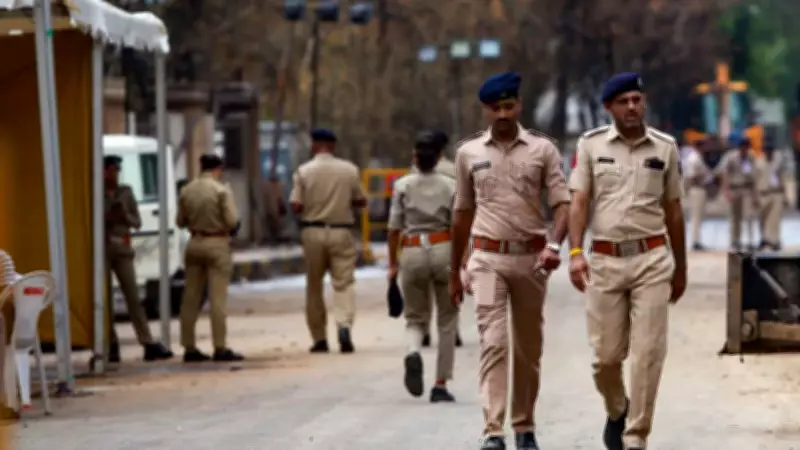
Delhi Police Cracks Down on Interstate Cyber Fraud Network, Six Arrested in Multi-City Raids
In a significant breakthrough against organized cybercrime, the Delhi Police has successfully dismantled an interstate fraud syndicate that allegedly duped a Delhi-based real estate developer of a staggering Rs 3.76 crore through a sophisticated fake stock market investment scheme. The operation, which involved coordinated raids across multiple cities, has led to the arrest of six individuals between January 9 and 14, 2026.
How the Elaborate Scam Unfolded: From WhatsApp Groups to Fake Trading Platforms
The fraudulent operation began in September 2025 when the victim, identified as Krishan Kumar, was lured into a WhatsApp group that purported to share lucrative trading tips and investment opportunities. According to police officials, one of the fraudsters then contacted Krishan directly, creating an account for him on a counterfeit demat portal that mimicked legitimate stock trading platforms.
"The accused relied on a combination of psychological manipulation and technological deception to ensnare their victims," explained an investigating officer. "They used encrypted messaging apps for communication, fake investment platforms with professional-looking interfaces, and a complex network of mule bank accounts to obscure the money trail."

The Illusion of Profits and the Reality of Loss
For approximately one month, Krishan was systematically fed false information about his supposed investment success. The fraudsters regularly sent him fabricated screenshots showing impressive profits accumulating in his trading account, using this illusion to persuade him to invest increasingly larger sums.
"The psychological manipulation was sophisticated," noted Deputy Commissioner of Police (IFSO) Vineet Kumar. "Victims were shown what appeared to be legitimate profits on their screens, creating a false sense of security and encouraging further investment. When Krishan eventually attempted to withdraw his funds, he was discouraged with threats of substantial withdrawal fees."
The realization of the scam only dawned when the fraudsters stopped responding to Krishan's calls entirely, prompting him to file a formal complaint with Delhi Police on September 15, 2025.
Multi-City Investigation Unravels the Fraud Network
The investigation, assigned to Delhi Police's specialized Intelligence Fusion and Strategic Operations (IFSO) unit, began with forensic examination of the bank accounts where the defrauded funds had been deposited. One transaction of Rs 10 lakh led investigators to Sablu Kumar, a resident of Navi Mumbai, whose account served as a first-layer mule in the money laundering chain.
"Initial searches in Mumbai proved unsuccessful, but our team persisted and eventually traced Sablu to Kota, Rajasthan, where he was apprehended on January 9," DCP Kumar detailed. "His interrogation provided crucial leads that enabled us to identify and arrest additional members of the syndicate."
Subsequent operations resulted in the arrest of Wasim Ahmad from Moradabad, Uttar Pradesh, who was tracked to Southeast Delhi's Jangpura area and arrested on January 11. During this raid, police also apprehended three of his associates: Rajesh Khan, Sahid Ali, and Mannu Issar.
Forensic Evidence Reveals Extensive Criminal Operations
Forensic analysis of the suspects' mobile devices uncovered damning evidence of their criminal activities. Investigators recovered detailed transaction logs, records of multiple mule bank accounts, and information about SIM cards used exclusively for fraudulent operations.
The sixth accused, Manish Kumar, was arrested on January 14 and played a particularly significant role in the syndicate's operations. "Manish Kumar was instrumental in managing fund flows and supplying bank accounts that were used not only for this investment fraud but also for other cybercrimes including 'digital arrest' scams," revealed DCP Kumar. "Analysis of his WhatsApp communications established links to bank accounts connected with at least 52 separate cybercrime complaints across multiple Indian states."

International Connections and Modus Operandi
Police investigations indicate that the arrested individuals primarily functioned as operatives within a larger criminal network, taking instructions from foreign-based handlers. Their specific responsibilities included procuring, operating, and managing mule bank accounts on an industrial scale.
"Once victims transferred funds into the designated accounts, the money was rapidly moved through multiple layers of accounts in a process designed to erase any financial trail," explained an IFSO officer. "This sophisticated layering technique, combined with the use of encrypted communication channels, made tracking the funds exceptionally challenging."
The successful busting of this interstate cyber fraud syndicate highlights the evolving nature of financial crimes in India and underscores the importance of specialized police units equipped to handle complex digital investigations. As cybercriminals continue to develop more sophisticated methods, law enforcement agencies are increasingly focusing on intelligence-driven operations and inter-state coordination to protect citizens from such elaborate financial frauds.
