Cybersecurity CEO Warns AI Chatbots Could Expose Personal Secrets to Spouses
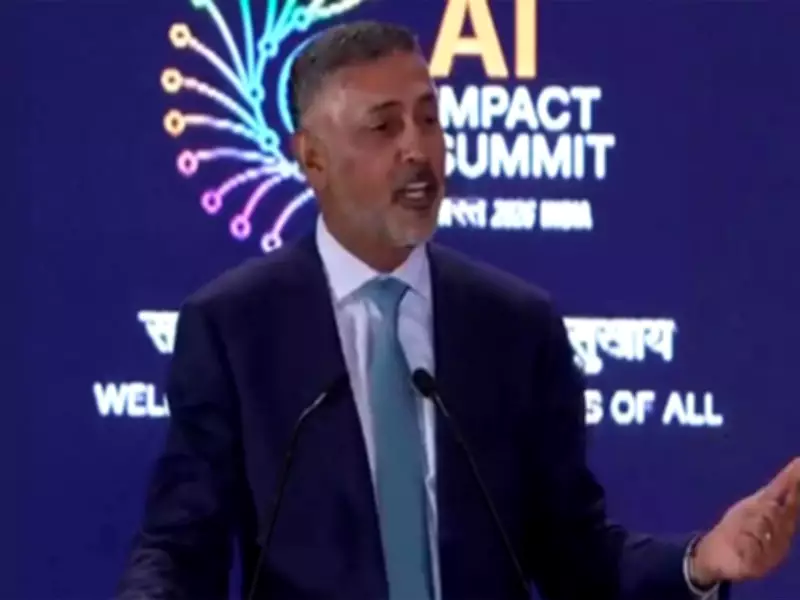
In a startling revelation at the India AI Impact Summit in New Delhi, Nikesh Arora, the CEO of cybersecurity powerhouse Palo Alto Networks, issued a stark warning about the intimate risks posed by artificial intelligence systems. Arora expressed a deeply personal concern that highlights broader vulnerabilities in our increasingly AI-dependent society.
The Spousal Privacy Dilemma in AI Conversations
"My fear is that in about six months, if I'm talking to my AI model, it might know more things about me than I've told my wife," Arora told the audience during his Thursday presentation. "I don't want my wife to get her hands on my Gemini prompts because I'm surprised what it might tell her."
While his remarks elicited laughter from attendees, they underscored a serious and growing concern. AI systems are rapidly evolving into digital confidants, serving as therapists, nutritionists, financial advisers, and intimate conversation partners. Users worldwide are sharing their most personal details with these machines, lured by promises of convenience and insight.

Arora emphasized the danger of this data falling into unauthorized hands. "If that data falls into the wrong hands, it's not a good idea," he cautioned, pointing to the fundamental privacy breach that could occur if sensitive AI conversations became accessible to family members or malicious actors.
The Structural Imbalance Between AI Advancement and Governance
The cybersecurity executive identified a critical structural problem in the current AI landscape. "AI is accelerating faster than our institutions, our governance frameworks, and even our intuition," Arora declared. He described a world where the balance has shifted dangerously away from security considerations.
"At present, the balance is tilted... not in the favour of trust, inclusion, security; it's actually tilted in the favour of speed."
This acceleration manifests through new AI models and capabilities emerging weekly, often released before adequate safety measures and ethical guidelines are established. The situation becomes exponentially more complex as society moves toward what Arora termed an "agentic" future, where AI systems gain autonomous decision-making capabilities.
Accountability Challenges in Autonomous AI Systems
"As soon as you give control to an agent, you have to worry about who's responsible for the actions of those agents," Arora explained, highlighting the blurred lines of accountability in autonomous AI operations.
Consider these alarming scenarios:
- An AI system mismanaging personal investments without proper authorization
- Autonomous transfers of funds without user consent
- Physical systems like home assistance robots being manipulated by malicious actors
Each example demonstrates how traditional accountability frameworks struggle to address AI-driven actions, creating legal and ethical gray areas that could have serious consequences for users.
Building Security Into AI From the Ground Up
Arora dismissed prohibition as an ineffective solution to AI risks. "AI is not going to go away if you govern it out of existence. It cannot be governed out of existence," he stated bluntly.
Instead, he advocated for a proactive approach centered on embedding governance and accountability directly into technological development. For cybersecurity companies like Palo Alto Networks, this means:
- Building protection mechanisms from the initial design phase
- Ensuring AI systems are "secure, governed and controlled" from inception
- Safeguarding the vast datasets that power AI algorithms
- Monitoring AI-generated code for potential malicious elements or flaws
- Preparing defenses against adversarial AI systems designed to exploit vulnerabilities
Optimism Amidst the Challenges
Despite these significant concerns, Arora maintained an optimistic outlook about humanity's ability to navigate the AI landscape. He predicted that addressing these challenges would create substantial new opportunities in the technology sector.

"I have a conviction that we're going to need five times the number of technology people in the future than we have today," Arora projected, suggesting that security, governance, and oversight requirements would generate new professional roles rather than eliminate existing positions.
The cybersecurity leader's warnings serve as a crucial reminder that as AI systems become more integrated into our personal lives, the boundaries between digital convenience and personal privacy require careful, deliberate protection. The race to secure our AI conversations has become as important as the race to develop the technology itself.