A young software professional in Bengaluru fell victim to a highly sophisticated cybercrime, losing a significant sum of money after being deceived by an AI-generated deepfake on a popular dating platform. The incident highlights the alarming new tactics employed by online fraudsters.
The Trap Set on a Dating App
The victim, a 22-year-old cloud engineer from Ejipura identified as Nishanth (name changed), was looking for genuine connections when he signed up on the dating app Happn. On January 5, he matched with a profile named "Ishani". After initial chats on the app, where basic personal details were shared, the conversation quickly shifted to WhatsApp.
Later the same day, Nishanth received a video call from the number linked to "Ishani." During the intimate call, the woman coaxed him into removing his clothes. Unbeknownst to him, the entire interaction was being secretly recorded by the scammers. The person on the call, as police later suspected, was likely a generative AI deepfake designed to appear as a real woman acting intimately.

The Extortion and Financial Loss
The nightmare began immediately after the call ended. The victim started receiving threatening messages and calls. The fraudsters demanded money, threatening to send the compromising video to all his contacts and make it go viral if he did not comply. Fearing public humiliation and embarrassment, the panicked techie initially transferred Rs 60,000.
However, the demands did not stop. Under continued pressure, he approached a friend and, by 4:30 pm on January 6, transferred another Rs 93,000 in multiple transactions. The money was sent to a provided bank account and two UPI IDs via a digital payment app. Even after receiving a total of Rs 1.5 lakh, the criminals kept pressuring him for more payments.
Police Action and Safety Advisory
Finally, in distress, Nishanth confided in close friends who advised him to go to the police. Based on his complaint, the central cybercrime police station registered a case under relevant sections of the Information Technology Act and Section 308 (extortion) of the Bharatiya Nyaya Sanhita. An investigation is currently underway to trace the accused.
A senior police officer noted that such sextortion cases originating from dating apps are increasing. "Many people believe the person on the video call is genuine and live, which leads them into trouble," the officer stated, emphasizing the use of AI-generated video in the scam.
How to Protect Yourself on Dating Apps
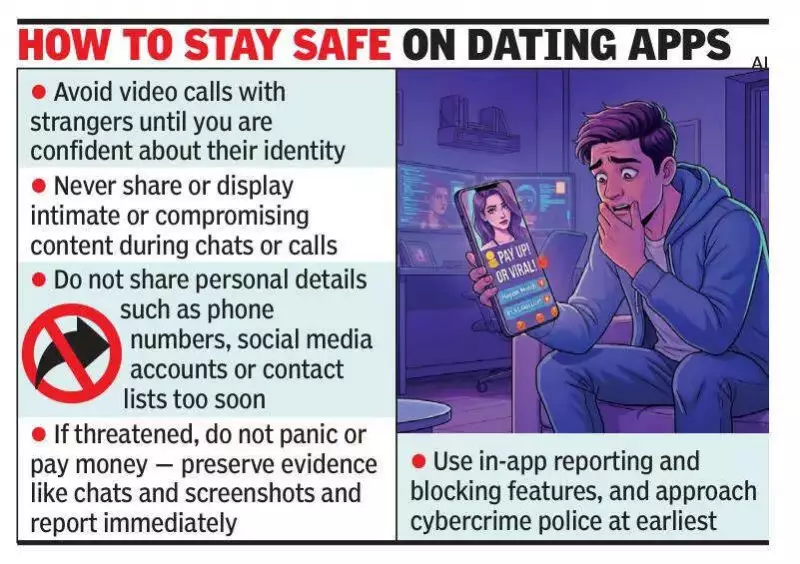
Cybercrime police urge extreme caution when interacting with strangers online and recommend the following safety measures:
- Avoid video calls with strangers until you are completely confident of their genuine identity.
- Never share or display intimate or compromising content during chats or calls under any circumstance.
- Do not share personal details like your phone number, social media accounts, or contact lists too quickly.
- If threatened, do not panic or pay money. Preserve all evidence like chat logs and screenshots, and report the incident to cybercrime police immediately.
- Use the in-app reporting and blocking features at the first sign of suspicious behavior.
This case serves as a stark warning about the advanced, manipulative techniques used by cybercriminals to exploit trust and vulnerability in the digital age.