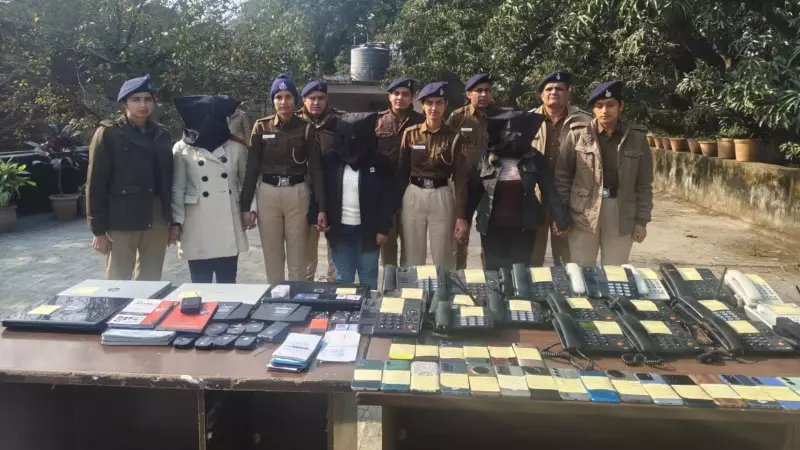
A resident of Chandigarh's Sector-45 fell victim to a sophisticated cyber fraud, losing Rs 1.73 lakh after responding to a WhatsApp message promising a credit card upgrade. The Cyber Crime Police of Chandigarh have since cracked the case, arresting three women from Delhi and uncovering a massive trove of equipment used for illicit activities.
The Modus Operandi: A Simple Offer, A Costly Trap
The incident began when the complainant received messages and calls on WhatsApp from a woman posing as a representative of a prominent foreign credit card company. The fraudster offered to convert his existing card to one from the global firm and enhance his credit limit. To process this "upgrade," the victim was convinced to click on a malicious link disguised as a Google form.
This single click granted the scammers unauthorized access to his mobile phone. Exploiting this access, they swiftly siphoned off Rs 1,73,463 from his State Bank of India (SBI) credit card.

Police Crackdown and Major Seizure
Following a technical investigation involving Call Data Records (CDR) analysis, IP address tracking, and KYC verification, police teams zeroed in on suspects operating from the Ashok Nagar and Uttam Nagar areas of Delhi. A subsequent raid in West Delhi's Tilak Nagar on December 26 led to the arrest of the three accused.
They have been identified as Pratima Sharma, Roshni, and Juhi Sethi, all residents of Delhi.
The police recovery from their possession was staggering. DSP Cyber Crime A Venkatesh stated that a massive cache of incriminating material was seized, including:
- 28 mobile phones
- 82 SIM cards
- 55 ATM cards
- 8 dongles
- 27 landline phones
- Wireless transmitters, passbooks, cheque books, and documents including 2 Aadhaar cards and 2 PAN cards.
Data Breach and Wider Network
Investigators made a concerning discovery: several of the seized mobile phones contained extensive customer databases with names, addresses, and contact numbers. The accused allegedly used this personal information to impersonate bank and credit card officials, making their calls and messages appear more credible to potential victims.
Inspector Iram Rizvi, Station House Officer of the Cyber Crime police station, added that the phones were linked to multiple bank accounts used to route the defrauded money. During interrogation, the arrested women admitted to their involvement and disclosed the role of an associate. Police are now working to identify more accomplices, verify bank accounts opened with forged documents, and determine the total number of victims cheated by this gang.
Police Advisory for Public Safety
In light of this case, the Cyber Crime police have issued a crucial advisory to help citizens guard against such scams:
Do not click on suspicious links received via WhatsApp, SMS, or unknown emails.
Never share OTPs, CVV numbers, or banking details with anyone over the phone or online.
Always verify the identity of callers claiming to be from banks or financial institutions by contacting the official customer care channels directly before taking any action on their requests.
This case underscores the evolving tactics of cyber criminals and the critical need for public vigilance in the digital age.