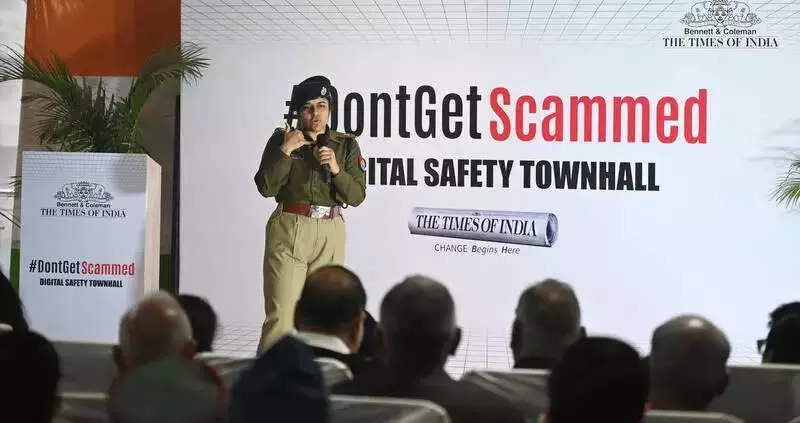
At the inaugural 'Don'tGetScammed' Townhall organized by The Times of India on Saturday, Deputy Commissioner of Police Shavya Goyal delivered a stark and comprehensive warning to the public. She emphasized that in the battle against cybercrime, awareness and prevention are the only effective shields available to citizens.
The Harsh Reality of Cybercrime Recovery
DCP Goyal did not mince words about the chances of victims recovering their stolen funds. "I don't want to give any false hopes. The truth is it is very difficult to recover money once it reaches fraudsters," she stated unequivocally. This grim reality underscores why a proactive, preventive strategy is not just advisable but essential.
Illustrating the complex, borderless nature of these crimes, Goyal shared insights from a recent investigation. A large sum of stolen money was traced through a labyrinthine network: the main IP address originated in Taiwan, while a local handler in India coordinated transactions for a mere one per cent commission. "This is how layered and decentralised these crimes are," she explained, noting that stolen funds often move through multiple accounts within minutes, making tracking and refunds an extremely complex challenge for law enforcement.

Psychological Manipulation Over Technical Tricks
Goyal stressed that scams do not discriminate by age, profession, or income level. "No matter how educated you are, you can get scammed," she cautioned. The primary tool in a fraudster's arsenal is not advanced technical hacking but sophisticated psychological manipulation designed to bypass a person's critical thinking.
During an interactive segment, she challenged the audience to spot differences between genuine and fake messages, bank documents, and links. Using real-case examples, she demonstrated how fraudulent communications are crafted to be nearly indistinguishable from authentic ones. A key technical distinction she highlighted was between APK and JPG files. "APK files are dangerous. A bank or govt department will never ask you to download an APK on WhatsApp," Goyal warned. These files, often disguised as courier receipts or bank alerts on messaging apps, can install malicious software the moment they are opened.
She identified senior citizens as particularly vulnerable, especially when scammers use unfamiliar technical jargon or intimidating language. A common tactic, she explained, is to use fear as the initial hook, followed by false reassurance. Goyal also warned the public to be extremely wary of lucrative investment schemes promising high returns on land or gold. "All such land, gold and high-return schemes are red flags," she said. "The moment someone asks you to transfer money to different accounts or click on different links, you should stop. That itself is a warning sign."
The Rising Threat of Deepfakes and e-SIM Fraud
A significant portion of the session was dedicated to the emerging danger of deepfake technology. Goyal described AI-generated audio and video as one of the most perilous new threats, capable of convincingly mimicking the voice and face of family members, colleagues, or celebrities. "Deepfakes remove the last layer of doubt people rely on, which is familiar faces and voices," she noted. Scammers are now using cloned voices for fake distress calls about emergencies or fabricated videos of company executives instructing urgent fund transfers.
Her advice for countering such sophisticated scams was clear: "Pause, cross-check through another channel, and never act in urgency." She emphasized that emotional pressure is the key weapon in these deepfake-enabled frauds.

Goyal also provided a detailed explanation of e-SIM related frauds, a growing concern. She warned that attackers can hijack a victim's phone number without ever physically accessing the device. By gathering personal data, fraudsters can request a SIM or e-SIM transfer, after which all OTPs and banking alerts are diverted to them. "Once they control your number, they control your identity," she stated. She advised the audience to immediately contact their telecom provider if their network signal drops without reason, as this could be a warning sign of a SIM-swap attempt, and to keep SIM-swap alerts enabled.
Practical Cyber Hygiene and Reporting
Concluding the session, DCP Goyal offered practical steps for maintaining cyber hygiene. She urged people to look for patterns in scams rather than viewing them as isolated incidents, and to educate those around them, especially elderly family members. Most importantly, she stressed the need for immediate reporting. "Understand cyberspace and verify what you don't understand," she advised. Victims of cyber fraud should report the incident immediately via the national helpline 1930 or through the National Cybercrime Reporting Portal to initiate swift action.