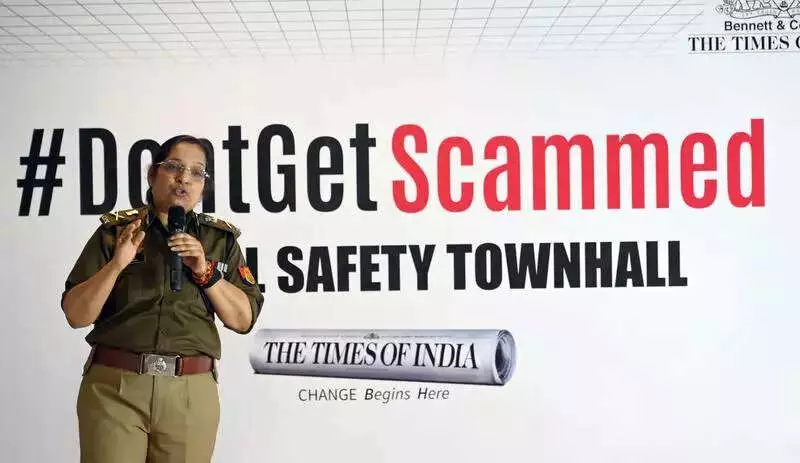
In a stark warning, a senior police official has stated that the explosive rise of cybercrime is poised to become the single most significant law and order challenge for police forces across India. The caution came from Noida Police Commissioner Laxmi Singh during the inaugural 'Don'tGetScammed' Townhall organized by the Times of India in the city.
The Psychological Battle Against Digital Fraud
Addressing a diverse audience including bureaucrats, tech professionals, bankers, students, and retirees at Supertech Capetown in Sector 74, Commissioner Singh emphasized that the fight against online crime is fundamentally won or lost in the mind of the potential victim. She urged people not to let panic override logic or allow bizarre allegations to manipulate them. Her primary advice was simple yet powerful: foremost, disconnect that call.
She specifically highlighted the menace of 'digital arrest' scams, where fraudsters posing as police officers terrify victims into handing over their life savings. "No agency in India or globally has the power to arrest people over the internet," Singh asserted. She added with a touch of humor that Indian police are still "backward" because if they need to detain someone, they physically go to their location rather than using Skype or the internet.

"No law enforcement agency is so advanced that it can nab you from the Internet. If you get video calls from people accusing you of crimes, please disconnect," she advised. She reassured the public that legitimate agencies like the Income Tax department would not conduct proceedings over a video call for infractions.
Evolving Scam Tactics and the Golden Window for Recovery
Commissioner Singh detailed other prevalent scams, such as calls falsely claiming that parcels containing drugs have been seized in the recipient's name. She advised logical thinking: if you have no relatives abroad, why would a parcel come? And if you do, simply verify with them first. "These are all tactics to create fear," she stated.
Among the most common frauds reported to police are those related to Know Your Customer (KYC) updates. Singh warned against using middlemen for KYC processes and recommended dealing directly with banks. "If you are sent KYC links and find them suspicious, check with your bank first," she urged, also asking citizens to report suspicious messages pretending to be from banks.
Stressing the critical importance of timely reporting, the Police Commissioner described the 'golden window'—the period immediately after a crime when authorities have the best chance to freeze, reverse transactions, or recover stolen funds. She directed victims to contact local police or the national cybercrime helpline 1930, established by the Ministry of Home Affairs and the IT Department.
"If you approach us during the golden window, there is no time for fraudsters to withdraw money or convert it into cryptocurrency, which becomes extremely difficult to track," Singh explained. She noted that delayed reporting, often seen with retired individuals who come forward a month later, severely hampers recovery efforts, leaving police able to retrieve only small amounts.
A Collective Fight for National Security
Laxmi Singh framed the issue as a national security concern, revealing that scams are now funding anti-national activities, with dubious call centers operating from distant countries. "Therefore, it is imperative to fight them as a nation united. We require citizens' cooperation in combating cybercrime," she appealed.
She concluded the session with a powerful message: "People can only scam you if you are willing to be defrauded. If you are of sound mind, think logically, and remain calm, you will not fall for such crimes." The police plan to engage more with Resident Welfare Associations (RWAs) and Apartment Owners' Associations (AOAs) to spread awareness, and she requested town hall participants to share the preventive information widely.