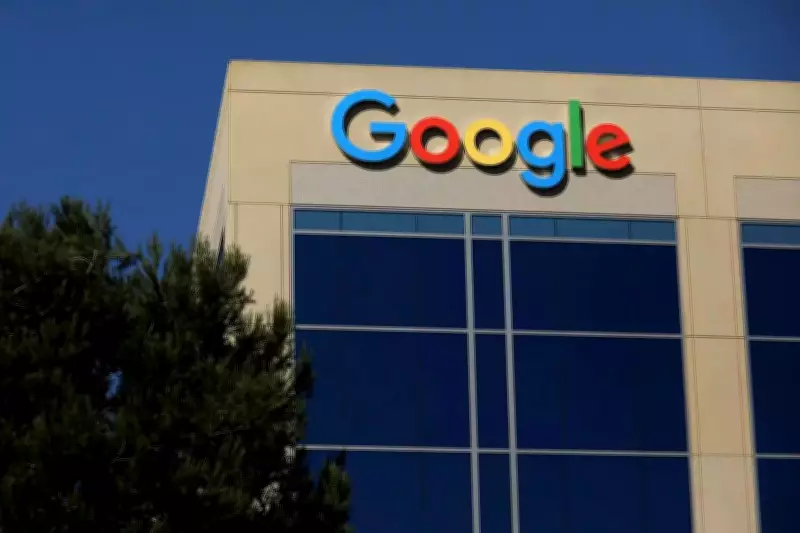
Former Google Engineer Found Guilty in Historic AI Trade Secrets Theft Case
A federal jury in San Francisco has delivered a landmark verdict this week, convicting former Google software engineer Linwei Ding, also known as Leon Ding, on multiple serious charges. The 38-year-old was found guilty on seven counts of economic espionage and seven counts of theft of trade secrets for systematically stealing thousands of pages of confidential information containing Google's proprietary artificial intelligence technology. The stolen secrets were intended to benefit the People's Republic of China, according to court documents and trial evidence.
Unprecedented Conviction in AI Espionage
The jury's decision came after an intensive 11-day trial presided over by U.S. District Judge Vince Chhabria for the Northern District of California. This case represents the first-ever conviction on AI-related economic espionage charges, setting a significant legal precedent in the rapidly evolving field of artificial intelligence technology protection.
Assistant Attorney General for National Security John A. Eisenberg emphasized the gravity of the situation, stating: "This conviction exposes a calculated breach of trust involving some of the most advanced AI technology in the world at a critical moment in AI development. Ding abused his privileged access to steal AI trade secrets while pursuing PRC government-aligned ventures. His duplicity put U.S. technological leadership and competitiveness at risk."

Systematic Theft and Chinese Government Connections
According to evidence presented during the trial, Ding engaged in a sophisticated scheme between approximately May 2022 and April 2023 while employed at Google. He stole more than two thousand pages of confidential information containing Google's AI trade secrets from the company's network and uploaded them to his personal Google Cloud account.
The investigation revealed that Ding had secretly affiliated himself with two technology companies based in China while still employed at Google. Around June 2022, he was in discussions to become the Chief Technology Officer for an early-stage technology company in the PRC. By early 2023, Ding was actively founding his own technology company in China focused on AI and machine learning, where he served as CEO.
In multiple presentations to potential investors, Ding claimed he could build an AI supercomputer by copying and modifying Google's proprietary technology. In December 2023, less than two weeks before resigning from Google, he downloaded the stolen trade secrets to his personal computer.
Stolen Technology Details
The jury determined that Ding stole trade secrets relating to the hardware infrastructure and software platforms that enable Google's supercomputing data center to train and serve large AI models. The stolen information included:
- Detailed architecture and functionality of Google's custom Tensor Processing Unit chips and systems
- Google's Graphics Processing Unit systems specifications
- Software that allows chips to communicate and execute tasks
- Software that orchestrates thousands of chips into a supercomputer capable of training cutting-edge AI workloads
- Information about Google's custom-designed SmartNIC, a network interface card used for high-speed communication within Google's AI supercomputers
Direct Links to Chinese Government Programs
Evidence presented at trial showed Ding actively sought to align himself with Chinese government initiatives. In late 2023, he applied for a government-sponsored "talent plan" in Shanghai, China. His application stated he planned to "help China to have computing power infrastructure capabilities that are on par with the international level."
The jury heard evidence about China's establishment of talent plans designed to encourage individuals to contribute to the country's economic and technological growth. Trial evidence further demonstrated that Ding intended to benefit two entities controlled by the Chinese government by assisting with AI supercomputer development and collaborating on custom machine learning chip research.

Law Enforcement Response and Future Proceedings
Assistant Director Roman Rozhavsky of the FBI's Counterintelligence and Espionage Division commented: "In today's high-stakes race to dominate artificial intelligence, Linwei Ding betrayed both the U.S. and his employer by stealing trade secrets about Google's AI technology on behalf of China's government. This case demonstrates the FBI's unwavering dedication to protecting American businesses from the increasingly severe threat China poses to our economic and national security."
U.S. Attorney Craig H. Missakian for the Northern District of California added: "Silicon Valley is at the forefront of artificial intelligence innovation, pioneering transformative work that drives economic growth and strengthens our national security. The jury delivered a clear message today that the theft of this valuable technology will not go unpunished."
Ding was originally indicted in March 2024, with a superseding indictment returned in February 2025 detailing seven categories of stolen trade secrets. He is scheduled to appear at a status conference on February 3, 2026, and faces severe penalties including a maximum sentence of 10 years in prison for each count of theft of trade secrets and 15 years for each count of economic espionage.
The prosecution team includes Assistant U.S. Attorneys Casey Boome, Molly K. Priedeman, and Roland Chang from the Northern District of California, with assistance from Veronica Hernandez and Trial Attorney Yifei Zheng from the Counterintelligence and Export Control Section, National Security Division. The case resulted from an extensive investigation by the Federal Bureau of Investigation.