

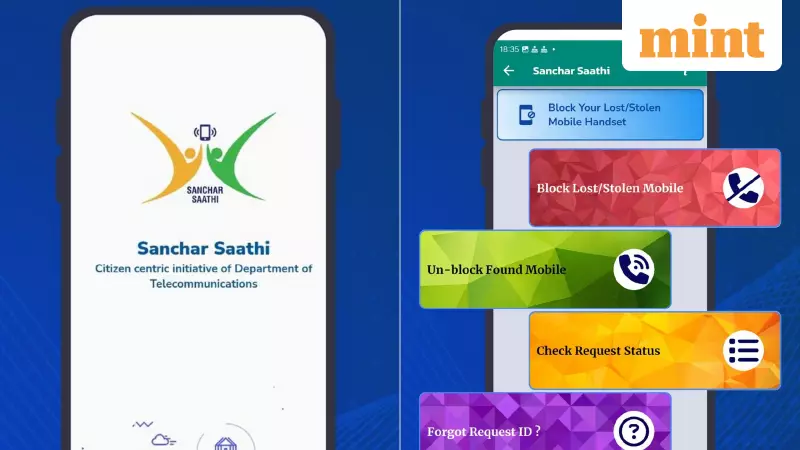
In a significant move to bolster digital security, the Department of Telecommunications (DoT) has issued a mandatory directive for major smartphone manufacturers operating in India. Companies including Apple, Oppo, Vivo, and Xiaomi are now required to pre-install the government's Sanchar Saathi cybersecurity application on all new devices launched in the Indian market.
Implementation Timeline and Key Directives
The Union government has set a strict compliance timeline for this new rule. Smartphone makers have been given 90 days to complete the implementation process. Furthermore, they must submit a detailed report to the authorities within 120 days. The mandate extends beyond just future devices; manufacturers must also push the Sanchar Saathi app onto already manufactured handsets currently in inventory through over-the-air (OTA) software updates.
The official notification from the DoT states that this initiative is aimed squarely at ‘curbing misuse of telecom resources for cyber frauds and ensuring telecom cyber security.’ The government cites the Telecom Commercial Communication Customer Preference Rules (TCCCPR), which empower it to issue directions to manufacturers of equipment bearing an International Mobile Equipment Identity (IMEI) number.

Why is the Sanchar Saathi App Being Made Mandatory?
The core rationale behind this decision lies in tackling the rampant issue of duplicate, spoofed, or tampered IMEI numbers. The government notification highlights that mobile handsets with duplicate IMEIs pose a serious threat to national telecom cybersecurity. A spoofed IMEI can allow the same number to appear on multiple devices in different locations simultaneously, creating significant challenges for law enforcement in tracking and taking action.
India's large second-hand mobile device market compounds this problem. Stolen or blacklisted devices often get resold, making unsuspecting buyers unwitting abettors to crime and causing them financial loss. The Sanchar Saathi app provides a direct tool for users to check if a device's IMEI is blocked or blacklisted before purchase.
Clarity on App Removal and Required Permissions
Initially, there was speculation that the app would be permanently locked and uninstallable. However, Union Minister for Communications, Jyotiraditya Scindia, has clarified that users will have the option to uninstall the Sanchar Saathi app if they choose to do so. This addresses a key privacy concern among consumers.
For the app to function effectively, it requires access to several permissions on a user's device. On Android, these permissions include:
- Access to phone calls and call logs
- Access to SMS and notifications
- Camera access
- Internet connectivity to communicate with central servers
Since its launch earlier this year, the Sanchar Saathi app—a successor to the portal of the same name—has been downloaded over 5 million times on both iOS and Android platforms.
Key Features of the Sanchar Saathi App
The app is designed as a multi-purpose tool for Indian mobile users to protect themselves and contribute to a safer telecom ecosystem. Its primary features allow users to:
- Block Lost or Stolen Phones: Users can report and block their lost or stolen mobile phones across all telecom networks in India. This action enables law enforcement agencies to trace the device's location if it is used anywhere in the country.
- Check Registered Connections: A critical feature lets users verify all mobile numbers registered under their name. They can identify and report any unauthorized or fraudulent connections that do not belong to them.
- Report Fraudulent Communication: Through the ‘Chakshu’ facility within the app, users can directly report suspicious or fraudulent calls, SMS, and even WhatsApp messages.
This mandate represents a proactive step by the Indian government to leverage technology in its fight against cybercrime and telecom fraud, placing a powerful tool directly into the hands of millions of new smartphone users.






