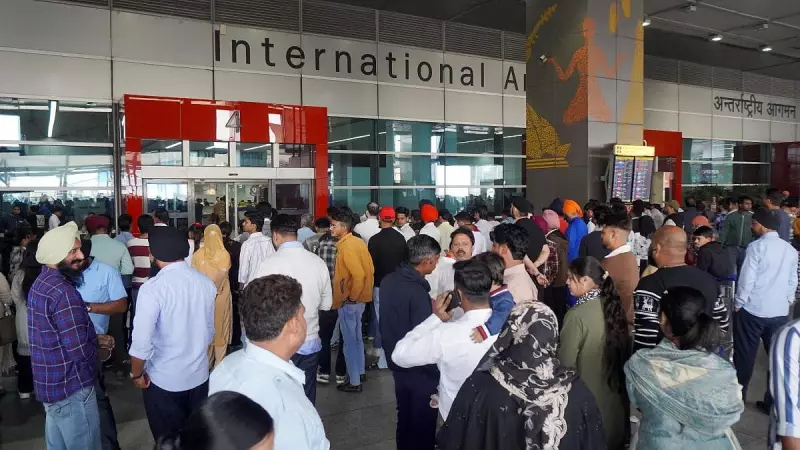
The Civil Aviation Ministry has officially acknowledged and is investigating a series of disturbing incidents involving the deliberate disruption of GPS signals in the vicinity of one of India's busiest aviation hubs. This confirmation comes after multiple reports of GPS spoofing and interference were logged in and around Delhi's Indira Gandhi International Airport (IGIA) in recent days.
Ministry Directs Probe into Signal Manipulation
In response to these potential threats to aviation safety and navigation, the ministry has taken decisive action. It has formally tasked the Wireless Monitoring Organisation (WMO) with a critical mission: to identify the exact source or sources of these malicious signals. The WMO, which operates under the Department of Telecommunications, specializes in detecting and locating unauthorized radio transmissions, making it the lead agency for this technical investigation.
Understanding the Threat: GPS Spoofing vs. Jamming
While the ministry's statement mentions both spoofing and interference, it is the act of GPS spoofing that raises particularly serious concerns. Unlike simple jamming, which blocks GPS signals, spoofing is a more sophisticated and dangerous attack. It involves broadcasting counterfeit GPS signals that are stronger than the genuine ones from satellites. These fake signals can trick a receiver—like those on an aircraft—into calculating an incorrect position, time, or velocity. The incidents, which came to light and were confirmed by authorities, were reported to have occurred in the last few days leading up to 01 December 2025.

Implications for Aviation Safety and Security
The confirmation of such activity near a major international airport has immediate ramifications. While modern aircraft use multiple navigation systems, including inertial references, heavy reliance on GPS for precise approaches and ground operations makes them vulnerable. Spoofing could, in a worst-case scenario, mislead pilots during critical phases of flight or cause confusion for ground vehicles on the airport's vast apron. The ministry's swift move to involve the WMO underscores the gravity with which the Indian government views this electronic threat to civil aviation security. The investigation aims to not only locate the culprits but also to understand the intent and prevent any recurrence of such dangerous interference.
As the probe unfolds, aviation authorities are likely reviewing and reinforcing protocols to ensure flight safety remains uncompromised. The global aviation community closely watches such developments, as GPS spoofing represents an emerging challenge to national and international airspace security.