India Drafts Comprehensive Framework to Secure Combat Drones from Vulnerabilities
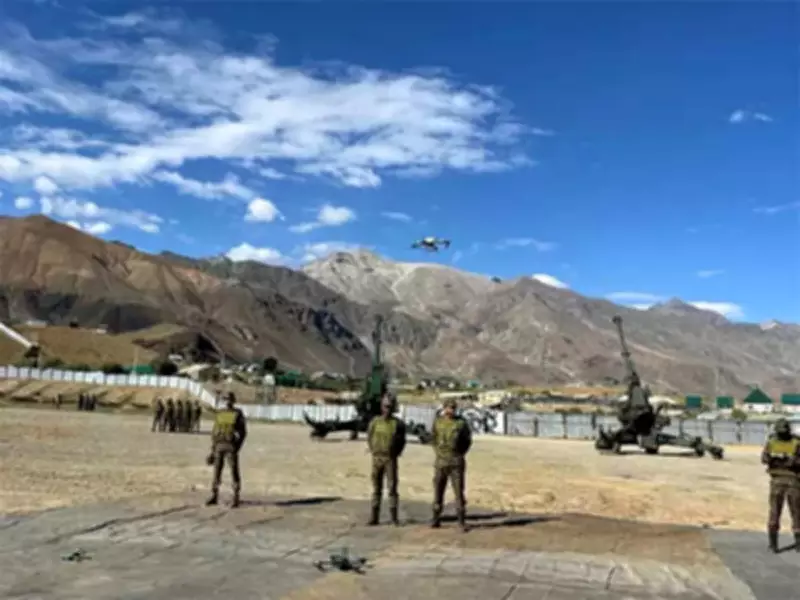
The Ministry of Defence (MoD) has unveiled a draft document aimed at fortifying India's combat drones against cyber threats and physical risks. This initiative seeks to establish a robust security ecosystem for unmanned aerial vehicles (UAVs), which are increasingly pivotal in modern warfare across India's vast frontiers, including the high Himalayas.
Multi-Agency Collaboration and Indigenous Focus
The framework was formulated through a collaborative effort involving the three armed forces, the National Security Council Secretariat (NSCS), the Ministry of Civil Aviation, the Ministry of Electronics and Information Technology, the Defence Research and Development Organisation (DRDO), accredited laboratories, and industry bodies. Work on this critical document commenced in September 2024, with consultations revealing that domestic capabilities in drone component design, development, manufacturing, and testing require further maturation.
Efforts are now intensifying to address these shortcomings, with a clear goal to "complete indigenise and foolproof supply chain verification." The draft is open for recommendations until April 8 and will be integrated into the upcoming Defence Acquisition Procedure (DAP) 2026.

Securing 'Low, Slow, and Small' Drones
This framework specifically targets what it terms "low, slow, and small" drones, encompassing nano, micro, and small categories such as quadcopters and hexacopters. These drones are projected to constitute a staggering 95% of all aerial vehicles in future battlespaces. Given their deployment in sensitive border areas, ensuring a secure operational environment is paramount.
The Indian Army has already inducted multiple drone types and implemented structural changes to leverage these systems, including Ashni platoons in infantry, Divyastra batteries and Shaktiban Regiments in artillery, and planned Shaurya Squadrons in the Armoured Corps. With all three services increasingly reliant on small unmanned systems, a secure ecosystem becomes even more critical.
Key Security Measures and Objectives
The document advocates for an indigenous drone environment that adheres to 'secure-by-design' principles, proactively mitigating vulnerabilities and emerging threats. Security requirements will be enforced from the Request For Information (RFI) phase through procurement and continue during service upgrades, ensuring multiple layers of checks.
Primary aims include:
- Reducing dependency on Chinese-made components to bolster domestic drone manufacturing participation.
- Protecting the drone ecosystem from interception of communication via Software Defined Radios.
- Shielding against GPS jamming and spoofing, which can confuse drones reliant on navigation systems.
- Preventing control hijacking by exploiting communication link vulnerabilities or malware.
- Securing data through encrypted links and thorough malware detection.
The "ideal solution" envisions drones and their critical components, down to the chip level, being designed, developed, and manufactured domestically. This approach would minimize vulnerabilities and enhance supply chain control, with testing and validation conducted within India.
Addressing Past Incidents and Future Threats
This move gains urgency from past incidents, such as an August 2024 event where a domestically produced Indian drone crossed the Line of Control in the Poonch sector due to a technical malfunction. Additionally, the Indian Army cancelled a drone order in February 2025 over concerns about Chinese components.
The framework defines security vulnerabilities as flaws, weaknesses, or errors that adversaries could exploit, compromising operational performance. Insecure drones are susceptible to cyber threats and physical risks, potentially leading to data breaches, unauthorized access, and physical harm. Hence, detecting and preventing these vulnerabilities is essential to safeguard national security.
By implementing this comprehensive framework, India aims to not only secure individual drones but also fortify the entire operational ecosystem, ensuring resilience against evolving threats in modern warfare.