

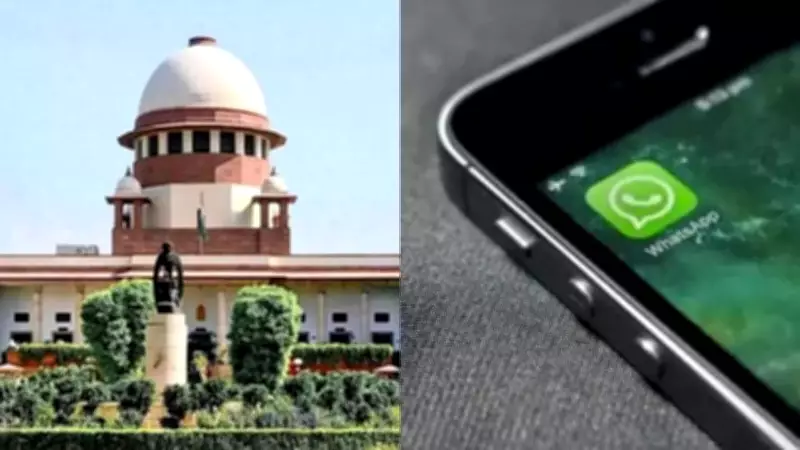
Meta and WhatsApp Commit to Supreme Court on Data Sharing Compliance
Social media giants Meta and WhatsApp on Monday assured the Supreme Court that they will not seek a stay of the appellate company law tribunal (NCLAT) order, which prohibits them from sharing user data for non-core services and mandates a transparent opt-out mechanism for consent withdrawal. This development comes two weeks after the Supreme Court strongly criticized the companies for their data-sharing practices and the complex process users face when attempting to withdraw consent.
Compliance Timeline and Court Proceedings
Senior advocate Kapil Sibal, representing Meta and WhatsApp, informed a bench comprising Chief Justice Surya Kant and Justices Joymalya Bagchi and Vipul M Pancholi that both companies will fully adhere to the NCLAT directives within a three-month timeframe, setting a deadline of March 16. Consequently, the bench disposed of the applications filed by Meta and WhatsApp seeking a stay of the NCLAT order.
However, senior advocate Madhavi Divan, appearing for the Competition Commission of India (CCI), highlighted that the core issue remains the regulator's direction imposing a five-year ban on data sharing for advertisement purposes. The Supreme Court has scheduled further hearings on this matter for April 19.

Key Arguments and Regulatory Concerns
Sibal attempted to defer the issue by arguing that it could be resolved during the final hearing of appeals filed by Meta, WhatsApp, and CCI. He later contended that the companies are legally required to comply with the Digital Personal Data Protection (DPDP) Act by June 2027. In contrast, Divan emphasized that the NCLAT had stayed a crucial CCI directive, which prohibited WhatsApp from sharing user data with other Meta entities for advertising purposes over five years.
Divan stressed the need for adjudication and an interim stay on the NCLAT's direction regarding this ban, noting that the NCLAT had previously agreed with CCI's findings. The tribunal acknowledged that Meta and WhatsApp hold a dominant market position and that cross-sharing data between them enhances Meta's competitive edge in the display advertising market, thereby creating barriers for rivals lacking comparable access to WhatsApp data.
Potential Market Impact
The CCI warned that failing to enforce the five-year ban on data sharing for advertising could cause grave prejudice to the market for OTT messaging apps on smartphones in India and the Online Display Advertising sector in India. This underscores the regulatory body's concern over maintaining fair competition and protecting user privacy in the digital landscape.
As the legal battle continues, the commitment from Meta and WhatsApp to implement transparent opt-out options marks a significant step toward addressing user consent issues, while the unresolved advertising data ban remains a pivotal point of contention with potential far-reaching implications for India's tech market.






