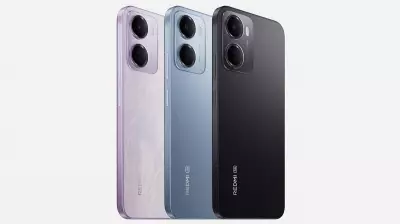
The Indian government's directive to smartphone manufacturers to pre-install its cybersecurity application, Sanchar Saathi, has ignited a significant controversy. The move, labeled a "Big Brother" tactic by the Opposition, is facing resistance from global tech giants and raising serious questions about user privacy and business operations.
Tech Giants Push Back Against Mandatory Installation
According to industry sources, major players like Apple and Google are preparing to challenge the government's order. Their concerns are multifaceted. Beyond the core issues of privacy and potential surveillance, companies cite operational challenges. Complying with the mandate may force them to create customized versions of their iOS and Android operating systems specifically for the Indian market.
There is also a broader strategic fear: acquiescing to India's demand could establish a troubling precedent, encouraging other governments where these firms operate to impose similar conditions.

Deep System Access and Data Privacy Fears
The Sanchar Saathi app is designed to help users report fraudulent communications and track lost or stolen devices. However, to perform these functions, the application requires system-level permissions classified as "dangerous." These include the ability to read the phone's unique IMEI number, access call logs, and even take pictures.
Adding to the concern is the revelation that on Android devices, registration on the app happens "automatically". This, coupled with blanket exemptions for the government under India's Data Protection Act, has intensified debates about the security and usage of citizen data.
Contradictory Statements and Legal Hurdles
In response to the backlash, Union Communications Minister Jyotiraditya Scindia stated that users would be free to not register on the app and could delete it. This clarification, however, appears to contradict the official order issued on November 28, 2025, which instructed smartphone companies to ensure the app's functions are not "disabled" or "restricted." An official clarification on this discrepancy is awaited.
Legal experts have pointed out that the mandate may struggle to pass the Supreme Court's established "three-fold constitutional test" for any state intervention into the right to privacy, setting the stage for potential legal challenges.
Other Key Developments on December 3
In a landmark scientific discovery, a team of Pune-based scientists has identified a massive spiral galaxy, named 'Alaknanda', which existed when the universe was merely 1.5 billion years old. Resembling our Milky Way, this finding adds crucial evidence that the early universe was more structured and mature than earlier theories suggested.
On the diplomatic front, Russian President Vladimir Putin is scheduled to begin a two-day visit to India on December 4, 2025. This is his first trip since the onset of the Ukraine war in 2022. The visit gains significance amid recent trade penalties imposed on India by the US. Key agenda items include a private dinner hosted by Prime Minister Narendra Modi, bilateral talks, a potential mobility agreement for Indian professionals, and the launch of the India operations of the Russian news outlet, RT.
In Parliament, the Winter Session may see productive discussions as the government and Opposition have agreed on mutual demands. The Lok Sabha is set to discuss 150 years of Vande Mataram on December 8, followed by a two-day debate on electoral reforms.
In a tragic healthcare failure, at least five children with thalassemia in Jharkhand's West Singhbhum district tested positive for HIV in October after receiving infected blood transfusions from the Chaibasa Sadar Hospital blood bank, highlighting systemic gaps.
Meanwhile, in Raipur, cricket fever grips the city as India takes on South Africa in the second ODI, with local vendors thriving on the bustling off-the-books economy that springs up around such major sporting events.