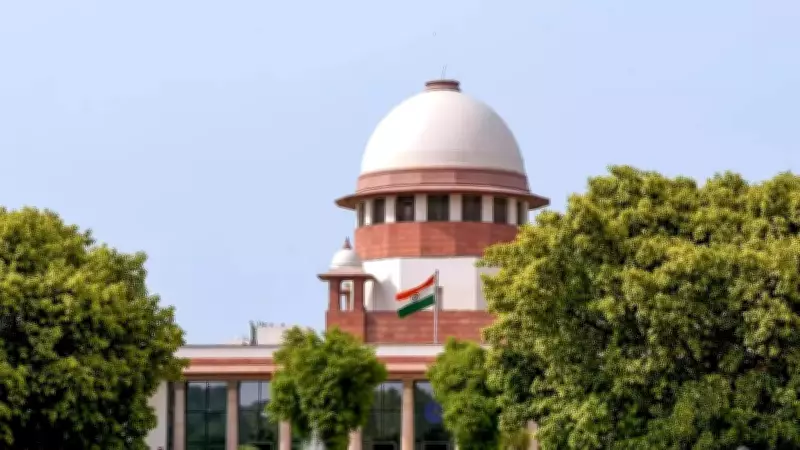
Supreme Court Issues Stern Warning to WhatsApp and Meta Over User Privacy Violations
The Supreme Court of India delivered a powerful warning to WhatsApp and its parent company Meta Platforms on Tuesday, strongly cautioning against the practice of sharing users' private data for targeted advertising purposes. The court emphasized that the fundamental right to privacy of Indian citizens cannot be compromised for the business interests of multinational corporations.
Bench Rejects Data Sharing Under Consent Guise
A three-judge bench led by Chief Justice Surya Kant made it unequivocally clear that user data cannot be shared under the guise of consent or opt-out mechanisms. The Chief Justice stated firmly, "We cannot allow citizens' privacy to be compromised for business interest of a multinational corporation." The bench indicated it could potentially ban such data sharing practices if adequate safeguards are not implemented and assured that detailed orders on this critical issue would be passed on February 10.
Court Questions Opt-Out Mechanisms and User Understanding
During the hearing, the bench expressed significant skepticism about the effectiveness of opt-out options provided to users. The Chief Justice questioned, "What is the choice? The choice is that even if you walk out of the WhatsApp facility we will share your data?" He further elaborated on the complexity of privacy policies, noting that "the kind of language you use, so cleverly crafted, even the street vendor will not understand."

Justice J Bagchi raised additional concerns about whether users are meaningfully informed about data practices, pointing out the discrepancy between in-app messages and newspaper notices for opt-out choices. He questioned, "Who reads newspaper ads?" while highlighting that the court would examine both the value of data being shared and how user behavior is being monetized.
Background of the Case and Legal Proceedings
The court's observations came during hearings of appeals filed by Meta and WhatsApp against a National Company Law Appellate Tribunal order. This order had upheld a substantial penalty of Rs 213 crore imposed by the Competition Commission of India for alleged abuse of dominance in the over-the-top messaging market.
Key developments in the case include:
- Senior advocate Mukul Rohatgi representing Meta and WhatsApp informed the court that three appeals are pending
- The penalty amount has been deposited in full, subject to the outcome of appeals
- The Competition Commission of India has not challenged the January 25 order
- The court directed that appeals be listed for final hearing before a three-judge bench
- Counters must be filed within four weeks as per court directions
Court's Strong Stance on Data Protection Principles
The bench remained unconvinced by arguments about user consent mechanisms, with the Chief Justice describing the data-sharing framework as "a decent way of committing theft of private information." He warned the companies, "We will not allow you to share even a single information, you cannot play with the rights of this country."
The Solicitor General reinforced this position by telling the court that the choice offered to users effectively amounted to a "take it or leave it" scenario. The bench also expressed particular concern about vulnerable users, with the Chief Justice referring to people in remote areas as "silent consumers" who remain "completely unaware of the system."
Broader Implications for Digital Privacy in India
Reiterating a fundamental principle, the Chief Justice stated, "Any commercial venture cannot be at the costs of the rights of the people of this country." The court has ordered that the penalty deposited by Meta should not be withdrawn until further directions are issued, maintaining financial accountability while the legal process continues.
This landmark hearing represents a significant moment in India's digital privacy landscape, with the Supreme Court taking a firm stand to protect citizen rights against corporate data practices that potentially compromise personal privacy for commercial gain.