

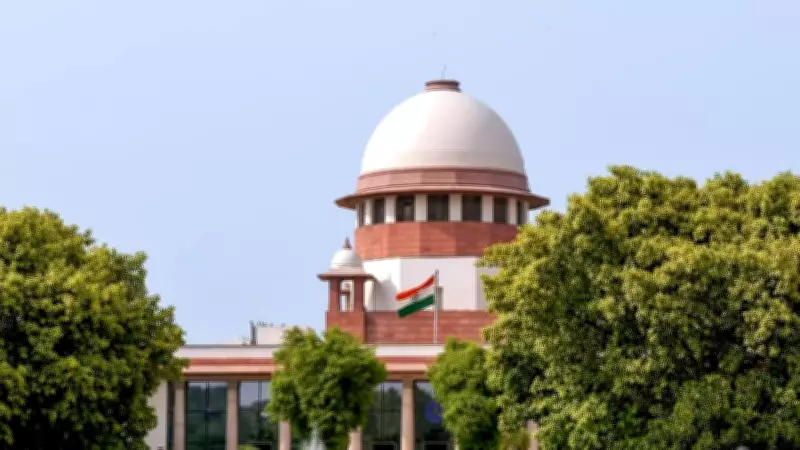
Supreme Court Issues Stern Warning to WhatsApp Over Data Privacy Violations
In a landmark hearing on Tuesday, the Supreme Court of India delivered a scathing rebuke to popular messaging platform WhatsApp, threatening a complete ban over allegations of privacy violations and exploitation of user data. The bench, comprising Chief Justice Surya Kant and Justices Joymalya Bagchi and Vipul M Pancholi, heard appeals by WhatsApp and its parent company Meta challenging a National Company Law Appellate Tribunal decision that upheld findings of abuse of dominant position.
Court Dismisses Consent Defense as Unfair and Deceptive
The bench tore into WhatsApp's defense that it obtains user consent before sharing data, calling it a "sham deal" where users have no real choice. "You have complete monopoly in the sector. What is the choice you give to users? The consent to share agreement is like the agreement between the lion and the lamb — either you give consent to share your personal data or you walk out of the WhatsApp service," Justice Kant remarked sharply.
The court emphasized that the terms and conditions are crafted in complex language that even educated individuals struggle to understand, let alone common users like vegetable vendors or rickshaw pullers. "How many users understand the legal obligations you impose upon them? Where is the question of opting out when people do not understand those conditions?" the CJI questioned.

Threat of Ban and Data Sharing Restrictions
In a stern warning, Chief Justice Kant stated, "We will not allow you to share a single word of the personal data you gather from messages. This must be made clear to you. If you are ready to give an affidavit to undertake this, we will hear you. Otherwise, we will dismiss the appeals." The court repeatedly emphasized that it would not permit the privacy of Indian citizens to be compromised.
Solicitor General Tushar Mehta supported the court's stance, arguing that personal data is not only sold but commercially exploited, turning users into mere products. The CJI echoed this sentiment, stating, "Selling data is violating the right to privacy, which is so zealously guarded in this country, and that data is exploited for purely commercial purposes."
Encryption Claims and Broader Implications
Senior advocates Mukul Rohatgi and Amit Sibal, representing WhatsApp and Meta, argued that data is shared only with user consent and that messages are end-to-end encrypted, making them inaccessible to WhatsApp. However, the bench remained unconvinced, questioning how privacy could be violated if data is shared with Facebook or other entities.
Justice Bagchi highlighted concerns beyond privacy, noting, "Every silo of data regarding an individual, irrespective of privacy, has a value. The Digital Personal Data Protection Act only addresses the privacy aspect. We would like to examine what the rent sharing of data is." He expressed worry that behavioral tendencies could be monetized for advertising advantages.
Court's Focus on Common Users and Future Oversight
The bench brushed aside attempts to link the case with other pending petitions, focusing instead on the impact on ordinary citizens. "Our simple query is — ask your domestic help whether she understands your privacy policy? It is not about the educated lot. It is about the majority who do not understand these and can't fathom its consequences," the court stated.
Justice Bagchi suggested that judiciaries worldwide need more intensive oversight over such companies, while the CJI emphasized, "It is not the social service you are providing. You can make legitimate income. But your commercial venture cannot be at the cost of the rights of people of India."
The Supreme Court has posted the matter for further hearing on February 9 and directed the Ministry of Electronics and Information Technology to file its response. This case underscores growing judicial scrutiny over tech giants' data practices in India, with potential implications for global privacy standards.

