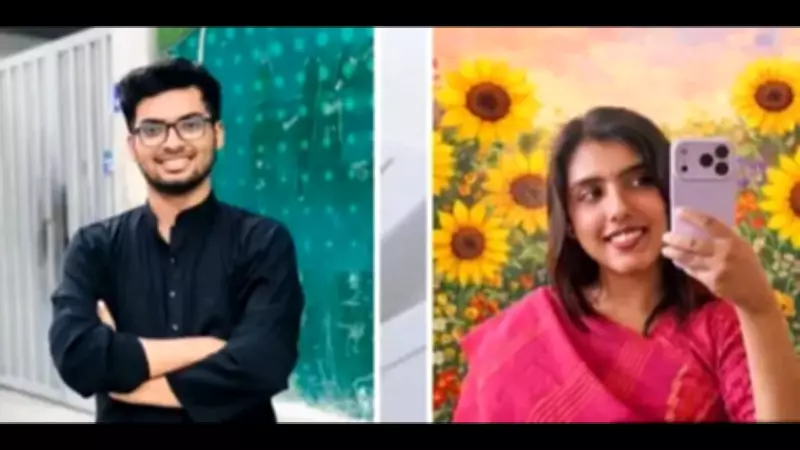
The alleged murder case of two Bangladeshi students in the United States has taken a grisly turn after the body of Nahida Sultana Bristy was discovered. Investigators have provided minute details of how they cracked the case of the mysterious disappearance of two students from the campus of the University of South Florida.
Discovery of Bodies
Bristy's body was found days after the recovery of her friend Zamil Ahmed Limon's body. The investigation is ongoing as the bodies have been sent to Bangladesh for last rites. Hillsborough County Sheriff Chad Chronister called it a monstrous crime, stating that Hisham Saleh Abugharbieh, the accused and Limon's roommate, planned the murders, executed them, and then removed all traces.
Limon's body was found stuffed inside a trash bag left on the shoulder of the Howard Frankland Bridge. Bristy's remains were discovered in a garbage bag from Tampa Bay when a kayaker reported smelling something indescribable and found remains of a human body inside an open plastic bag.

Investigation Details
Both students, believed to be in a relationship, went missing on April 17. Their friends and family reported this as unusual, as both were very responsible. Detectives visited the apartment Limon shared with Abugharbieh and a third roommate. The sheriff disclosed that while one roommate cooperated fully, Abugharbieh gave evasive and contradictory answers. Investigators noticed he had a laceration on his left pinky and a deep cut on the back of his left arm that should have required stitches—wounds he could not explain and that detectives believe were defensive injuries.
The cooperative roommate later told investigators that Abugharbieh had used a large cart to move items out of his room to the trash compactor overnight on April 16 and 17. Acting on that tip, detectives searched the compactor and found Limon's glasses, student ID, wallet, and clothing—all heavily soaked in blood.
Forensic Technology
Chronister said forensic experts used Bluestar technology and found blood in the outline of a human body curled in a fetal position on the floor behind Abugharbieh's bed. Blood traces were also found in his car.
Premeditation Evidence
Abugharbieh wiped his phone's search history, but forensic examination revealed that days before the disappearances, he searched phrases like "Can a knife penetrate a skull?" and "Can a neighbor hear a gunshot?" He also ordered heavy-duty black contractor bags, Lysol wipes, duct tape, lighter fluid, and a lighter, some through Amazon, others through DoorDash. "This was calculating. That's what makes this so premeditated," Chronister said.
The motive of the killing has not yet been established, and the accused did not react after his arrest either.