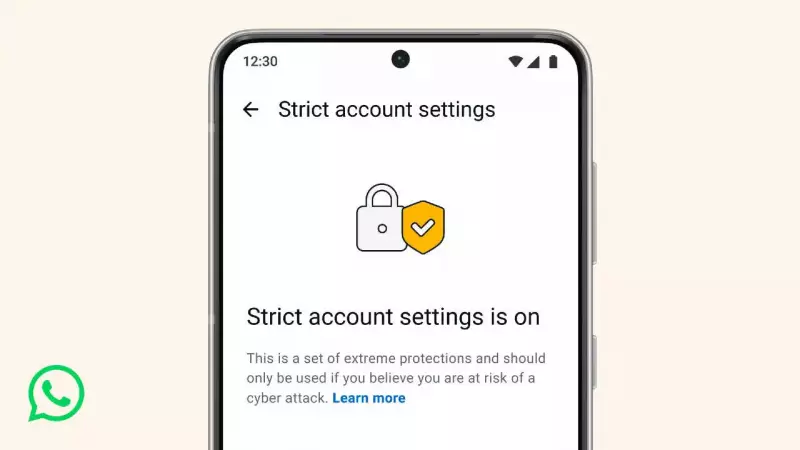
In a significant move to enhance user security, WhatsApp has launched a new feature called Strict Account Settings, designed to provide extreme protection against sophisticated cyber threats. This rollout comes shortly after WhatsApp chief Will Cathcart publicly criticized Elon Musk for spreading what he called "totally false" information about WhatsApp's security.
WhatsApp's Commitment to Privacy
The Meta-owned instant messaging platform emphasized its dedication to user privacy in an official statement. "At WhatsApp, we believe you should be able to have a private conversation online, just like you would in-person. We will always defend that right to privacy for everyone, starting with default end-to-end encryption," the company declared.
WhatsApp acknowledged that while most users benefit from standard security measures, certain individuals—such as journalists, activists, and public figures—require additional safeguards against rare but highly sophisticated cyber attacks. The Strict Account Settings feature aims to address this specific need.

How Strict Account Settings Work
According to WhatsApp, when users activate this feature, certain account settings automatically lock to their most restrictive configurations. This limits some WhatsApp functionalities to enhance security. For instance, the feature blocks all attachments and media from individuals not saved in the user's contact list.
"Strict Account Settings represents one of many initiatives we're implementing to protect you from the most sophisticated cyber threats," WhatsApp explained. "We've also deployed a programming language called Rust behind the scenes to help safeguard your photos, videos, and messages from threats like spyware, ensuring you can share and chat with confidence."
The company confirmed that the feature is being rolled out gradually over the coming weeks. Once available, users can enable it by navigating to Settings > Privacy > Advanced within the WhatsApp application.
Legal Challenges and Security Controversies
The introduction of Strict Account Settings coincides with significant legal challenges for WhatsApp. Just one day before the feature's announcement, an international group of plaintiffs filed a class-action lawsuit against the messaging platform.
The lawsuit accuses WhatsApp of defrauding billions of users by allegedly maintaining backdoor access to private communications that the company claims are protected by end-to-end encryption. The plaintiffs contend that WhatsApp can "store, analyze, and access virtually all of WhatsApp users' purportedly 'private' communications."
Meta's Response to Allegations
Meta, WhatsApp's parent company, has vehemently denied these claims, labeling the lawsuit as "frivolous" and "absurd." Company spokesperson Andy Stone stated that Meta intends to seek legal sanctions against the plaintiffs' counsel for pursuing the case.
"Any assertion that people's WhatsApp messages are not encrypted is categorically false," Stone told Bloomberg. "WhatsApp has utilized end-to-end encryption through the Signal protocol for a decade. This lawsuit is nothing more than a frivolous work of fiction."
Will Cathcart further criticized the lawsuit by highlighting that it was filed by lawyers who previously defended the spyware company NSO Group. "WhatsApp cannot read messages because the encryption keys are stored on users' phones, and we do not have access to them," Cathcart wrote on X. "This is a meritless, headline-seeking lawsuit brought by the very same firm that defended NSO after their spyware targeted journalists and government officials."
Broader Implications for Digital Security
The timing of WhatsApp's new security feature and the ongoing legal battle underscores the growing tensions between technology companies, regulatory bodies, and user privacy advocates. As cyber threats become increasingly sophisticated, platforms like WhatsApp face mounting pressure to balance robust security measures with transparency about their data practices.
The Strict Account Settings feature represents WhatsApp's proactive approach to addressing these concerns, particularly for users at higher risk of targeted attacks. However, the lawsuit raises fundamental questions about the integrity of end-to-end encryption and the extent to which tech companies can access user data.

As the digital landscape evolves, the debate over privacy, security, and corporate accountability continues to intensify. WhatsApp's latest move highlights the platform's commitment to enhancing user protection, even as it navigates complex legal and public relations challenges.