Bengaluru's Pink Line Metro Prepares for Public Launch with Crucial Trials
The much-anticipated Pink Line of Bengaluru's Namma Metro is advancing toward its public debut, with mandatory safety and performance trials scheduled to commence imminently. This critical phase marks a significant milestone in the city's expanding metro network, promising enhanced connectivity for residents and commuters across key urban areas.
RDSO Trials to Ensure Safety and Compliance
The Research Designs and Standards Organisation (RDSO) trials are a mandatory step before any metro line can be commissioned for public use in India. These comprehensive assessments evaluate the metro trains and infrastructure against stringent safety, performance, and operational standards. For the Pink Line, these trials are expected to begin by the end of the month and will require at least two weeks to complete all formalities, ensuring the system meets national regulatory requirements.
Pink Line Corridor Overview and Construction Progress
The Pink Line spans 21 kilometers, featuring a substantial 13-kilometer underground section between Dairy Circle and Nagawara. This underground segment is designed to provide efficient and seamless connectivity through densely populated parts of the city, reducing surface traffic congestion and travel times.

In addition to the underground portion, an elevated stretch from Kalena Agrahara to Tavarekere is targeted for opening by mid-2026. This section will become operational ahead of the full corridor's completion, offering early benefits to commuters in these areas.
Timeline for Full Corridor Completion
While the elevated section is slated to open in mid-2026, the entire 21-kilometer Pink Line corridor is expected to be fully operational by December 2026. This phased approach allows for incremental service launches, enabling the metro authority to address any operational teething issues while gradually expanding network coverage.
Train Delivery and Initial Operations
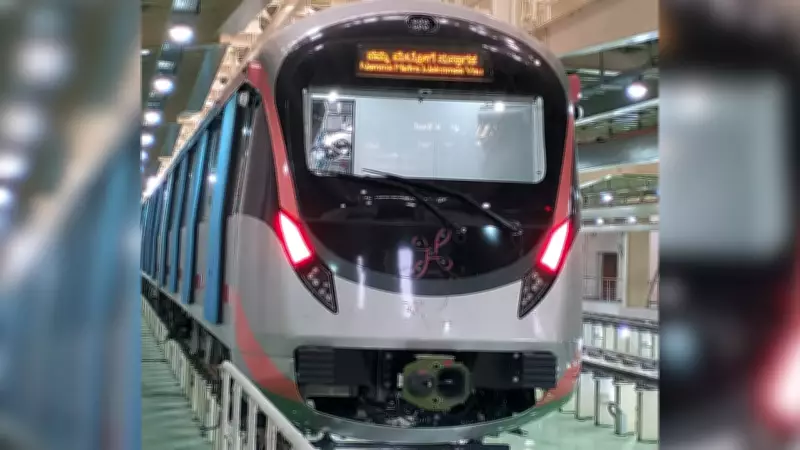
On the rolling stock front, four trainsets have already been delivered by BEML, the manufacturer responsible for supplying the metro coaches. Initially, four to five trainsets are planned to operate on the elevated section of the Pink Line, ensuring adequate frequency and capacity for early commuters. These trains will undergo rigorous testing during the RDSO trials to verify their reliability and performance under real-world conditions.
The introduction of the Pink Line is poised to transform urban mobility in Bengaluru, offering a modern, efficient, and eco-friendly transportation alternative. As trials progress and timelines firm up, residents can look forward to a more connected and accessible city by the end of 2026.