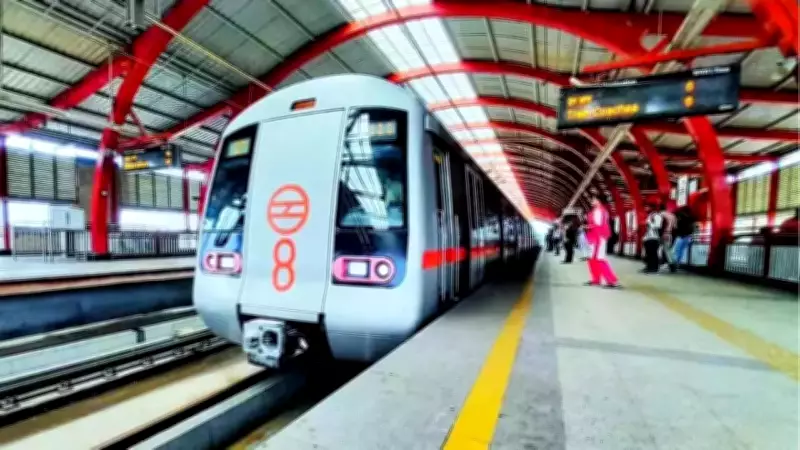
The Delhi Metro Rail Corporation (DMRC) on Sunday announced a series of measures aimed at encouraging commuters to shift from private vehicles to public transport across Delhi-NCR. These include additional train services, enhanced security deployment, expanded ticketing facilities, and improved last-mile connectivity.
Additional Train Services
The DMRC will introduce 24 additional train trips by deploying six extra trains every Monday from May 18. Similar arrangements are likely to be extended to other days based on passenger demand. The initiative is part of efforts to strengthen mass transit systems and improve urban mobility, aligning with the growing focus on energy security, environmental sustainability, and reducing dependence on petroleum-based transport.
The corporation stated that the additional services are intended to manage a potential rise in passenger footfall and ensure smooth, uninterrupted operations during peak travel hours. Passenger demand will be closely monitored, and further measures will be implemented as required.

Enhanced Security and Ticketing
To manage higher commuter volumes, the DMRC will deploy additional security personnel, open extra ticket counters, activate spare Door Frame Metal Detectors (DFMDs) and baggage scanners, and take steps to reduce waiting time at frisking points.
Integrated Transport Connectivity
Highlighting the metro network's role in integrated transport connectivity, the corporation noted that several metro stations are linked with railway stations, interstate bus terminals, airport terminals, the Namo Bharat Regional Rapid Transit System (RRTS), Noida Metro, and Rapid Metro Gurugram. This connectivity enables commuters to switch seamlessly between multiple transport systems, reducing dependence on private vehicles.
The DMRC also underlined that the metro network provides access to major commercial hubs, government offices, educational institutions, corporate centres, and tourist destinations across Delhi-NCR. Areas such as Connaught Place, Chandni Chowk, Cyber City, Hauz Khas, Nehru Place, and key university campuses are directly connected through the metro network, making daily commuting easier for office-goers, students, and tourists.
Last-Mile Connectivity Initiatives
On last-mile connectivity, the DMRC said around 1 lakh passengers use services such as e-autos, e-rickshaws, bike taxis, cab aggregators, and bicycle rentals daily across 160 metro stations. The DMRC's 'Saarthi App' offers integrated journey planning and enables commuters to book metro tickets as well as last-mile transport services through a single platform.
Hydrogen-powered bus services have recently been introduced in the Central Vista area with support from Indian Oil Corporation Limited (IOCL) to strengthen last-mile connectivity between metro stations and government offices. Additionally, around 1,500 Devi buses operated by the Delhi Transport Corporation (DTC) are currently providing feeder services at 52 metro stations, with additional buses planned to be added in a phased manner.
Park and Ride Initiative
The DMRC noted that parking facilities are available at 126 metro stations across Delhi-NCR under its 'Park and Ride' initiative to encourage the use of combined private and public transport.
Digital Ticketing Ecosystem
The metro network has expanded its digital ticketing ecosystem, including QR code-based tickets, National Common Mobility Cards (NCMC), WhatsApp-based ticketing, and integration with platforms such as Paytm, PhonePe, Amazon, and IRCTC.
The corporation added that these initiatives are part of its broader commitment to promoting sustainable and environmentally responsible urban transport in the National Capital Region.