

India's Semiconductor Ambitions Gain Momentum with Strategic Investments
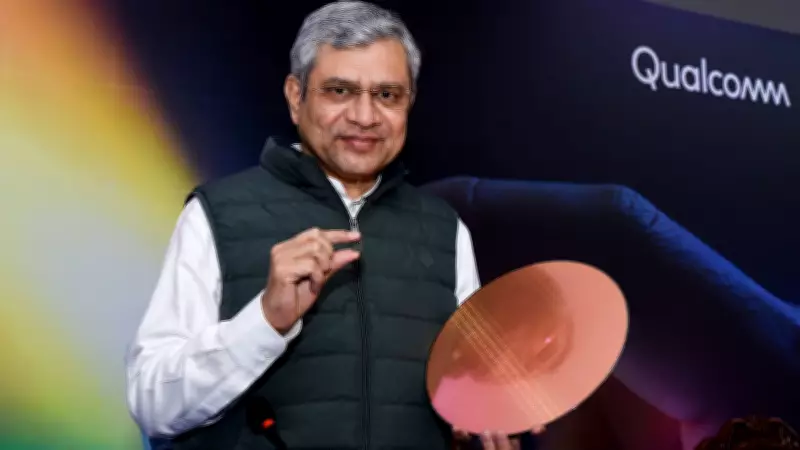
Union Minister Ashwini Vaishnaw has announced that India's semiconductor ecosystem is expanding at a rapid pace, driven by a robust talent pipeline, plans for new fabrication units, and increasing investments from global technology giants. The minister made these remarks during a visit to Qualcomm's design centre in Bengaluru, where he unveiled the company's 2nm semiconductor design tape-out.
Government Strategy Validated by Global Tech Expansion
The semiconductor ecosystem is very rapidly expanding, and the talent pipeline that we are creating will further accelerate it, said Vaishnaw, who holds portfolios for Railways, Information and Broadcasting, Electronics and IT. He emphasized that the expansion of companies like Qualcomm in India is more than just positive news—it signals that the country's long-term technology strategy is firmly taking root.
According to the minister, this momentum is built on a combination of factors:

- A strengthening talent pipeline with trained engineers
- New fabrication plants and ATMP (Assembly, Testing, Marking, and Packaging) units
- Expected arrival of equipment manufacturers to complete the ecosystem
Vaishnaw told mediapersons that the entire process, from defining customer requirements to designing the final silicon, taping it out, and validating it, is carried out here. This represents a significant shift from back-office development to end-to-end product creation within India.
Qualcomm's Milestone Achievement
Qualcomm Technologies Inc. announced the successful tape-out of its 2nm semiconductor design, marking a critical advancement in semiconductor technology. This achievement highlights India's emergence as a crucial hub for cutting-edge semiconductor development and demonstrates Qualcomm's commitment to supporting India's semiconductor ambitions.
The complexity of this achievement is extraordinary. Each die on the wafer contains approximately 20 to 30 billion transistors. Vaishnaw illustrated this by stating, It's like writing the entire Mahabharata, writing the entire Ramayana, and writing the entire Puranas on this small little chip; that is the level of complexity.
Prabhu Ram, VP-Industry Research Group at CyberMedia Research, noted that Qualcomm's 2nm chip, designed and taped out with significant engineering contribution from India, underscores the country's growing role in advanced semiconductor design. This reflects a broader transition from support functions to comprehensive chip design and system-level development.
Talent Development Exceeding Expectations
India's semiconductor talent pipeline has surpassed initial projections. Under the Semicon 1.0 mission, the government aimed to train 85,000 semiconductor professionals over ten years. Vaishnaw revealed that within just four years, 67,000 semiconductor-trained engineers have already been trained.
These engineers are now working across 315 universities and colleges equipped with semiconductor design EDA tools, designing chips and validating them at the semiconductor lab in Mohali.
AI Impact and Infrastructure Growth
The minister also addressed AI's dual impact on the Indian IT sector, acknowledging both disruption and opportunity. He stressed that this is the time when the industry, academia, and government should fully synchronize to ensure proper skill development for students and professionals.
Regarding infrastructure, Vaishnaw shared ambitious projections:
- Current committed investments in data centers stand at $70-90 billion, with expectations to exceed $200 billion in coming months
- This expansion is attracting AI server manufacturing to India, with two companies planning to establish facilities
- India's GPU capacity is set to grow from 38,000 GPUs to approximately 88,000, with further expansion under AI Mission 2.0
The message is clear: India is steadily positioning itself as a global hub for semiconductor design, manufacturing, and talent development. What began as a vision is now transforming into tangible capacity and substantial investment, creating a solid foundation for future innovation and growth in the technology sector.

