India's Semiconductor Strategy Enters New Phase with Design-First Approach
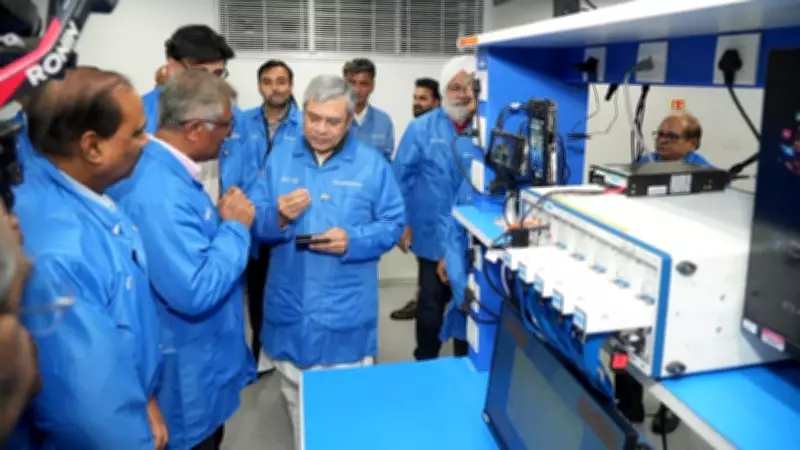
Electronics and Information Technology Minister Ashwini Vaishnaw has declared that design will be the foremost priority for India's upcoming Semiconductor Mission 2.0, signaling a strategic shift away from the country's historical role as a back-office development hub. The announcement was made during Qualcomm India's event in Bengaluru, where the minister launched an advanced semiconductor design utilizing cutting-edge 2-nanometer technology.
The End of the Back-Office Era
The era when India served merely as a center for back-office development is conclusively over, stated Minister Vaishnaw, emphasizing the nation's evolving technological capabilities. He highlighted that following equipment and materials, design represents the critical next frontier for India's semiconductor ambitions. This declaration marks a significant evolution in India's technology policy, moving from supporting roles to leading-edge innovation.
The minister pointed to recent developments as evidence of this transformation, noting that multiple global companies are now designing complete end-to-end products within India. He specifically mentioned that AMD has previously achieved similar milestones, and now Qualcomm has followed suit with their 2-nanometer chip design unveiled in Bengaluru's Whitefield area.

Artificial Intelligence: India's Next Frontier
Addressing the integration of artificial intelligence into India's technology landscape, Vaishnaw outlined a compelling opportunity for the nation. We now possess a robust industry capable of approaching any enterprise worldwide with technology-based solutions, he explained. Where India once provided software-based solutions, the country now stands ready to deliver AI-based solutions to global markets, representing a substantial upgrade in technological offerings.
The minister revealed concrete developments supporting this vision, disclosing that two companies have already expressed serious interest in establishing AI server manufacturing facilities within India. He connected this interest directly to the expansion of data centers across the country, creating a synergistic ecosystem for advanced technology manufacturing.
Manufacturing Infrastructure and Future Targets
Vaishnaw detailed how India's manufacturing infrastructure is evolving to support these ambitions. Through the Electronics Component Manufacturing Scheme, specialized units are being established to produce the most advanced printed circuit boards domestically. These components form essential parts of servers, enabling rapid scaling of manufacturing capabilities as demand increases.
Regarding semiconductor fabrication, the minister expressed measured optimism about India's progress. The country has begun with 28-nanometer chips used in automotive applications and is now charting a clear path toward producing 7-nanometer chips, learning from established semiconductor powerhouses like Taiwan and South Korea. This systematic approach aims to build domestic expertise gradually while targeting increasingly sophisticated manufacturing processes.
A Bold Vision for Domestic Fabrication
In his address to Qualcomm personnel, Minister Vaishnaw articulated an ambitious goal for India's semiconductor future. Let us establish as our target that the 2-nanometer chip should also be fabricated within India, he proclaimed, setting a visionary benchmark for domestic manufacturing capabilities. This statement reflects the government's commitment to not only designing advanced semiconductors but eventually producing them entirely within the country's borders.
The minister's comprehensive announcement at the Qualcomm event underscores a multi-faceted strategy for India's technological advancement, combining design leadership, AI integration, manufacturing development, and long-term fabrication ambitions into a cohesive national mission.