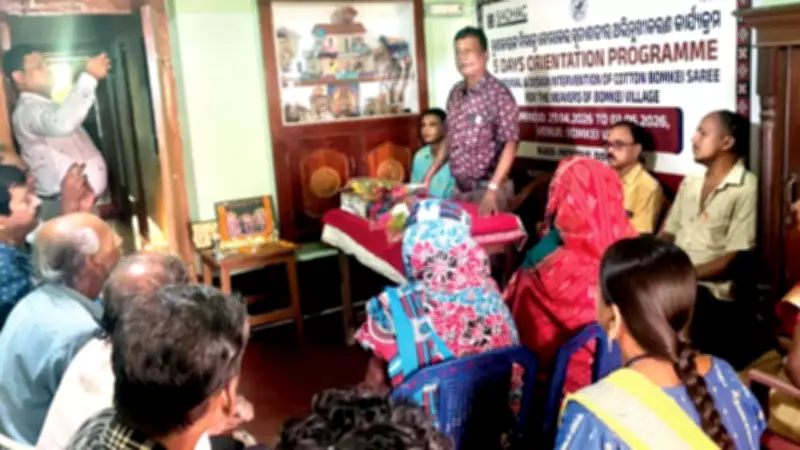
The Odisha government has initiated a revival plan to preserve the traditional Bomkai weaving craft, which is on the verge of disappearing in Ganjam district. The handlooms, textiles and handicrafts department has focused on two key areas: documenting the traditional designs and motifs of original and rare Bomkai weaves, and training a new generation of artisans in the weaving technique.
Documentation of Original Designs
Commissioner-cum-secretary of the department, Guha Poonam Tapas Kumar, stated that the initiative aims to safeguard the authenticity of the original cotton Bomkai saree, which now survives only in a few weaving families in Bomkai village. She explained that the documentation process is expected to preserve the weave's distinctive motifs, colour combinations and patterns for future generations. The project, titled 'Revival of Languishing Products (Cotton Bomkai Saree)', was approved by the state government in the last financial year.
To understand the challenges faced by existing weavers, the department conducted a five-day orientation programme in the village, in coordination with the State Agency for Development of Handloom Clusters. During this programme, details of Bomkai designs and colour specifications were collected from the weavers' families.

Department official Dipan Krushna Sahoo noted that due to growing demand, extensive modifications have been made to traditional designs, diluting the originality of the weave. He said, "We are documenting the original motifs and patterns and creating a database that can serve as a reference in the future."
Training New Artisans
The next phase of the project will focus on training more weavers from Ganjam district in the original Bomkai weaving technique. However, sustaining the tradition remains a challenge due to the lack of younger artisans in the village. Sapna Nayak, one of the remaining weavers, said most youngsters from Bomkai village have migrated to work in cotton mills in other states or taken up alternative businesses.
Officials plan to rope in people from surrounding villages who may be interested in learning the craft and pursuing it as a livelihood. The department aims to revive the dwindling artisan base and ensure the survival of this heritage craft for future generations.