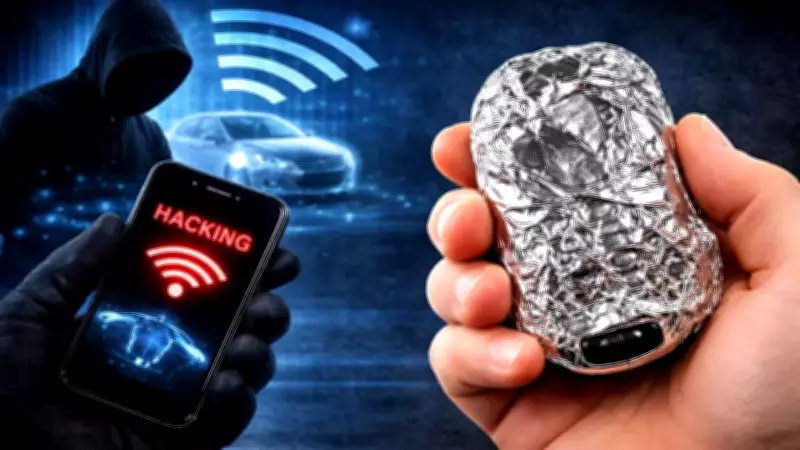
The Hidden Vulnerability in Modern Car Key Fobs
Modern automotive technology has transformed how drivers interact with their vehicles, particularly through advanced key fob systems. These sophisticated devices have eliminated the traditional need to insert physical keys or even press buttons in many cases. Contemporary vehicles can automatically detect when an authorized key fob is nearby, seamlessly unlocking doors and enabling engine start functions through proximity-based wireless communication.
The Growing Threat of Signal-Based Car Theft
This remarkable convenience, however, comes with significant security vulnerabilities that many vehicle owners overlook. As automobiles become increasingly intelligent and connected, criminal methodologies have evolved correspondingly. Signal-based attacks, especially relay attacks, have seen a concerning rise in frequency across global automotive markets in recent years.
These sophisticated theft techniques do not require physical access to your keys or vehicle. Instead, criminals exploit the constant radio frequency signals that modern key fobs emit, often without the owner's awareness. Thieves utilize specialized equipment to intercept and relay these signals, effectively tricking vehicles into unlocking and starting for unauthorized individuals.

How Key Fob Communication Systems Work
According to technical information from automotive security specialists, car key fobs operate using radio frequency signals typically ranging between 315 and 433 MHz. When a user presses a button on their key fob, the device transmits an encrypted coded signal to their vehicle, which then executes the requested action. For proximity-based systems, the key fob continuously emits signals that the vehicle detects when within range.
While these communication systems employ encryption for security, determined thieves have developed methods to bypass these protections without actually cracking the encryption algorithms. In a typical relay attack scenario, criminals deploy two coordinated devices. One device positions near the owner's residence to intercept the key fob's signal, while a second device near the vehicle relays this captured signal, effectively creating a wireless bridge that tricks the car into responding as if the legitimate key were present.
The Science Behind Aluminium Foil Signal Blocking
Aluminium foil provides surprisingly effective protection against these wireless attacks through its ability to function as a basic Faraday cage. A Faraday cage is any enclosure constructed from conductive material that blocks external electromagnetic fields. When radio frequency waves encounter properly applied aluminium foil, they cannot penetrate effectively. Instead, these electromagnetic signals become reflected or absorbed across the foil's conductive surface.
This physical barrier prevents the key fob's signals from escaping into the surrounding environment where thieves might intercept them. However, the effectiveness of this approach depends critically on proper application technique. Even minor gaps, tears, or imperfections in the foil wrapping can allow signal leakage that compromises the protective barrier.
Proper Technique for Wrapping Your Key Fob
To achieve reliable signal blocking, the aluminium foil wrapping must completely and securely enclose the key fob device. Begin with a sufficiently large piece of aluminium foil to allow complete coverage. Position the key fob at the center of the foil sheet, then fold and wrap the material tightly around the device, ensuring no visible gaps remain at any point.
Applying multiple layers significantly enhances the shielding effectiveness. Most security experts recommend three to four layers for consistent, reliable results. After wrapping, conduct a practical test by approaching your vehicle while carrying the foil-wrapped key fob. If the car fails to respond to proximity detection or button presses, the signal blocking is likely functioning correctly.

Advantages of Aluminium Foil Protection
- Cost-Effective Solution: Aluminium foil represents an extremely inexpensive and widely available material that requires minimal financial investment.
- Flexible Application: The material easily conforms to key fobs of any shape, size, or design without requiring modifications to the device itself.
- Reversible Protection: Users can remove the foil wrapping at any time without affecting the key fob's functionality, allowing normal operation when needed.
- Portability: Even when fully wrapped, the key fob remains lightweight and convenient for everyday carrying.
Limitations and Practical Considerations
Despite its advantages, aluminium foil protection presents several practical limitations that vehicle owners should acknowledge. The daily routine of wrapping and unwrapping the key fob can become inconvenient and time-consuming for regular users. Durability concerns also emerge, as foil material tends to tear easily with frequent handling, potentially creating microscopic holes that compromise effectiveness without visible indication.
Environmental factors like moisture and humidity can gradually degrade the material's conductive properties over time. Additionally, the aesthetic appearance of a foil-wrapped key fob may seem unprofessional or impractical for some users in social or professional contexts.
Comprehensive Vehicle Security Strategies
Signal blocking represents just one component of a comprehensive vehicle security approach. Additional protective measures include storing key fobs away from exterior doors and windows where signal interception becomes easier for potential thieves. Parking in secure, well-lit areas with surveillance provides another layer of protection.
Vehicle owners might consider installing additional security devices such as steering wheel locks, alarm systems with motion sensors, or GPS tracking systems. Some automotive manufacturers offer signal-blocking pouches specifically designed for key fobs, which provide more durable and convenient alternatives to homemade foil solutions while offering similar protective benefits against relay attacks.