Digital Artist Brings Psychedelic Experiences to Life Through CGI
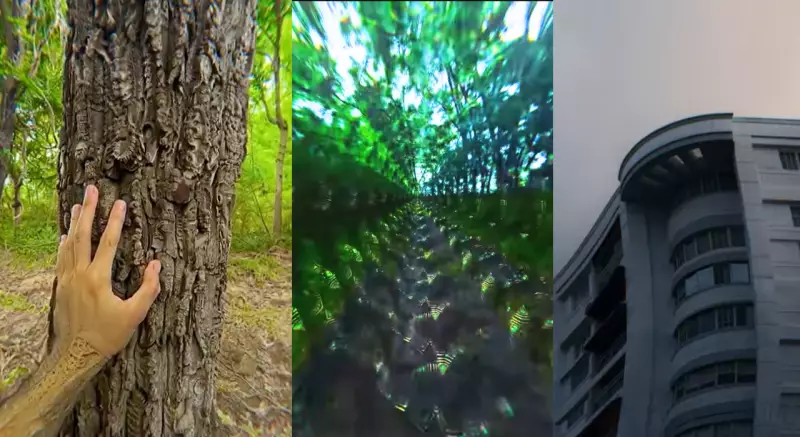
A remarkable digital simulation that accurately recreates the experience of a psychedelic trip without any substances has taken the internet by storm. Created by digital artist known as Loka_vision, the viral video provides viewers with a safe window into the mind-altering world of psychedelic visuals.
The simulation brilliantly captures the color-shifting patterns, visual distortions, and intricate geometric designs commonly reported by people who have experienced psychedelic substances. Shared widely on Instagram, the short clip has been viewed millions of times and attracted thousands of comments from amazed viewers.
The Mind Behind the Simulation
Loka describes himself as passionate about exploring "the mind's deeper dimensions" and uses CGI and audiovisual design to reproduce altered states of perception. His work aims to push the boundaries of how human consciousness can be represented visually.

The artist revealed that his visuals were inspired by his own experiences, where he witnessed "indescribably complex patterns embedded in surfaces, inanimate objects breathing, moving, warping, and colours shifting and cycling through different hues and shades." His simulation attempts to digitally recreate these fleeting and abstract perceptions into visible form.
Viewers familiar with psychedelic experiences have praised the accuracy of Loka's work. One comment that stood out read: "That is the most accurate visual I've ever seen for the hallucinations."
Beyond Visuals: The Full Psychedelic Experience
While viewers acknowledge how well the video captures the visual component of psychedelics, many noted that the complete experience involves more than just what meets the eye. Some users described accompanying sensations of euphoria, while others recalled feelings of anxiety depending on their setting and state of mind during their actual experiences.
Health professionals have taken this opportunity to caution about the psychological risks associated with actual psychedelic substances. These can include:
- "Bad trips" characterized by panic and confusion
- Potential unsafe behavior in some cases
- Triggering of latent mental health conditions
- Rare instances of Hallucinogen Persisting Perception Disorder (HPPD)
The Science Behind Psychedelic Vision
Scientific research provides fascinating explanations for why psychedelic experiences often feature vivid geometric imagery. A study titled "Neural Mechanisms of Psychedelic Visual Imagery" found that psychedelics primarily act on serotonin receptors, especially those in brain regions linked to vision and mental imagery.
This interaction reduces the brain's usual filtering of sensory data and heightens reliance on internal signals from imagination, memory, and expectation. As a result, the visual cortex begins generating its own imagery, blending external perception with internally created visuals.
An article in Quanta Magazine describes a similar process, noting that under psychedelics, the brain attempts to interpret chaotic neural activity by imposing order based on its intrinsic wiring. This produces repeating patterns such as spirals, lattices, and fractals.
The Cleveland Clinic's 2025 overview on hallucinations further explains that psychedelics "loosen the boundaries between reality and imagination," allowing the mind to project images even when no external visual input is present.
Together, these findings demonstrate that the vivid shapes and shifting colors reported during psychedelic experiences stem from altered communication between sensory input and top-down processing. When this balance is disrupted, the brain's visual system effectively paints its own version of reality.
Loka_vision's simulation serves as both an artistic achievement and an educational tool, providing insight into altered states of consciousness while highlighting the importance of understanding both the fascinating visual phenomena and the very real risks associated with psychedelic substances.