Fujifilm X-E5 Review: A Compact Powerhouse for Street Photography
The Fujifilm X-E5, paired with the 23mm f/2.8 pancake lens in its kit, presents an obvious choice for photographers seeking a portable setup. This combination mirrors the field of view of Fujifilm's renowned fixed-lens cameras, creating an intentional aesthetic that fits neatly into a jacket pocket. However, personal preferences led to swapping the kit lens for the XC 15-45mm zoom, as the 35mm equivalent didn't align with the author's framing style, which typically operates in the 35-50mm full-frame range.
Ergonomic Design and Build Quality
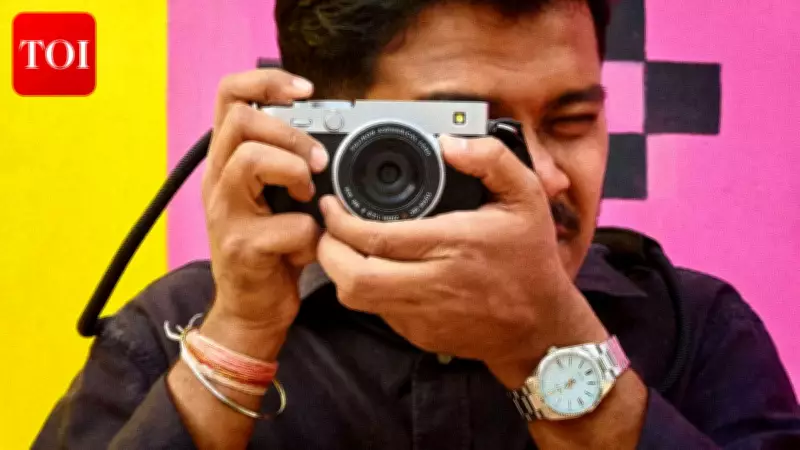
During a shoot in Mumbai's Kala Ghoda area, the camera's ergonomics became apparent. The body fits comfortably in one hand, with a modest grip that includes a carved bump on the front and a ridge on the back. This design ensures the camera sits securely, allowing fingers to locate controls intuitively without visual assistance. The top plate, machined from a single piece of aluminium using the same process as the GFX100RF, adds a sense of density that feels substantial rather than heavy. Knurled dials with bevelled edges provide tactile feedback, with exposure compensation accessible mid-walk without fumbling.
The included rope strap is a notable accessory, of a quality that would typically be purchased separately, avoiding the common fate of being discarded. Weighing 80 grams more than its predecessor, the X-E4, the X-E5 feels more robust and well-constructed, a difference perceptible within seconds of handling.

Sensor Performance and Image Quality
In South Mumbai, the 40MP X-Trans CMOS 5 HR sensor demonstrated its capabilities under challenging lighting conditions. At the Institute of Science building, with harsh afternoon light and deep shadows, exposing for the facade and recovering shadow detail in post-processing yielded clean results without colour noise or muddiness. This sensor, first introduced in the X-H2 in 2022, remains Fujifilm's top APS-C chip, excelling in contrasty scenes.
Details like the Carlton Hotel sign, featuring Devanagari and English text with "Since: 1956" in smaller print, showcase the benefits of 40 megapixels, enabling significant cropping while retaining clarity. Fujifilm's colour processing, exemplified by the Classic Chrome film simulation, produces images with balanced shadow falloff and warm tones that avoid excessive orange hues, giving frames a thoughtfully composed appearance.
Film Simulation and Customization
The film simulation dial on the X-E5 offers enhanced functionality through isolated recipe slots. Unlike other Fujifilm models where custom setups save the entire camera configuration, these slots store only image processing parameters such as grain intensity, highlight and shadow curves, clarity, and Colour Chrome settings. This separation allows photographers to switch between looks—like Classic Chrome for street scenes or Eterna for café shots—without altering operational settings, facilitating quick adjustments while on the move.
However, a design flaw exists: the dial's placement above the eye sensor can inadvertently trigger it when adjusting at eye level, turning off the rear screen—an annoyance in an otherwise meticulous design.
Viewfinder and Screen Features
The viewfinder, a 2.36 million dot OLED with 0.62x magnification, may seem modest for the price, but its Classic Display mode adds value. This option removes most overlays, presenting a minimal red LED-style readout and an analogue needle for exposure compensation, evoking the experience of using a 1970s SLR. This mode encourages greater presence and awareness during shooting.
The rear screen, at 1.04 million dots, is softer than desired and can struggle in direct sunlight, though its flip-forward function aids low-angle and self-facing shots. Unfortunately, mounting a microphone in the hot shoe obstructs the flipped screen, limiting its utility for vloggers.

Performance in Dynamic Environments
In Ho Chi Minh City's fast-paced District 1, the camera's autofocus system proved effective. Phase detection and eye AF quickly locked onto subjects like a Grab driver at a traffic junction or a fruit vendor in a bustling market, even through glare and visual noise. While continuous tracking lags behind competitors like Sony and Canon, it performed reliably for reactive street photography.
In-body image stabilization (IBIS), a first for the X-E series, enabled sharp handheld shots at slow shutter speeds, as seen in a poster shop interior captured at 1/40s. The Vietnamese alley scene, shot in Acros with grain simulation adding texture to shadows, exemplifies the camera's ability to capture nuanced urban moments.
Pricing and Considerations
Priced at Rs 1,44,990 for the body alone and Rs 1,61,990 with the 23mm kit lens, the X-E5 commands a premium for an APS-C camera. A significant drawback is the lack of weather sealing, which is puzzling for a model targeted at travel and street photographers, especially since the kit lens is weather-sealed. This omission can cause anxiety in unpredictable environments.
Despite this, the camera delivers a compelling package: a high-resolution sensor with excellent dynamic range, mature film simulation tools, premium build quality, and a compact form factor ideal for all-day carry. Across shoots in Mumbai and Ho Chi Minh City, it facilitated capturing memorable images—from the Carlton Hotel sign to vibrant street scenes—without drawing attention to itself, ensuring the focus remained on the photography.
At this price point, expectations are high, and the X-E5 largely meets them, earning a rating of 4 out of 5 for its blend of performance and portability.