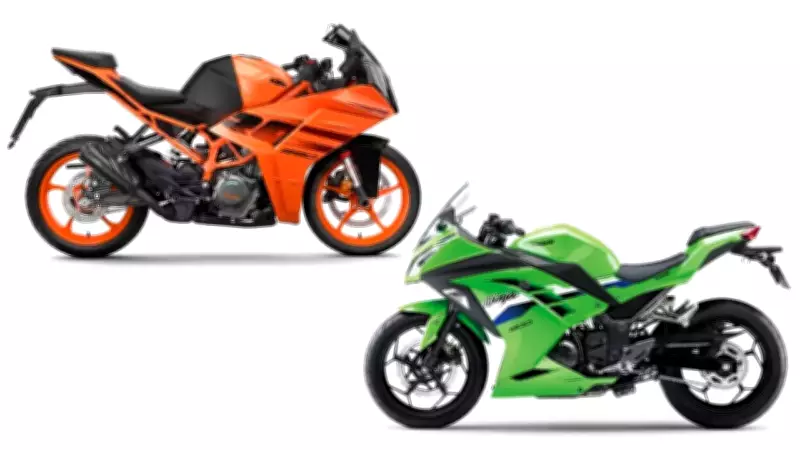
KTM RC 390 vs Kawasaki Ninja 300: A Head-to-Head Showdown for Indian Riders
For enthusiasts seeking an entry-level supersport motorcycle in the Indian market, the decision often narrows down to two prominent contenders: the KTM RC 390 and the Kawasaki Ninja 300. Both models have carved out significant reputations in this competitive segment, offering distinct characteristics that appeal to different riding preferences. This detailed comparison delves into their engine specifications, performance metrics, feature sets, hardware components, and pricing structures to help potential buyers make an informed choice.
Engine Specifications and Performance Dynamics
The most striking difference between these motorcycles lies in their powertrains. The KTM RC 390 is equipped with a robust 373cc, single-cylinder, liquid-cooled engine that delivers an impressive output of approximately 43 horsepower and 37 Newton-meters of torque. This powerplant is coupled with a smooth six-speed gearbox, providing aggressive acceleration and a thrilling ride experience suited for spirited street and track use.
In contrast, the Kawasaki Ninja 300 features a 296cc liquid-cooled parallel-twin engine that generates around 38 horsepower and 26 Nm of torque, also mated to a six-speed transmission. This configuration offers a smoother, more refined power delivery, making it ideal for riders who prioritize comfort and linear performance over outright peak power.

Features and Hardware: Technology and Components
When it comes to features, the KTM RC 390 stands out with its advanced technology suite. It boasts a full-color TFT display that supports smartphone connectivity, allowing riders to access navigation, calls, and music on the go. Additionally, it includes multiple riding modes, a slipper clutch for smoother downshifts, and a quick-shifter for seamless gear changes without using the clutch.
The Kawasaki Ninja 300 adopts a more minimalist approach with a semi-digital instrument cluster that provides essential information clearly. It comes with an assist and slipper clutch to prevent rear-wheel hop during aggressive downshifts, along with heat management technology to enhance rider comfort during long journeys. Both motorcycles are equipped with disc brakes and dual-channel ABS as standard safety features, ensuring reliable stopping power in various conditions.
In terms of hardware, the RC 390 utilizes USD (upside-down) front forks and a rear monoshock suspension, paired with larger front brake discs and performance-oriented components that enhance handling and stability. The Ninja 300, on the other hand, employs conventional telescopic front forks and a monoshock rear suspension, offering a balanced setup that prioritizes everyday ride comfort and predictability.
Pricing and Market Positioning in India
The pricing of these two motorcycles places them at the premium end of the entry-level sportbike spectrum in India, reflecting their quality and capabilities. The KTM RC 390 is priced at approximately Rs 3.22 lakh (ex-showroom), while the Kawasaki Ninja 300 starts at around Rs 3.17 lakh (ex-showroom). This close price proximity means that the decision often boils down to personal preference regarding performance characteristics, feature sets, and brand allegiance.
Ultimately, the choice between the KTM RC 390 and Kawasaki Ninja 300 depends on what the rider values most: the RC 390 offers raw power, advanced electronics, and track-focused hardware, whereas the Ninja 300 provides a smoother, more refined experience with proven reliability and comfort. Both models represent excellent options for those entering the supersport motorcycle arena in India.