

Samsung Display is set to redefine the application of screen technology, moving beyond smartphones and televisions. The company has confirmed its participation in the Consumer Electronics Show (CES) 2026 in Las Vegas, scheduled from January 6 to 9. Under a theme centred on new experiences, Samsung will demonstrate that OLED is ready for a wider world of devices, including robots, laptops, and automobiles.
OLED Gets a Face: The Robot Revolution
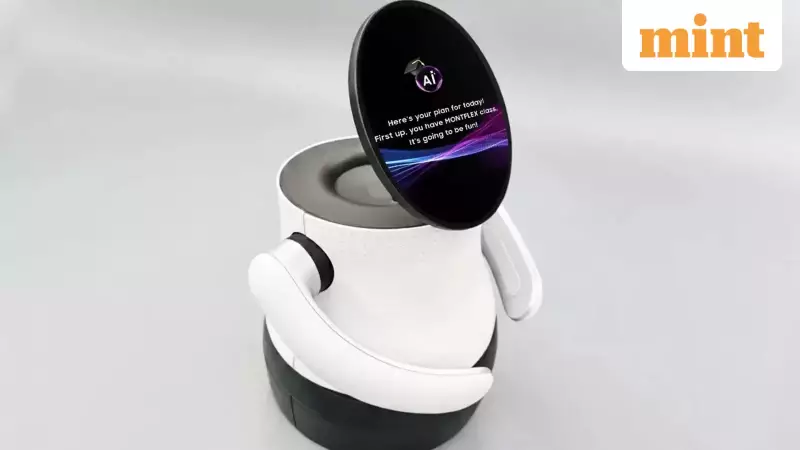
A central highlight of the Samsung booth will be the OLED Bot, a concept designed as a mobile assistant for university campuses. This robot features a 13.4-inch circular OLED screen that acts as its interactive face. The idea is to provide instant, silent visual communication in noisy environments like corridors and libraries, displaying practical information such as directions, professor details, and assignment updates.
The inherent flexibility of OLED technology is key to this application. Unlike traditional LCDs, OLED panels can be manufactured in curved, circular, and custom shapes. This allows designers to integrate a display seamlessly as a robot's face, rather than attaching a flat panel as an obvious add-on. While the future of campus robots is uncertain, the principle of using a clear, quick-read screen for quiet interaction presents a compelling case.

Proving Durability: From Basketballs to Bitter Cold
Samsung is tackling perceptions of OLED fragility head-on with dramatic demonstrations. One test involves a robotic arm repeatedly hurling basketballs at a backboard constructed from 18 foldable OLED panels, aiming to prove their resilience against repeated impact. A separate steel ball drop test further underscores this point of impact resistance.
Perhaps a more persuasive durability argument comes from automotive testing. Samsung Display is showcasing OLED performance in extreme cold, claiming its panels maintain a 0.2 millisecond response time even at temperatures as low as minus 20°C. In contrast, LCD performance reportedly slows significantly in such conditions. For modern cars, where displays control critical driver information and alerts, this lag-free performance is framed as a vital safety and usability feature.
Thinner, Lighter, Smarter: OLED for Next-Gen Laptops
For the laptop segment, Samsung is introducing UT One, a new panel structure that makes OLED displays 30% thinner and 30% lighter compared to older dual-glass designs. This advancement addresses two major concerns for portable computers: weight and bulk.
The new laptop panels also boast a variable refresh rate that can drop to 1Hz to save power during static tasks and scale up to 120Hz for smooth motion. On colour performance, Samsung claims full coverage of the demanding DCI-P3 and Adobe RGB colour spaces. For users, this translates to the classic OLED benefits of vibrant contrast and rich colour, now paired with significantly improved power efficiency to extend battery life.
The company's vehicle concepts at CES further broaden the horizon. Ideas like the Flexible L display, which bends across the dashboard to serve both driver and passenger, and a dedicated 13.8-inch passenger entertainment screen, highlight the multi-screen future of automotive interiors where display responsiveness is paramount.
In essence, Samsung Display's CES 2026 showcase makes a clear argument: the future of screens in robots, laptops, and cars demands thin, light, fast, and flexible panels. OLED, the company asserts, is uniquely positioned to meet these diverse needs, with laptops likely being the first mainstream category to see this expanded adoption, followed by a wider array of intelligent machines and vehicles in the years to come.






