

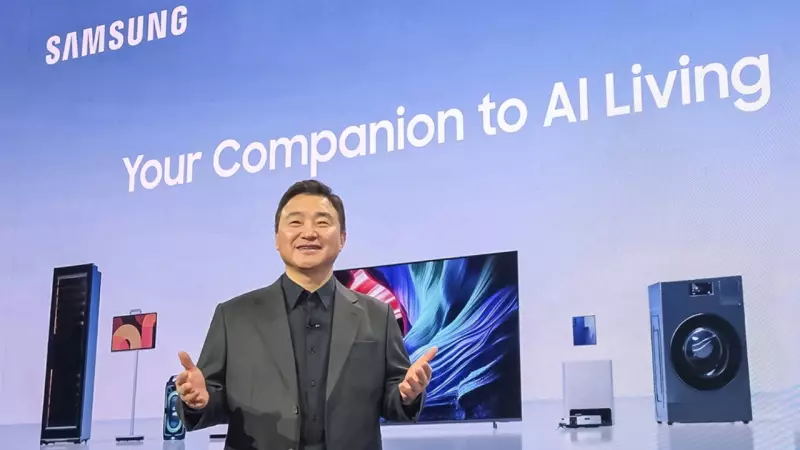
Samsung Electronics has made a spectacular entry into the future of home entertainment by unveiling the world's first and largest 130-inch Micro RGB television. The grand reveal of the R95H model took place at the Consumer Electronics Show (CES) 2026, where Samsung positioned this behemoth as its flagship display, showcasing what it calls "next-generation colour display and AI engine" capabilities for the ultra-premium market segment.
A Deep Dive into the 130-Inch Micro RGB Marvel
According to Samsung, the R95H represents the pinnacle of its Micro RGB innovation. The core technology involves microscopic red, green, and blue diodes that operate independently to generate colour, a method that promises superior brightness and more saturated colours capable of displaying a wider spectrum than ever before. The company asserts that this is its most advanced application of Micro RGB technology to date.
The television is not just about size; it's powered by a sophisticated AI processing engine designed to intelligently enhance picture quality. This AI works to lift details from shadows, refine contrast levels, and maintain colour accuracy across both brilliantly lit and dark scenes. The goal is to deliver a picture with vivid colour and subtle detail for maximum realism and fidelity.

Furthermore, Samsung has integrated its proprietary Glare Free technology into the 130-inch panel. This feature is engineered to minimise disruptive reflections from ambient light while preserving the clarity, colour, and contrast of the on-screen image, making it viewable in various lighting conditions.
Designed as an Immersive Experience
Samsung's design philosophy for the R95H moves beyond the traditional television. With its expansive frame and enhanced audio system, the display is intentionally crafted to resemble a vast, immersive window that visually expands the living space. It's meant to transform viewing into an experience.
On the software front, the giant TV supports HDR10+ Advanced and runs on Samsung's Tizen operating system. The company has committed to providing seven years of software updates for the platform, ensuring longevity and access to new features.
"Micro RGB represents the peak of our picture quality innovation, and the new 130-inch model takes that vision even further," stated Hun Lee, Executive Vice President of the Visual Display Business at Samsung Electronics.
AI Takes Center Stage: Football Pro Mode and Beyond
Samsung used the CES 2026 stage to emphasise how artificial intelligence will shape everyday entertainment. A key highlight was the introduction of an "AI Football Pro Mode" under the broader Vision AI Companion suite.
During the unveiling, Sukhmani Mohta, Chief Marketing & Partnerships Officer for Home Entertainment, demonstrated how this feature could revolutionise live sports viewing. "Vision AI Companion in AI football pro mode will completely transform how you experience each match," Mohta explained.
The AI sound control technology allows viewers to customise their audio experience dynamically. One can choose to mute the commentator, reset the audio mix, or even remove background crowd noise to focus solely on the commentary. The AI assistant can also provide pre-match information such as team rankings, key player stats, and predictions, making the viewing session more engaging and informative.
This move underscores Samsung's strategy to make AI an integral, interactive part of the big-screen experience, offering personalised control that goes beyond traditional remote functions.
The Future of Viewing is Here
The launch of the 130-inch Samsung Micro RGB TV at CES 2026 marks a significant milestone in display technology. It combines groundbreaking hardware with intelligent software to create a product aimed at the very top of the market. While the price and exact availability details were not disclosed in the initial announcement, the R95H sets a new benchmark for what is possible in terms of size, colour performance, and AI-driven interactivity in home entertainment. It signals a future where televisions are not just screens but adaptive, immersive portals powered by artificial intelligence.






