Sennheiser HDB 630 Review: Wireless Audiophile Headphones Finally Arrive
For decades, Sennheiser's HD 600 series has been the gold standard for serious audio enthusiasts, symbolizing a shift from bass-heavy consumer listening to nuanced, room-filling soundscapes. However, their reliance on wires, amplifiers, and quiet environments made them impractical for daily use. The new HDB 630 changes that paradigm entirely.
Design and Comfort: Function Over Flash
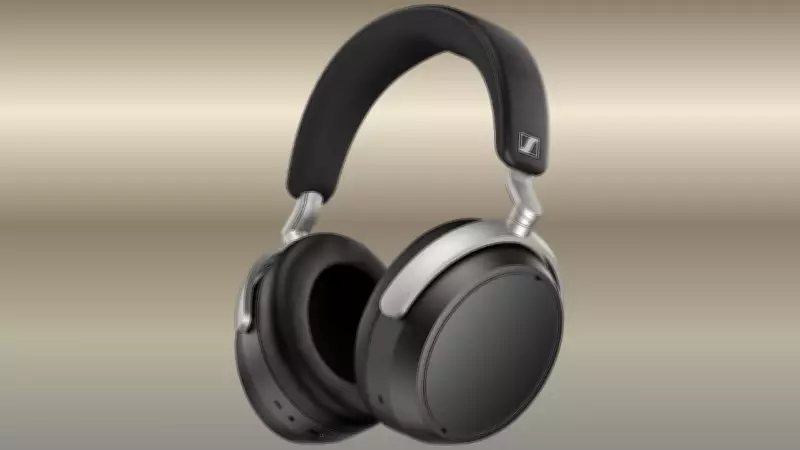
At Rs 44,990, the HDB 630 won't win any fashion awards. Their matte black oval earcups, silver accents, and minimalist studio monitor aesthetic prioritize utility over luxury. Some may find the silver connecting pieces slightly plasticky, and there's a subtle rattling when handled—minor flaws at this premium price point.
Where they excel is comfort. The deep, generously padded earcups fully envelop the ears without pressure, while the headband distributes weight evenly. The clamping force strikes a perfect balance: tight enough to seal for active noise cancellation (ANC) yet loose enough to avoid discomfort during extended sessions. Users can wear them through full workdays or long flights without constant adjustments.

The included hardshell carry case offers excellent protection, with dedicated slots for cables, a USB-C dongle, and an airplane adapter. Though bulkier than folding cases from competitors like Sony, its robust build justifies the size.
Sound Quality: Audiophile DNA Unleashed
The HDB 630 delivers Sennheiser's signature neutral sound profile, a refreshing departure from bass-heavy wireless ANC headphones. Bass is present but restrained—punchy without overpowering. Mids are forward and textured, with vocals positioned intimately in the mix. Treble remains controlled, avoiding harshness.
Detail retrieval is exceptional. Listening to complex tracks like D'Angelo's Voodoo reveals previously hidden instruments: buried Rhodes piano, melodic bass guitar, and precisely scattered percussion. These headphones dissect music rather than blending it into a pleasant mush.
The bundled BTD 700 USB-C dongle is a game-changer, especially for iPhone users. It bypasses standard Bluetooth limitations to enable aptX Adaptive, supporting high-resolution streams up to 24-bit/96kHz. The result is music with added body, dimension, and a less compressed feel. Wired listening via USB-C further enhances authority in bass and instrument separation, though the difference from the dongle is subtle.
Out-of-the-box tuning prioritizes accuracy over thump, which may feel lean for bass-heavy genres. However, the companion app includes a bass boost toggle and a parametric EQ for fine-tuning.
Noise Cancellation and Features
Sennheiser's ANC is effective but not class-leading. On flights, engine drone is reduced to manageable levels; in offices, background chatter fades adequately. It creates space for music without complete isolation. Default ANC is set to 60% to preserve sound quality, but cranking it to maximum in the app adds isolation without sonic penalty.
Adaptive mode adjusts intensity based on ambient noise, while transparency mode sounds natural for quick conversations. An anti-wind setting reduces ANC strength slightly when active. Compared to Sony WH-1000XM6 or Bose QuietComfort Ultra Gen 2, the HDB 630 lets more ambient sound through, especially voices.
The Smart Control Plus app offers robust features, including a parametric EQ for precise frequency adjustments, crossfeed for a speaker-like soundstage, and Sound Zones for location-based profiles. However, touch controls are finicky—volume swipes overshoot, play/pause triggers accidentally, and ANC gestures rarely work as intended. On-head detection can be temperamental, occasionally activating unintentionally.
Battery Life and Practicality
With up to 60 hours of battery life with ANC on, the HDB 630 outlasts competitors significantly. Real-world usage aligns closely with this claim, requiring only occasional charges over weeks of daily use. Using the dongle and high-res codecs reduces battery life to around 45 hours—still impressive.
Quick charging provides seven hours of playback from a ten-minute charge. Note that the headphones must be powered on for all playback modes, with no passive option available.

Verdict: A Sound-First Approach
The HDB 630 makes its priorities clear: sound quality comes first. Its detail, tonal balance, and spatial presentation surpass other wireless ANC headphones in this price range. The dongle elegantly solves Bluetooth codec limitations, the parametric EQ allows endless customization, and the battery life is exceptional.
Trade-offs include ANC that trails Bose and Sony, unreliable touch controls, and a design that doesn't scream luxury. These headphones aren't trying to be the best at everything—they aim to excel at sound, and they succeed. For audiophiles seeking wireless convenience without compromising audio fidelity, the HDB 630 is a compelling choice. For those prioritizing seamless integration and top-tier ANC, alternatives like the Sony XM6 remain safer bets.