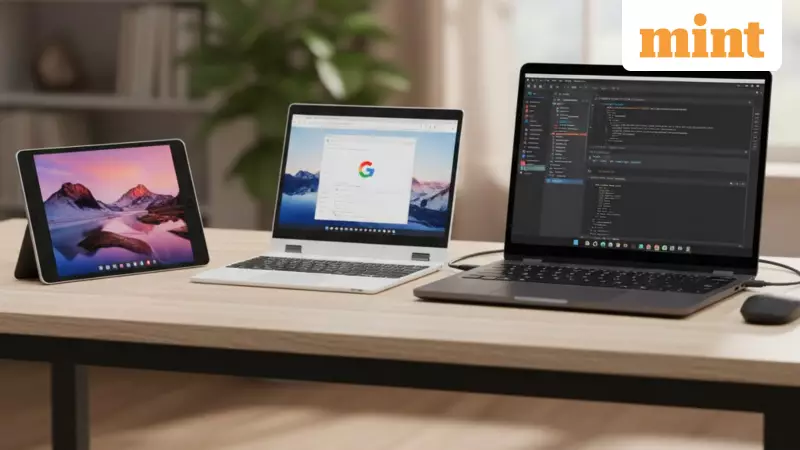
In today's evolving work environment, the distinction between tablets, Chromebooks, and traditional laptops has become increasingly blurred. Professionals across India now face a challenging decision when selecting their primary work device, as each category offers distinct advantages in portability, processing power, and practical functionality.
Tablets: Lightweight Powerhouses for Creative Professionals
Modern tablets have transformed from simple media consumption devices into capable work machines that handle most daily tasks with impressive efficiency. With significant improvements in processor technology, extended battery life, and the availability of detachable keyboards, tablets now function as legitimate portable workstations.
If your work primarily involves note-taking, sketching, document editing, or delivering presentations, a tablet provides an ideal solution. These devices start instantly, offer clean interfaces for quick app access, and maintain exceptional portability. When combined with a stylus, tablets become particularly valuable for designers, artists, and anyone who prefers hands-on creative work.

However, tablets do have limitations. They're not designed for heavy multitasking, managing large files, or running professional-grade software. Their true strength lies in portability and creative freedom rather than raw processing power.
Chromebooks: Streamlined Efficiency for Cloud-Based Work
Chromebooks occupy the middle ground between tablets and laptops, running on ChromeOS and catering specifically to users who primarily work online. These devices emphasize speed, security, and seamless integration with cloud storage and web applications.
For writers, students, educators, and professionals who rely heavily on Google Workspace applications, Chromebooks represent an excellent choice. They boot up rapidly, synchronize effortlessly across multiple devices, and deliver outstanding battery life. Most models combine lightweight design with affordable pricing, making them perfect for users seeking a clutter-free, efficient workflow.
The limitations of Chromebooks become apparent when dealing with resource-intensive tasks. Large-scale video editing, gaming, or running specialized software can feel restrictive on these devices. Nevertheless, for most online-based professional activities, Chromebooks provide reliable and efficient performance.
Laptops: Unmatched Power for Demanding Professional Work
Laptops continue to dominate as the preferred choice for professionals requiring substantial computing power, flexibility, and reliability. These machines comfortably run multiple applications simultaneously, handle large files without hesitation, and support both creative and technical software with ease.
From complex spreadsheet analysis to sophisticated 3D rendering, laptops deliver the complete computing experience while maintaining portability. They offer greater control over storage configurations, hardware upgrades, and peripheral accessories. If your work depends on advanced tools like Photoshop, Excel macros, or specialized coding environments, a laptop remains the most dependable option available.
The primary trade-off involves portability. Although modern laptops have become significantly thinner and lighter, they typically weigh more than tablets or Chromebooks. For users who prioritize performance and stability over ultra-light design, laptops continue to represent the unbeatable choice.
Making the Right Choice for Your Work Requirements
Each device category serves specific professional needs effectively. Tablets excel in mobility and creative applications, Chromebooks deliver simplicity and online efficiency, while laptops provide superior power and multitasking capabilities.
Your ideal device depends entirely on your work patterns and mobility requirements. If your daily activities revolve around cloud-based applications, email management, and web browsing, a Chromebook offers balanced performance and user-friendly operation. For professionals constantly on the move who need compact setups for writing or design work, a tablet suits these requirements perfectly. However, if you manage multiple demanding projects, require robust processing power, or depend on specific software applications, a laptop undoubtedly serves as your best investment.

Modern technological advancements have created significant overlap between all three categories. High-end tablets now mimic laptop functionality with detachable keyboards, Chromebooks support both Android and Linux applications, and ultra-light laptops approach the portability of tablets. This convergence means your selection can focus more on personal comfort and workflow preferences rather than rigid technical specifications.