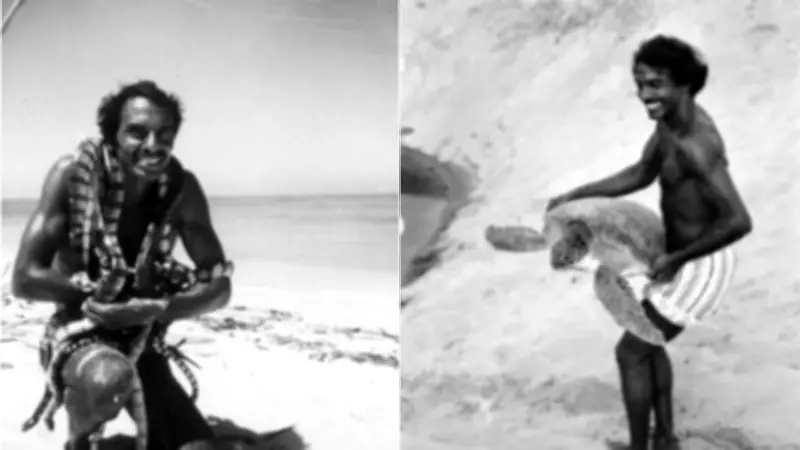
India's coastline stretches for more than 7,500 kilometers, touching remote beaches, mangrove forests, fishing villages, and some of the world's most important marine ecosystems. Yet, until a few decades ago, many of the country's sea turtle nesting sites remained undocumented. That changed thanks to the extraordinary efforts of an IIT graduate who chose a path very different from the one expected of him. Known today as the "Turtle Walker," Satish Bhaskar spent years walking nearly 4,000 kilometers along India's coast to identify and map sea turtle nesting beaches. Remarkably, he did much of this work before GPS was widely available, relying on observation, local knowledge, and a strong commitment to conservation.
Satish Bhaskar's 4000 km Turtle-Walk: The Start of an Unusual Journey
In the late 1970s and early 1980s, sea turtle conservation in India was still in its infancy. Information about nesting sites was scattered, and many coastal regions had never been scientifically surveyed. Rather than remaining in a conventional career, Satish Bhaskar devoted himself to understanding these ancient marine reptiles. His mission was simple but ambitious: travel along India's coastline and document where sea turtles came ashore to nest. What followed was one of the most remarkable wildlife surveys ever undertaken in the country.
Walking Thousands of Kilometres Without GPS
Today, researchers can use satellite imagery, drones, and GPS devices to track wildlife. Bhaskar had none of these tools. Instead, he traveled largely on foot, speaking to fishermen, coastal communities, forest guards, and residents. By combining local knowledge with direct field observations, he painstakingly recorded nesting beaches used by species such as the Olive Ridley turtle, Green Turtle, Hawksbill Turtle, Leatherback Turtle, and Loggerhead Turtle. The surveys took him across remote stretches of mainland India and the Andaman and Nicobar Islands. Often traveling in difficult conditions, he documented nesting sites that had never before been scientifically recorded.

Why Bhaskar's Discoveries Mattered
Bhaskar's work fundamentally shifted how scientists viewed sea turtles in India. He demonstrated that numerous coastal areas were critically important and identified nesting sites that required protection. A key achievement was emphasizing the ecological value of the Andaman and Nicobar Islands for marine turtles. His research ultimately shaped conservation plans and policies across the region. According to a newsletter released by the Indian Ocean Turtle, long-term field studies like Bhaskar's are essential for tracking population changes and preserving nesting sites. Even today, his data helps researchers understand turtle movement and prioritize protection efforts.
The Legacy of the 'Turtle Walker' Satish Bhaskar
Over the years, Bhaskar earned the nickname "Turtle Walker," a title that reflects both his dedication and the extraordinary distances he covered in pursuit of knowledge. His work demonstrated that meaningful scientific discoveries do not always require sophisticated technology. Sometimes, patience, persistence, and curiosity can achieve just as much. Marine biologists and conservationists continue to build upon the foundation he established decades ago. Many of the nesting beaches he documented are now recognized as important conservation areas.
Inspiring Future Generations of Conservationists
As environmental problems become increasingly complex, the story of the Turtle Walker reminds us what one person can achieve with pure grit and passion. Bhaskar walked nearly 4,000 kilometers without using GPS, an incredible feat. Yet, his journey yielded immense benefits. It safeguarded crucial marine species in India, advanced scientific understanding of sea turtles, and inspired a new generation of conservationists. These individuals now venture out of laboratories to engage directly with nature. His impact continues whenever we see protected beaches, baby turtles reaching the ocean, or researchers tracing coastlines for clues.

About the Author: TOI Science Desk. The TOI Science Desk is an inquisitive team of journalists, ceaselessly delving into the realms of discovery to curate a captivating collection of news, features, and articles from the vast and ever-evolving world of science for the readers of The Times of India. Consider us your scientific companion, delivering a daily dose of wonder and enlightenment. Whether it is the intricacies of genetic engineering, the marvels of space exploration, or the latest in artificial intelligence, the TOI Science Desk ensures you stay connected to the pulse of the scientific world. At the TOI Science Desk, we are not just reporters; we are storytellers of scientific narratives. We are committed to demystifying the intricacies of science, making it accessible and engaging for readers of all backgrounds. Join us as we craft knowledge with precision and passion, bringing you on a journey where the mysteries of the universe unfold with every word.