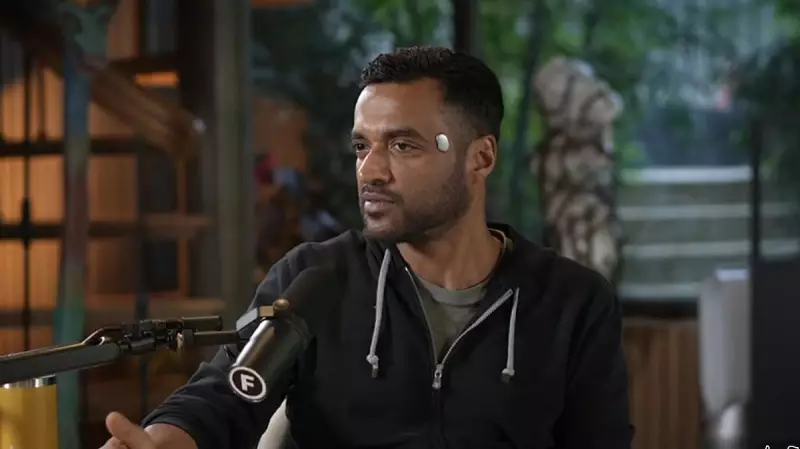
Deepinder Goyal, the founder and CEO of Indian food delivery giant Zomato, recently became the center of a tech mystery. A picture of him wearing a curious device strapped to his face has ignited widespread speculation online. Was he testing the futuristic Apple Vision Pro spatial computer, or was it a sophisticated health monitoring gadget?
The Viral Picture That Started It All
The image, which quickly circulated on social media platforms, shows Goyal in what appears to be a casual setting. The focal point, however, is the sleek, dark band wrapped around his head, with a compact module sitting prominently on his forehead. This wasn't a typical pair of smart glasses or VR goggles, leading to a frenzy of guesses from tech enthusiasts and the general public alike.
Many observers initially jumped to the conclusion that it was the highly anticipated Apple Vision Pro. Apple's mixed-reality headset is known for its premium design and spatial computing capabilities, allowing users to blend digital content with their physical space. Given Goyal's profile as a leading tech entrepreneur, testing such cutting-edge hardware seemed plausible.

Unveiling the Device: More Than Meets the Eye
However, a closer look and insights from industry watchers suggest the device is likely not the Apple Vision Pro. The design and form factor differ significantly. Instead, evidence points towards it being a specialized health and wellness tracker. Devices like the "Ultrahuman Ring Air" or advanced wearable sensors from companies like Whoop are designed to monitor key physiological metrics continuously.
Such wearables typically track a range of vital data points, including:
- Heart Rate Variability (HRV): A key indicator of recovery and stress levels.
- Skin Temperature: Monitors for fluctuations that can signal illness or metabolic changes.
- Blood Oxygen Levels (SpO2): Tracks respiratory health and sleep quality.
- Sleep Patterns: Analyzes sleep stages, duration, and disturbances.
For a high-performance CEO like Goyal, managing stress, optimizing sleep, and ensuring peak physical and mental condition are crucial. Continuous biometric monitoring provides data-driven insights to improve recovery, manage workload fatigue, and enhance overall well-being. This aligns with a growing trend among executives and athletes who rely on quantifiable data to optimize their health.
The Bigger Picture: Wearable Tech Goes Mainstream
This incident highlights a significant shift in the technology landscape. Wearable devices are evolving beyond wrist-worn fitness bands and smartwatches. The future points towards more integrated, unobtrusive form factors that can gather more accurate and comprehensive health data. A device worn on the forehead or temple can potentially access more precise readings than a wrist-based sensor.
Deepinder Goyal's inadvertent product showcase demonstrates how health tech is becoming a silent partner in the lives of leaders. It moves the conversation from simple step counting to advanced biometric optimization for cognitive and physical performance. While the Apple Vision Pro represents the future of interactive computing, the device on Goyal's face may well represent the future of personalized, preventive healthcare.
The intrigue also underscores the public's fascination with the gadgets adopted by influential tech figures. Their choices often serve as early indicators of broader market trends. Whether for spatial computing or deep health analytics, the line between personal technology and personal well-being is blurring rapidly, and India's corporate leaders are already at the forefront of this adoption.