

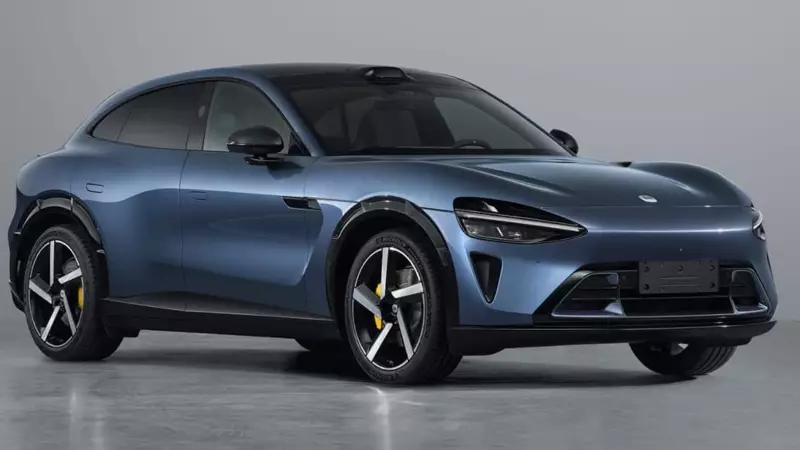
In an unprecedented move to counter online criticism and viral misinformation, Xiaomi's founder and CEO Lei Jun kicked off 2026 with a dramatic live broadcast. The event, which stretched for nearly five hours, featured a complete, on-camera teardown of the company's Tesla-rivaling electric SUV, the Xiaomi YU7.
Addressing Controversy Head-On: The Live Dismantling
The livestream, held this week, was a direct response to a wave of discussions and critical clips circulating on Chinese social media. Lei Jun, alongside company engineers, systematically took apart a green Xiaomi YU7 standard model that was produced in December 2025. The goal was to transparently address public scrutiny and demonstrate the vehicle's engineering integrity.
According to reports, the online criticism included several key points. These were misquotes about the YU7's driving range, viral videos falsely claiming "200 km/h instant braking," and manipulated clips showing wheels detaching during collisions. Other issues involved marketing disclaimers in small font, a rumored incident dubbed the “green belt incident,” and a false rumor that Xiaomi restricted farmers from selling its products. Questions were also raised about the build quality of the YU7, which is Xiaomi's second mainstream EV after the SU7 sedan launched earlier.

During the broadcast, Lei Jun clarified each point, explaining the engineering rationale behind the car's design choices. He emphasized the need for fair and fact-based reviews in the automotive space.
A Step-by-Step Look Inside the YU7
The engineering team left no bolt unturned. The live teardown process methodically reduced the SUV to its bare body shell. It began with the removal of the four doors and two hoods. Subsequently, the interior and exterior trim pieces were taken off, followed by the chassis and the complete electric drivetrain. Finally, the front compartment, thermal management system, instrument panel, and wiring harness were dismantled.
This exhaustive process gave viewers a rare, detailed look at the YU7's core structures. The broadcast highlighted the vehicle's integrated die-cast body, robust door side-impact beams, and the sophisticated layout of its electric powertrain.
Why Xiaomi Chose This Radical Transparency
Lei Jun stated that while Xiaomi initially believed its strong products would speak for themselves, the growing volume of user feedback prompted a more direct and immediate response. The company decided to tackle the concerns head-on with undeniable visual evidence.
A significant part of the discussion focused on addressing specific safety concerns about the YU7's doors. Xiaomi engineers clarified that the SUV uses mechanical pull cables for both interior and exterior handles. They provided a crucial safety assurance: in the event of an extreme collision where both the main and auxiliary batteries fail, a dedicated backup power source allows the door locks to switch to independent power and mechanical control. This ensures the doors can always be opened mechanically from the outside, while interior handles remain functional.
Concluding the session, Lei Jun welcomed independent reviewers and automotive media to conduct their own teardowns of Xiaomi vehicles. He called for objective assessments and cautioned against exaggerated criticism designed solely to generate online traffic. The roughly five-hour broadcast is reported to have captured widespread attention across China, marking a bold new chapter in how tech automakers engage with public discourse.






