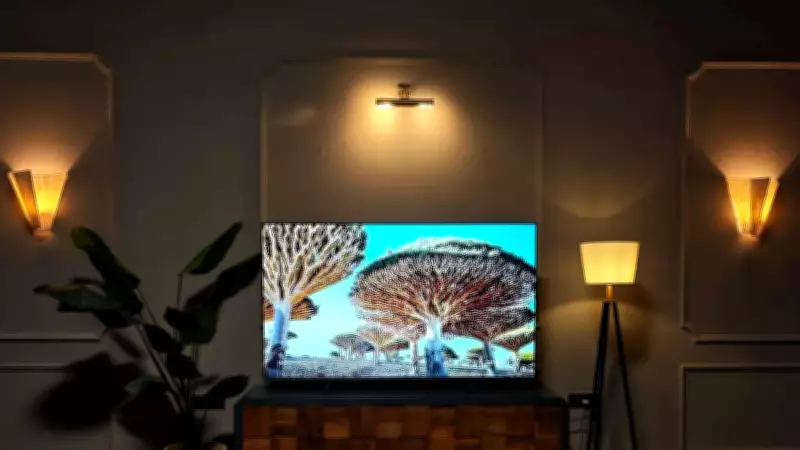
The 75-inch TV segment has long been dominated by premium brands like Sony, Samsung, and LG, with prices starting at Rs 1.2 lakh and above, excluding soundbars. Xiaomi aims to disrupt this with the X Pro QLED 75, its largest TV in India, priced at Rs 69,999, and dropping to Rs 64,999 with select card offers. The key question is not whether Xiaomi can build a more affordable large TV, but what compromises are made to achieve that price. After weeks of use, the trade-offs are fewer than expected given the Rs 50,000 price gap.
Design and Build: Premium Feel at a Budget
A 75-inch TV is as much a piece of furniture as an electronic device. The X Pro 75 manages to look the part with slim bezels on three sides, a metal frame around the panel, and a brushed back finish that is noticeable mainly when wall-mounted. Xiaomi keeps its branding minimal with a small bottom chin, showing restraint. Weighing 18.7kg without the stand, it is manageable but not light; two people can wall-mount it without difficulty. The bundled stand legs require a TV unit at least 1.6 meters wide, so measuring before delivery is wise. Wall-mounting is the cleaner option, and most rooms benefit from the cinematic angle. The remote is the familiar long, slim Xiaomi design with a number pad and shortcut keys for Netflix, Prime Video, JioHotstar, and YouTube. It works well but is long enough to slip between sofa cushions, so keep a designated spot for it.
Display: QLED Panel with One Caveat
The 4K QLED panel covers 94% of the DCI-P3 color space and supports both Dolby Vision and HDR10+, a spec list that would have commanded a six-figure price not long ago. In a room, colors are vivid without being cartoonish; skin tones remain natural, and 178-degree viewing angles ensure off-center seats retain color fidelity. Content like Planet Earth III on Netflix looks cinematic, with foliage and wildlife textures holding detail. HDR content mastered for Dolby Vision showcases the panel's highest performance. However, peak HDR brightness sits around 900-1,000 nits in vivid mode, sufficient for a normally-lit living room but requiring curtains drawn for daytime HDR viewing. Black levels are decent for an edge-lit QLED, though not OLED-tier; in dim light, blacks lean toward dark gray, and mild backlight bloom may appear in high-contrast scenes. These are typical for this price range. Filmmaker Mode is a highlight, stripping motion smoothing and sharpening for a true film experience.

The 120Hz Asterisk Xiaomi advertises 120Hz, but the panel is native 60Hz. The 120Hz figure comes from Dual Line Gate (DLG) technology, which doubles perceived refresh rate by halving resolution to 1080p. On a 75-inch screen, the drop is noticeable. In practice, this matters less for sports and casual use; MEMC handles motion well at native 4K 60Hz, and live broadcasts don't run at 120Hz. ALLM reduces input lag for console gaming, making FIFA and Call of Duty responsive. However, for PC gaming or PS5 titles requiring native 120Hz at 4K, the X Pro 75 falls short due to lack of full HDMI 2.1 bandwidth and proper VRR.
Audio: Clean but Limited
The 34W boom box system handles dialogue and everyday viewing well, sounding clean and loud enough for a medium living room without distortion at high volumes. DTS Virtual:X adds width. However, films reveal the audio's limitations; there is no low-end thump, and the soundstage doesn't match the 75-inch picture. The eARC HDMI port supports Dolby Atmos passthrough, so a soundbar transforms the experience. Treat the built-in speakers as a stopgap.
Software: PatchWall and Google TV Combo
Xiaomi's PatchWall layered over Google TV is a rare case where a tweaked Android skin adds value. PatchWall aggregates content from over 30 Indian OTT partners and surfaces trending shows, useful when deciding what to watch. Google TV handles personalized recommendations and profiles. Xiaomi TV+ offers free live TV channels over the internet. AirPlay 2, Google Cast, and Miracast are built-in, and Google Assistant works via the remote mic. The Quad-Core A55 chip with 2GB RAM and 32GB storage handles app switching smoothly, though some menu lag may develop over time. 32GB storage is generous for the segment.

Connectivity
Three HDMI ports (one with eARC), two USB 2.0, Ethernet, optical out, AV input, antenna, and a 3.5mm jack are included. Bluetooth 5.0 and dual-band Wi-Fi handle wireless connections. Enough for a console, soundbar, streaming stick, and hard drive.
Verdict
After weeks of use, the X Pro 75's limits feel appropriate for its price. Brightness has a ceiling, the 120Hz claim relies on DLG, and speakers are adequate but not immersive. However, Dolby Vision and HDR10+ are properly implemented, Filmmaker Mode is included, and 32GB storage exceeds the segment standard. These are choices Xiaomi could have skipped to protect margins but didn't. For most buyers upgrading to their first 75-inch TV, this is a compelling option. At Rs 69,999, it offers a lot of TV for the money.
Rating: 4/5