

As the final day of 2025 arrives, it prompts a profound reflection on the trajectory of technological progress. Looking back a quarter-century to the misplaced optimism of the year 2000, when many believed the internet would democratize knowledge and unite the world, offers a crucial lesson. The reality proved more complex, with connectivity often weaponized and societies fractured by digital echo chambers.
The Four Axes of Future Transformation
Despite the difficulty of prediction, four primary axes are poised to define technological and societal change over the next 25 years. The most significant shift may occur not in silicon, but in biology.
1. The Bio-Manufacturing Revolution
Synthetic biology is set to move from labs to local communities. The coming decades will see the rise of precision fermentation and cell-free enzymatic systems, allowing us to 'brew' essential products on demand. This means pharmaceuticals, fabrics, fuels, and food could be produced locally by neighbourhood 'brewers'.

This shift to distributed bio-manufacturing ecosystems could decouple economic growth from relentless resource extraction, potentially marking the end of the dominant 'Age of Oil'. It represents a fundamental rethinking of industrial production.
2. The Commoditization of Intelligence
The second axis is intelligence—extending beyond today's large language models to a form of pervasive machine cognition. When personal AI systems become commonplace, they will trigger profound changes.
Always-on medical diagnostics will detect health threats long before they become critical, shifting medicine from reactive to predictive. Education will be transformed by AI tutors offering one-on-one, personalized learning paths. Micro-efficiencies will permeate daily life, with smart traffic systems, energy-grid negotiations, and automated home management freeing human attention for higher-order tasks.
3. The Final Frontier Becomes Industrial
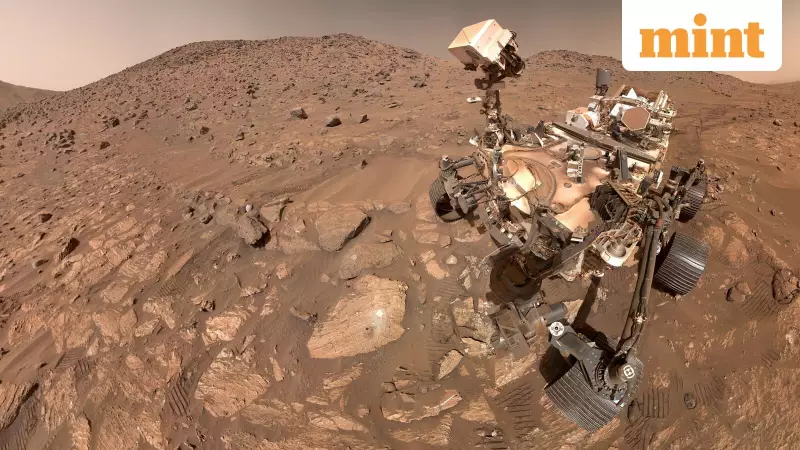
The third axis is space, evolving from an arena of exploration to one of industry. Even if a human mission to Mars by 2050 remains uncertain, the use of space for manufacturing and supply chain augmentation will likely begin.
Microgravity environments will enable the production of high-value materials impossible to make on Earth. The mining of asteroids for resources could begin to supplement terrestrial supply chains, opening a brand new dimension for our planetary civilization.
4. The Energy Abundance Breakthrough
Closely linked to space is the fourth axis: energy. The perennial challenge of clean, abundant power may find its solution in orbit. Space-based solar power platforms could collect continuous, uninterrupted solar energy and beam it wirelessly to Earth.
Free from weather, seasonal, and land constraints that hinder terrestrial renewables, this technology promises to deliver carbon-free baseload power, fundamentally altering the global energy landscape.
Institutional Adaptation: The Real Challenge
History warns that we often overestimate the speed of technological change while underestimating its complex second-order effects. The true narrative of the next quarter-century may hinge less on the technologies themselves and more on our capacity for institutional redesign.
Synthetic biology will raise deep ethical questions about engineering life. Commoditized intelligence will force societies to define the boundaries between human agency and automated decision-making. The scramble for orbital slots and space-based resources risks turning a global commons into a new geopolitical battleground.
Whether the period from 2025 to 2050 is remembered as a 'New Long Boom' of shared prosperity or an era where new sources of abundance further fracture the global order will depend entirely on how our geopolitical and institutional architectures evolve to harness these transformations.






