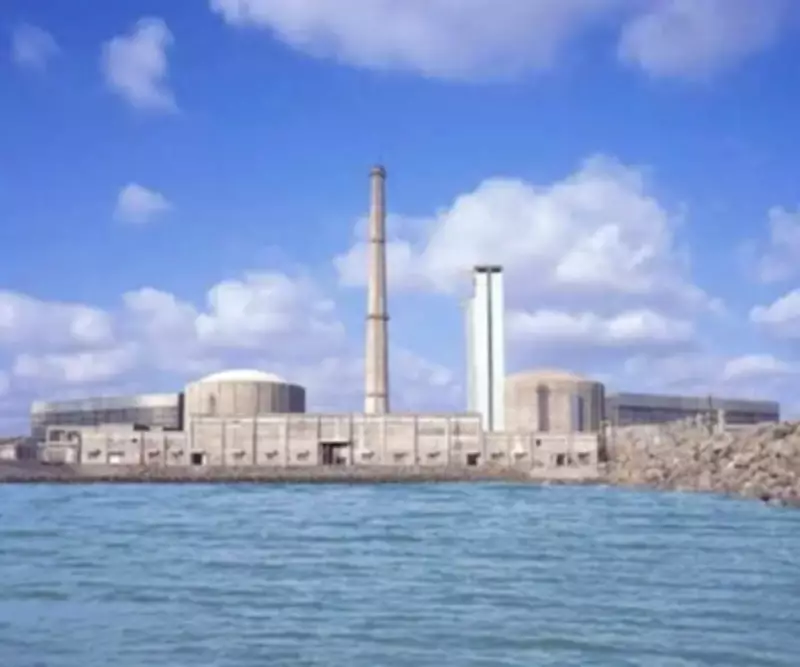
The Atomic Energy Regulatory Board (AERB) has granted approval for the restart and continued operation of Unit-2 at the Tarapur Atomic Power Station for an additional 10 years. This decision follows a comprehensive refurbishment and safety upgrade program executed by the Nuclear Power Corporation of India Limited (NPCIL).
Approval Process and Safety Review
The approval was officially issued on May 7 after a multi-tiered safety review conducted by the nuclear regulator. During its meeting on May 6, the AERB board acknowledged the refurbishment work, safety enhancements, inspection findings, and detailed technical assessments before permitting the reactor restart. The rigorous evaluation underscores the commitment to maintaining high safety standards.
Historical Significance of Tarapur Units
Tarapur Units 1 and 2 are India's first boiling water reactors (BWRs) and began commercial operations in 1969. They are also recognized as Asia's first commercial nuclear power plant units. The station is situated near Boisar in Maharashtra's Palghar district. These units hold a special place in the history of India's nuclear energy program.

The approval arrives at a crucial time for India's nuclear power program, as the country expands its next-generation nuclear fleet. Recent milestones include the activation of the second stage of the fast breeder reactor program at the Madras Atomic Power Station in Kalpakkam, highlighting India's progress in advanced nuclear technology.
Tarapur Complex and Power Contribution
The Tarapur Atomic Power Station remains one of India's most vital nuclear complexes. In addition to the two aging 160 MWe BWR units, the site houses two Pressurised Heavy Water Reactors (PHWRs) — Units 3 and 4 — each with a capacity of 540 MWe. These are among the largest indigenously built PHWRs in the country. Collectively, the four reactors significantly contribute to western India's power supply and form a key component of India's nuclear generation network.
Refurbishment and Safety Upgrades
According to AERB, the refurbishment of Unit-2 involved the complete replacement of reactor coolant recirculation piping with advanced corrosion-resistant stainless steel forged piping and fittings. Major safety upgrades included the commissioning of a Reactor Containment Filtered Venting System and an Alternate Cooling Water System. Sources indicate that the refurbishment was completed at the lowest possible cost, ensuring economic efficiency.
During the shutdown period, critical inspections were performed on reactor components, including reactor pressure vessel welds, to assess aging and residual life. The regulator concluded that the reactor could continue safe operation with normal maintenance and surveillance measures.
Regulatory Oversight and Future Operation
AERB stated that it will maintain regulatory oversight and monitor the safety performance of both Tarapur units. Earlier, Unit-1 of the station underwent a similar refurbishment exercise and was cleared for restart in December 2025. That unit is currently operating at its rated capacity of 160 MWe.
As India advances with innovative reactor technologies to ensure long-term energy security and implement its three-stage nuclear roadmap, the extension of aging but strategically important reactors like Tarapur underscores the ongoing role of legacy nuclear assets in maintaining base-load low-carbon electricity generation.