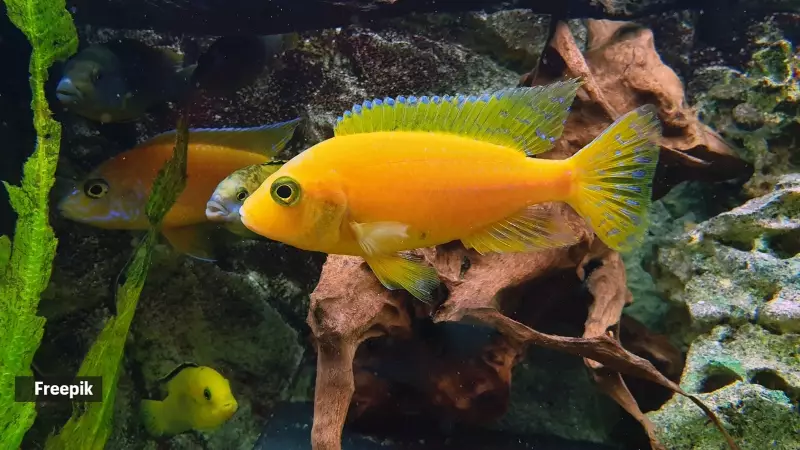
In a fascinating fusion of biology and mathematics, engineers are looking to an unlikely source for inspiration: the ornate boxfish. This small, cubic marine creature, native to Australian waters, sports a vibrant skin decorated with an array of spots, stripes, and hexagons. Researchers have now discovered that these complex natural designs can be accurately mapped and reproduced using a mathematical framework first proposed by Alan Turing, the pioneering mind often called the father of modern computing.
The Turing Pattern Connection
Two engineers from the University of Colorado Boulder, Siamak Mirfendereski and Ankur Gupta, have developed a new mathematical model that successfully replicates the intricate patterns found on the ornate boxfish. Their model, detailed in a study published in the journal Matter, goes a step further by incorporating the natural imperfections—like graininess and line breaks—observed in real life, which previous simulations often missed.
Ankur Gupta explained that this breakthrough helps close the gap between idealized mathematical theories and the complex reality of biological systems. "This helps bridge the gap between mathematical models and the messy beauty of biological reality," Gupta stated. He added that this understanding could one day lead to advanced applications, including bio-inspired fabrics for better camouflage and innovations in the field of soft robotics, where machines are built from flexible materials like silicone instead of rigid parts.

From Leopard Spots to Boxfish Stripes
The foundation of this research lies in a theoretical model published by Alan Turing back in 1952. Turing proposed that certain patterns in nature emerge from a process involving diffusion—where particles spread out from crowded to less crowded areas—and chemical reactions. While diffusion typically leads to uniformity, Turing demonstrated that under specific conditions, this combination can spontaneously generate organized designs like stripes, spots, and hexagons. These are now universally known as Turing patterns.
The mathematics of Turing patterns has been instrumental in explaining a wide array of natural phenomena, from the spots on a leopard and the swirls on a seashell to the formation of human fingerprints and even the distribution of matter in galaxies. Computer simulations based on this principle have recreated some biological patterns, but they often produced results that were too perfect, failing to capture the inherent flaws and variations seen in living organisms.
Sharpening Nature's Blurry Edges
Gupta's team faced a key challenge: their initial simulations of the boxfish's pigment cells produced patterns that were blurry, unlike the sharp designs found on the actual fish. "A diffusive system is, by definition, diffuse," Gupta noted. "So how can you get sharp patterns?"
The solution emerged in 2023 when a student in Gupta's research group introduced a different type of cell movement into the simulation. This process, known as diffusiophoresis, describes how cells in a fluid can clump together and move collectively, pulled by the motion of other diffusing particles. This is the same mechanism that allows soap to pull dirt out of clothing during a wash cycle. By incorporating this, the simulated boxfish patterns became significantly sharper and more defined.
To introduce the desired natural imperfections, Mirfendereski further refined the model to account for individual cells bumping into each other. As the patterns formed, so did the flaws: stripes varied in thickness, some hexagons were incomplete, and spots sometimes bled into one another. According to Gupta, these imperfections can be intentionally adjusted, offering a level of control over the final design.
The Path to Bio-Inspired Innovation
While the new model is a significant step forward, the researchers acknowledge it is still a simplified version of a highly complex biological reality. It does not account for all the intricate interactions between cells or the specific biological mechanisms of pigment production.

Nevertheless, Turing's foundational work continues to provide a powerful tool for scientists. Researchers have already used his model to engineer patterns in growing bacteria colonies and rearrange the stripes on zebrafish. The principles are also being applied in seemingly unrelated fields, from developing more efficient water filters to understanding patterns in human settlement.
"We learn how biology does it so that we can replicate it," Gupta said, though he confessed his primary motivation was sheer curiosity. He expressed a keen interest in unraveling how nature masterfully creates the "imperfect but distinctive patterns that have fascinated biologists for decades." This research not only decodes the secret language of fish skin but also opens a new chapter in bio-inspired engineering.