

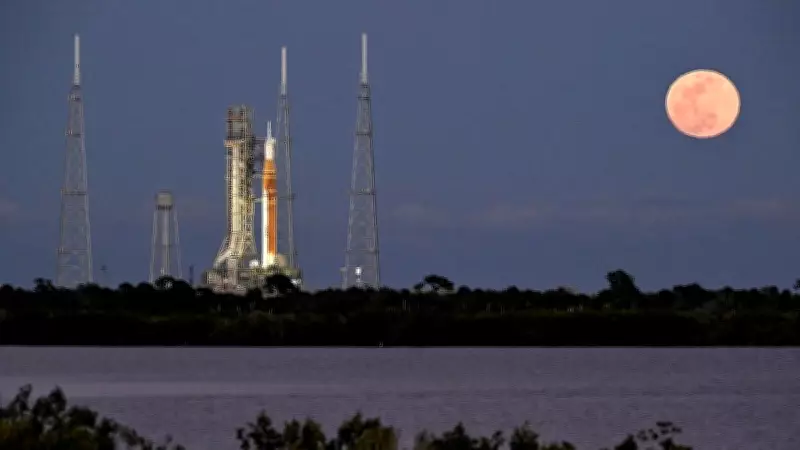
In a significant step toward humanity's return to lunar exploration, NASA's Artemis II mission is progressing with preparations for its historic journey around the moon. This ambitious mission will mark a crucial milestone in the Artemis program, aiming to pave the way for future human landings on the lunar surface.
Artemis II Mission Overview
The Artemis II mission represents the first crewed phase of NASA's broader Artemis program, which seeks to establish a sustainable human presence on the moon. Unlike its predecessor, Artemis I, which was an uncrewed test flight, Artemis II will carry a four-member astronaut crew on a flyby around the moon. This mission is designed to test critical systems and procedures in deep space, ensuring the safety and reliability of future lunar expeditions.
Crew Preparation and Training
The four astronauts selected for the Artemis II mission are undergoing intensive training to prepare for the challenges of deep space travel. Their preparation includes simulations of the flyby trajectory, emergency procedures, and operations aboard the Orion spacecraft. This training is essential for handling the unique conditions of a lunar mission, where communication delays and isolation from Earth present new operational hurdles.

Recent Developments at NASA
Just last week, NASA achieved a key milestone by rolling out its gigantic Space Launch System (SLS) moon rocket and the Orion Space Capsule to the launch pad. This move signifies the transition from assembly and testing phases to final pre-launch preparations. The rollout allows engineers to conduct integrated tests of the rocket and spacecraft systems in a launch configuration, verifying their readiness for the mission.
The SLS rocket, standing as the most powerful rocket ever built, is central to NASA's deep space exploration plans. Its capabilities are crucial for launching the Orion capsule and its crew beyond Earth's orbit. Meanwhile, the Orion capsule is designed to support human life in the harsh environment of space, with advanced life support systems and radiation protection.
Mission Objectives and Significance
The primary objective of the Artemis II mission is to perform a crewed flyby of the moon, testing the integrated performance of the SLS rocket and Orion spacecraft with astronauts on board. This mission will gather valuable data on crew health, spacecraft systems, and mission operations in deep space, informing the planning for Artemis III, which aims to land humans on the moon.
Beyond its technical goals, Artemis II holds symbolic importance as it reignites human exploration of the moon after decades. It represents a collaborative effort involving international partners and commercial entities, highlighting a new era in space exploration focused on sustainability and scientific discovery.
Future Implications
Successfully completing the Artemis II mission will validate key technologies and operational concepts necessary for longer-duration missions, including eventual missions to Mars. It also sets the stage for establishing a lunar gateway and base, which could serve as a stepping stone for deeper space exploration.
As NASA continues its preparations, the global space community watches closely, anticipating the insights and inspiration that this mission will bring. The Artemis II crew's journey around the moon is not just a test flight but a bold step toward expanding human presence in the solar system.






