NASA's Artemis II Mission Set for Historic Moon Flyby with International Crew
NASA is poised to launch its first crewed mission to the lunar vicinity in over 50 years with the Artemis II mission, scheduled for liftoff tomorrow, April 1, 2026. This groundbreaking flight will carry four astronauts aboard the Orion spacecraft, marking a significant milestone in humanity's return to deep space exploration.
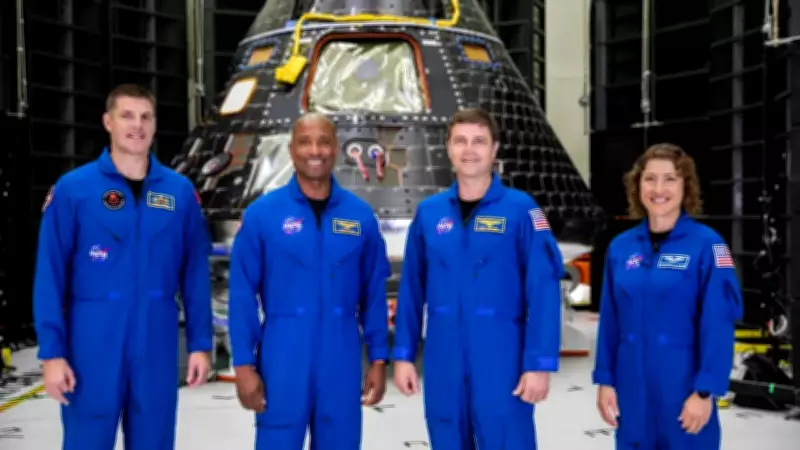
The Diverse Artemis II Crew
Reid Wiseman (Commander): A US Navy Captain and decorated naval aviator selected as a NASA astronaut in 2009, Wiseman brings extensive leadership experience. He previously served as a flight engineer on the International Space Station for 165 days during Expedition 41, conducting over 300 scientific experiments. As Chief of the Astronaut Office from 2020 to 2022, he managed training and flight assignments. As Artemis II Commander, Wiseman will lead the mission to validate the Orion spacecraft's performance in deep space.
Victor Glover (Pilot): A US Navy Captain with over 3,000 flight hours including 24 combat missions, Glover holds master's degrees in military operational art and flight test engineering. He made history as pilot of SpaceX's Crew-1 mission, the first crewed commercial flight to the ISS, where he spent 168 days and completed four spacewalks. Glover will become the first person of color to travel beyond low Earth orbit, using his technical skills for manual piloting trials during Artemis II.

Christina Koch (Mission Specialist): Selected as a NASA astronaut in 2013, Koch is an electrical engineer who set the record for longest single spaceflight by a woman (328 days on the ISS) and participated in three all-female spacewalks. With experience at remote research stations in Antarctica and Greenland, plus work at NASA's Goddard Space Flight Center, her engineering background and knowledge of long-duration life support systems will be invaluable. Koch will become the first woman to fly around the Moon, monitoring environmental systems during the 10-day mission.
Jeremy Hansen (Mission Specialist): A Colonel in Canada's Royal Canadian Air Force and Canadian Space Agency astronaut since 2009, Hansen has served as Capcom on ISS missions and led NASA astronaut candidate classes. Though this is his first spaceflight, he represents the strong NASA-Canada partnership, including Canada's contribution of the Canadarm3 robotic arm. Hansen will be the first non-American to travel beyond low Earth orbit, helping achieve international scientific objectives and test survival systems for future lunar landings.
Mission Objectives and Symbolic Significance
As the crew flies past the Moon, the mission will thoroughly test deep-space life-support systems aboard Orion. The flight also carries a unique Official Flight Kit containing symbolic items from around the world, including seeds from trees grown from Apollo mission seeds for future lunar planting. This kit creates a powerful link between Earth and the new era of sustainable lunar exploration, while connecting culturally to humanity's past through historical artifacts.
Notable Items in the Official Flight Kit
- Wright Flyer Fabric: A one-square-inch piece of muslin from the original Wright Flyer, previously flown on Space Shuttle Discovery in 1985.
- Legacy American Flag: A 13-by-8-inch flag that flew on both the first (STS-1) and last (STS-135) Space Shuttle missions, plus SpaceX's Demo-2 flight.
- Apollo 18 Commemorative Flag: A flag originally intended for Apollo 18, symbolically bridging the concluded Apollo era with the continuing Artemis program.
- Ranger 7 Photo Negative: A 4-by-5-inch negative of the first close-up Moon surface images taken by Ranger 7 in 1964.
- Artemis I Moon Tree Soil: Soil collected from all 10 NASA centers housing 'Moon Trees' grown from seeds flown on the uncrewed Artemis I mission.
Artemis II represents humanity's bold return to lunar exploration, combining cutting-edge technology with profound historical connections. This mission sets the stage for sustainable Moon exploration and future crewed landings, demonstrating international cooperation in space exploration.