Today, the barcode appears on countless products we buy. It flashes across supermarket scanners, helps warehouses count inventory, and lets businesses track products from coast to coast. In other words, the barcode has become so ordinary that almost no one even notices it. Yet, one of the most influential retail innovations of the 20th century began as a grad student drawing lines in the sand.
The Birth of an Idea: A Solution in Search of a Problem
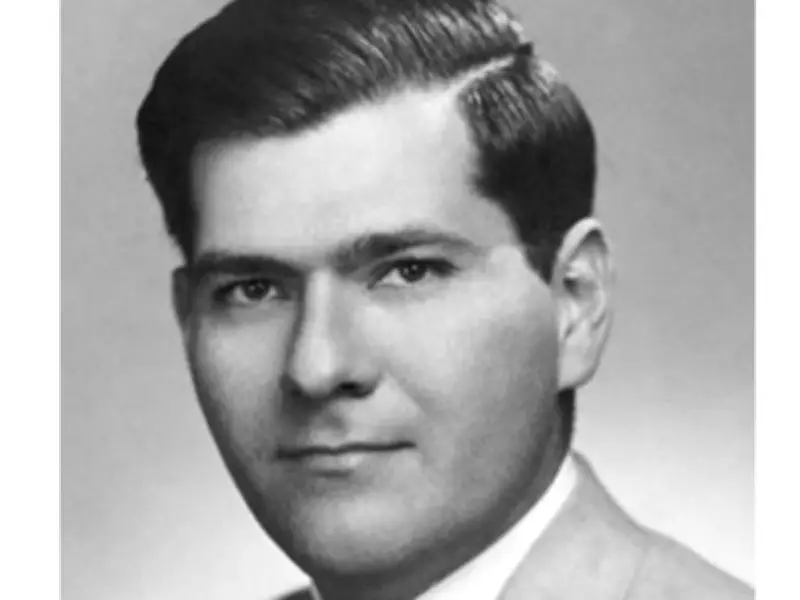
According to IBM's official history of the UPC, the idea of the modern barcode emerged in 1949 when engineering graduate student Norman Joseph Woodland sought to solve the problem of slow checkouts, a pain point for supermarkets for years. The problem began the year before at the Drexel Institute of Technology in Philadelphia. As reported by Smithsonian Magazine, engineering graduate student Bernard Silver, also at Drexel, overheard a supermarket executive ask a Drexel dean if the school could invent a system that would read item prices as they passed over a checkout counter. The dean turned him down, but Silver could not forget the request. He later shared his ideas with his fellow Drexel engineering student Norman Woodland. Before barcodes, cashiers had to individually read prices from items and enter them manually into the cash register. This was tedious work and prone to error. Woodland was intrigued by the challenge, left graduate school, and began working toward solving it.
The Beachside Sketch That Changed Retail
While relaxing on the beach in Florida in 1949, Woodland was exploring ways machines could automatically read data. IBM notes that, as a Boy Scout, Woodland knew Morse code. He sat on the beach and traced dots and dashes with his fingers in the sand, then extended them vertically into bars. Suddenly, the idea struck him—thick and thin bars could represent data in a form machines might be able to read. Smithsonian Magazine describes this moment as the birth of the barcode concept, decades before the technology existed to make it practical. Woodland himself described his invention simply as extending the Morse code into a visual pattern. This simple sketch eventually evolved into one of the world's most recognisable symbols.

A Patent Ahead of Its Time
Woodland and Silver filed a patent for a "Classifying Apparatus and Method" on October 11, 1949. The patent, granted in 1952, included a linear barcode design as well as a circular "bull's-eye" barcode that could be read from any angle. According to archives from IBM and barcode history sites, the concept was viable, but the technology to support it did not yet exist. Powerful lights and specialised machinery were needed for early prototypes. Developing a viable scanning device for the early 1950s was too costly. As a result, the invention sat largely unused for years.
The Barcode Finally Reaches the Checkout Counter
It took more than two decades for the invention to come to fruition. Reports state that the grocery industry renewed its search for automated checkout systems in the late 1960s and early 1970s. Laser technology and modern computing brought the cost of barcode scanners down enough to be economically feasible, and IBM engineer George Laurer developed the UPC specification that is used in the industry today, drawing on Woodland's earlier ideas. Then, the landmark scan took place. On June 26, 1974, at a Marsh supermarket in Troy, Ohio, the first retail product scanned using a UPC barcode was a packet of Wrigley's Juicy Fruit gum. The scan is widely regarded as a milestone in the adoption of barcode technology.
The Impact of the Barcode
The barcode was more than just a faster way to checkout; by instantly identifying products, it streamlined retail inventory management, helped eliminate pricing errors, and facilitated sales data analysis. Over time, the technology spread far beyond the supermarket to logistics, healthcare, aviation, manufacturing, and more. According to IBM, barcode technology became a key component of modern tracking and inventory systems, impacting everything from the way books are borrowed from libraries to airline baggage checks to the management of vast warehouses. More than 75 years after Woodland drew his lines in the sand, the basic principle is the same. A simple pattern of bars and spaces can identify a product instantly to a machine.

That is what makes the barcode remarkable. It was neither a flash-in-the-pan invention nor a high-profile scientific breakthrough, but a practical solution to an everyday problem. And in both the aisles of the grocery store and the complex pathways of global supply chains, its influence can be seen almost everywhere. From a few strokes in the sand to one of the quietest but foundational elements of modern commerce.