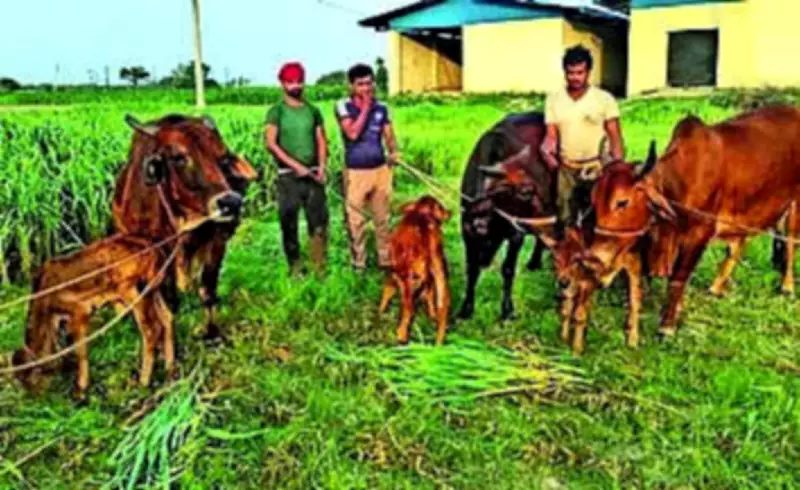
RPCAU Scientists Achieve Breakthrough with Bihar's First IVF-Produced Sahiwal Calves
In a landmark achievement for agricultural science in Bihar, researchers at Rajendra Prasad Central Agricultural University (RPCAU) have successfully produced the state's first Sahiwal calves using advanced in vitro fertilisation (IVF) and embryo transfer technology. This pioneering work was conducted under the Central Government's Rashtriya Gokul Mission, aimed at promoting indigenous cattle breeds.
Climate-Resilient Indigenous Cattle Development
The successful births were recorded at two locations: the university's Centre of Excellence on Indigenous Breed (CoEIB) in Piprakothi and the Chakiya Goshala in Motihari. This achievement represents a significant step forward in developing climate-resilient indigenous cattle while reducing dependence on heat-sensitive exotic breeds such as Holstein Friesian (HF) and Jersey.
The project received funding from the Department of Animal Husbandry and Dairying (DAHD), Government of India, and was led by RPCAU scientists Pramod Kumar, Krishna Mohan Kumar, and R K Asthana.

Addressing Climate Challenges in Dairy Farming
RPCAU Vice-Chancellor P S Pandey highlighted the critical importance of this breakthrough for India's dairy sector. "For decades, the Indian dairy industry has heavily relied on European cattle breeds," Pandey explained. "However, with rising global temperatures, these exotic cows have become increasingly problematic. HF and Jersey breeds are vulnerable to tropical diseases and suffer from severe 'conception stress,' often failing to conceive during harsh Indian summers."
By perfecting the ovum pick-up-IVF technique specifically for native breeds, the university has provided farmers with what Pandey describes as "a truly climate-smart cow." The technology ensures that superior genetic traits—including high milk yield, heat tolerance, and improved milk quality—can be transmitted to the next generation in a single breeding cycle.
The A2 Milk Advantage
A key motivation behind this research is the focus on A2 milk, which Sahiwal cattle naturally produce. In contrast, exotic HF and Jersey cows typically produce A1 milk containing the BCM-7 protein fragment, which has been linked to digestive inflammation and other health concerns.
Scientists emphasize that A2 milk offers multiple health benefits:
- Rich in proline amino acids that prevent formation of inflammatory BCM-7 peptides
- Higher concentrations of calcium, vitamin D, and omega-3 fatty acids
- Contains cerebrosides known to enhance cognitive development and immunity
Transforming Dairy Economics
This technological advancement could revolutionize dairy farming economics. "While conventional selective breeding requires 10 to 15 years to upgrade herd genetics," Pandey noted, "IVF enables farmers to achieve a 100% elite Sahiwal herd in just one generation."
Following the successful births at both facilities, RPCAU now plans to extend this model directly to farmers across the region. As India consolidates its position as the world's largest milk producer, attention is shifting toward what Pandey calls "the 'golden' Sahiwal"—a breed that combines heat resilience with exceptional nutritional value.
This breakthrough represents more than just scientific achievement; it offers a sustainable path forward for India's dairy industry in an era of climate change, providing farmers with cattle that are both economically viable and environmentally appropriate for tropical conditions.