C-DAC Launches Prototype Early Warning System for Glacial Floods in Indian Himalayas
In a significant advancement for disaster preparedness in the fragile Himalayan region, the Centre for Development of Advanced Computing (C-DAC) has unveiled an indigenous early warning system specifically designed for glacial lake outburst floods (GLOFs). This innovative prototype, successfully deployed at a glacial lake in Sissu, located in the Lahaul-Spiti district of Himachal Pradesh, underwent rigorous testing by officials from C-DAC and the National Disaster Management Authority (NDMA) on Wednesday.
System Design and Indigenous Development Goals
According to C-DAC Director General E Magesh, who spearheaded the testing efforts in Sissu, the system is engineered to provide advance alerts for GLOFs, facilitating timely evacuations and minimizing potential loss of life in downstream communities. "We have designed and developed the first prototype early warning GLOF system and automatic weather station," Magesh stated. "This system was deployed at this glacial lake some three years ago when it was completely frozen. It's successfully running and giving us data. The purpose is to give advance GLOF warning so that timely measures can be taken to evacuate people."
Magesh emphasized the commitment to making the technology fully indigenous. "This system was designed and developed by C-DAC and the intention is to make it completely indigenous," he explained. "Today, we still import some of the sensors, but in future we would like to make it indigenous. The next version will carry indigenous sensors along with the control system that C-DAC has developed." He further highlighted that over 150 glacial lakes across India necessitate similar early warning systems to mitigate risks.

Real-Time Data Transmission and Official Inspections
The early warning system operates by continuously capturing and transmitting real-time data to central servers through a combination of LoRa networks, satellite links, and 5G connectivity. This ensures prompt and reliable communication of critical information. During the testing, NDMA member Dinesh Kumar Aswal and secretary Manish Bhardwaj inspected the system in Sissu. Aswal confirmed that the GLOF system is capable of issuing warnings well in advance of potential disasters, enhancing community safety.
Growing Threat from Expanding Glacial Lakes
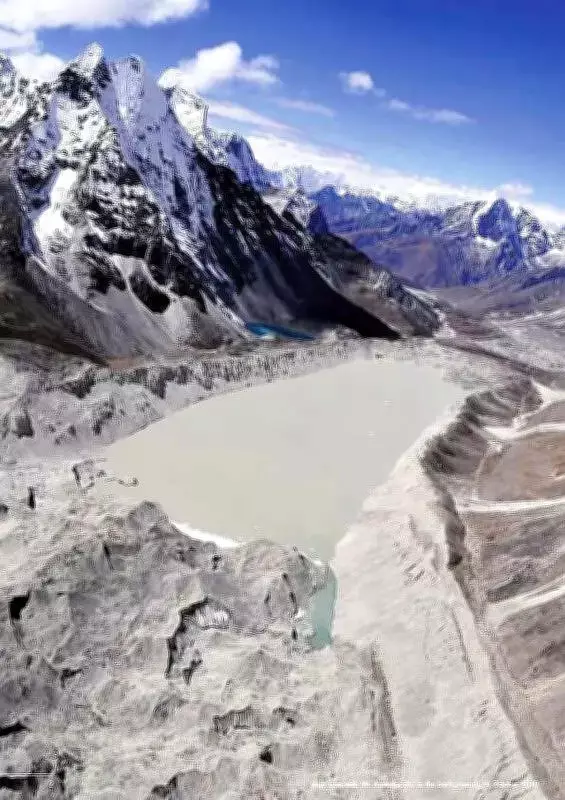
The deployment comes amid rising concerns over glacial lake expansion in the region. In July last year, the Lahaul-Spiti district administration raised an alarm regarding the increasing size of the Ghepan glacial lake, situated near Sissu at an elevation of approximately 4,070 metres in the Chandra sub-basin of the Indus. A study by the National Remote Sensing Centre (NRSC) revealed that this lake's size surged by 178%, from 36.49 hectares to 101.30 hectares, over a 33-year period from 1989 to 2022.
With an estimated volume of 35.08 million cubic metres, a GLOF from this lake could trigger severe devastation in the Sissu area, which lies about 1,000 metres below at an elevation of 3,070 metres. Additionally, a 2024 study conducted by scientists from the State Centre on Climate Change of the Himachal Pradesh Council for Science, Technology and Environment (HIMCOSTE) indicated a 13% increase in glacial lakes, from 414 in 2022 to 466 in 2023.
The study mapped these lakes, finding:
- Approximately 14% (67 lakes) in the Spiti sub-basin
- Around 12% (58 lakes) in the lower Satluj sub-basin
- A maximum of 73% (341 lakes) in the upper Satluj sub-basin
HIMCOSTE issued a stark warning in its report, noting that these lakes "pose a threat to the population living downstream due to their locations and potential to cause damage." This underscores the urgent need for robust early warning systems like the one developed by C-DAC to safeguard vulnerable Himalayan communities.